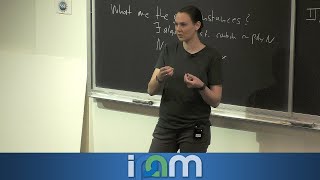
Topological Dualities from Matchgate Tensor Networks
Explore topological dualities connecting toric code, superconductors, and Ising model using matchgate tensor networks. Unifies approaches to non-local duality between fermionic and bosonic systems.

Hodge Structures and Quantum Toric Geometry
Explore Quantum Toric Geometry and its impact on Hodge Theory generalizations in this advanced mathematics colloquium, featuring insights from collaborative research in non-commutative spaces.
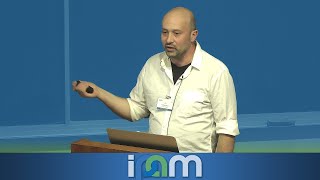
From Connectome to Dynamic Representations
Explore dynamic representations in connectome analysis, bridging neuroscience and mathematics to uncover brain network functionality and information processing mechanisms.
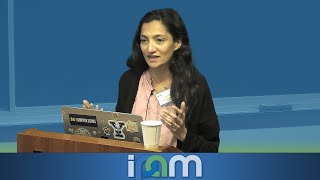
Inferring and Characterizing Neuronal Connectivity with Deep Geometry and Topology
Exploring novel geometric and topological methods to decode neural connectivity rules in C. elegans, revealing insights into embryonic development and nervous system architecture.
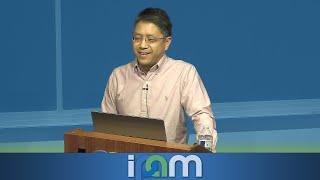
Visual Processing During Navigation
Explore visual processing mechanisms in navigation, focusing on neural pathways and computational models for spatial orientation and movement through environments.
Architectural Constraints on Recurrent Network Dynamics
Explore how network architecture influences and constrains dynamics in recurrent neural networks, focusing on threshold-linear models and their implications for understanding connectomes in neural computation.
The Cost of Brain State Transitions
Explore the energetic costs of brain state transitions and their implications for connectome analysis in this insightful presentation on cutting-edge neuroscience research.
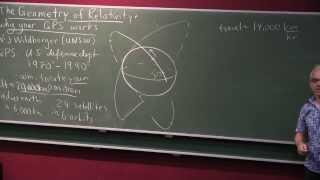
The Geometry of Relativity and GPS Technology
Explore the fascinating intersection of GPS technology and Einstein's relativity theories, uncovering how these scientific principles ensure accurate global positioning in our everyday lives.
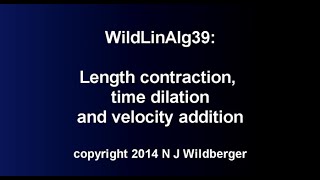
Length Contraction, Time Dilation, and Velocity Addition in Special Relativity - Lecture 39
Explore Einstein's Special Relativity through a novel approach, deriving length contraction, time dilation, and velocity addition using Lorentz transformations and linear algebra concepts.
Oriented Circles and 3D Relativistic Geometry - Part 1
Explores 3D relativistic geometry, hyperboloids as relativistic spheres, and connections with oriented circles. Introduces cyclography and its relation to relativistic quadrance.
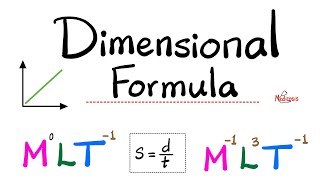
Dimensional Formula - MLT System and SI Units in Physics and Mathematics
Comprehensive overview of dimensional analysis in physics, covering MLT system, SI units, and various physical quantities. Ideal for exam preparation and understanding fundamental concepts.
Manin Pairs and Moment Maps Revisited
Explore advanced concepts in Hamiltonian geometry, focusing on Manin pairs and moment maps, with insights from University of Toronto's Eckhard Meinrenken.
Training Autonomous Dynamics of a Soft Body - Embedding Bifurcation Structures Using Physical Reservoir Computing
Explore physical reservoir computing for embedding bifurcation structures in autonomous dynamics of soft bodies, focusing on innovative machine learning applications in dynamical systems.
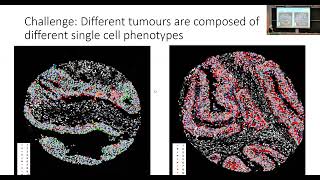
Exploring Cancer Progression: From Static Imaging Data to System Dynamics
Discover innovative approaches to analyze cancer progression using machine learning and dynamical systems, bridging static imaging data with dynamic biological processes.
Using Historical Information to Improve Seismic Data Processing Methods I
Explore innovative seismic data processing techniques, including Bayesian methods, machine learning, and waveform cross-correlation, to enhance earthquake monitoring and location accuracy.
The Future of Human-Landscape Systems - Part 2
Explore the future of human-landscape interactions, discussing driving forces, global shaping, and sustainability challenges in the Anthropocene era.

Weather's Influence on Earthquakes - Press Conference
Explore the intriguing connection between weather patterns and seismic activity, featuring insights from experts on monsoons, icecap retreat, and their potential impact on earthquake occurrence.
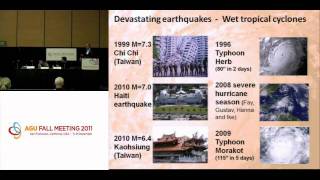
Weather's Influence on Earthquakes and Volcanoes
Exploring connections between weather patterns and seismic/volcanic activity, revealing how surface phenomena can influence underground events and potentially impact eruption timing.
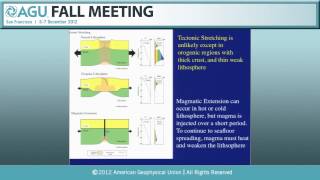
The Geodynamics of Plate Tectonics II - 2012
Explore cutting-edge geodynamics research on plate tectonics, including continental collisions, mantle plumes, subduction zones, and their effects on Earth's topography and magmatism.
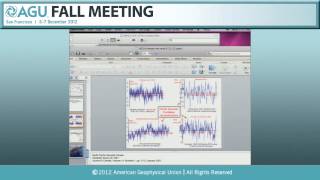
Nonlinear and Scaling Processes in the Atmosphere and Ocean at All Scales
Explore cutting-edge research on nonlinear and scaling processes in atmospheric and oceanic systems, covering climate reconstructions, sensitivity, long-range memory, megadroughts, turbulence, and micro-scale phenomena.
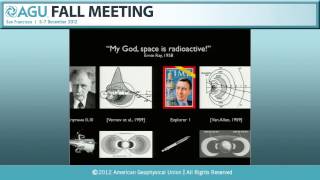
Dynamic Regimes of Space Plasmas - Deterministic or Stochastic? - Lecture 1
Explore statistical and physical aspects of self-organized criticality in solar flares and astrophysical phenomena, and the complexity of radiation belt electron transport at Earth.