
Data-Driven Cosmology by Jia Liu
Explore data-driven approaches in cosmology, leveraging statistical methods and machine learning to analyze vast datasets and uncover insights about the universe's structure and evolution.
Geometry, Entropy and Complexity in Quantum Gravity - Part II
Explore quantum gravity's geometrization of quantum mechanics, focusing on entropy calculations and complexity=action conjecture. Learn advanced techniques beyond basic concepts.
Geometry, Entropy and Complexity in Quantum Gravity - Part I
Explore quantum gravity's recent advances through quantum information and complexity, focusing on the geometrization of quantum mechanics and its practical calculations.
Non-stationary Quantum Many-body Dynamics - Lecture 1
Explore non-stationary quantum many-body dynamics in this lecture, covering advanced concepts in periodically and quasi-periodically driven complex systems.
Non-stationary Quantum Many-body Dynamics - Lecture 2
Explore non-stationary quantum many-body dynamics in this advanced physics lecture, delving into complex systems and their behavior under periodic and quasi-periodic driving forces.

How Motor Arrangement on Cargo Surface Influences Collective Transport by Ambarish Kunwar
Explores how motor protein arrangement on cargo surfaces affects collective transport in cells, examining factors influencing efficiency and coordination in intracellular movement.
Modern Numerical Methods in Computational Relativity - Lecture 5
Explore advanced numerical techniques in computational relativity, focusing on simulating black hole mergers and other high-energy astrophysical phenomena for gravitational-wave astronomy.

Large-Scale Ocean Circulation and Climate - Interannual Climate Variability by Anand Gnanadesikan
Explore interannual climate variability and its connection to large-scale ocean circulation. Gain insights into the complex interactions between oceans and climate systems, enhancing understanding of global climate patterns.

The Role of Convection and Turbulence in Melting of Polar Ice-Shelves
Explores convection and turbulence in polar ice-shelf melting, discussing fluid dynamics of oceans and their impact on climate processes. Aimed at students, no prior background required.

The Inconstant Nature of Climate Feedback and Climate Sensitivity by Angshuman Modak
Explore climate feedback mechanisms and sensitivity, examining their variable nature and impact on climate modeling and predictions in this insightful lecture by Angshuman Modak.
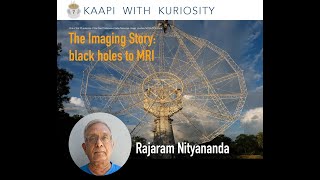
The Imaging Story - Black Holes to MRI by Rajaram Nityananda
Explore modern imaging techniques beyond traditional cameras, from medical MRI to radio telescopes. Learn how optics, computation, and statistics revolutionized image creation across various fields.
Modern Numerical Methods in Computational Relativity - Lecture 2
Explore advanced numerical techniques for solving Einstein's equations in computational relativity, focusing on applications in gravitational-wave astronomy and astrophysical simulations.
Modern Numerical Methods in Computational Relativity - Lecture 3
Explore advanced numerical techniques for solving Einstein's equations in computational relativity, focusing on modeling gravitational waves from merging black holes and neutron stars.

Modern Numerical Methods in Computational Relativity - Lecture 1
Explore modern numerical methods for solving Einstein's equations in computational relativity, essential for modeling gravitational waves from black hole and neutron star mergers.

Global Warming and Climate Policies by Ashwin Seshadri
Explore global warming's impacts and climate policy solutions in this comprehensive lecture, emphasizing scientific understanding and practical approaches to addressing climate change.

Assessment of Regional and Global Climate Models in Simulating Wind Speed by Manasa Behera
Evaluation of climate models' accuracy in wind speed simulation, focusing on regional and global scales. Insights into model performance and implications for climate predictions.

Large-Scale Ocean Circulation and Climate - High-Latitude Climate Variability by Anand Gnanadesikan
Explore high-latitude climate variability and its impact on large-scale ocean circulation, examining the intricate relationship between oceanic processes and global climate systems.

Basics of Ocean Climate Models by Nairita Pal
Explore ocean climate modeling fundamentals, including fluid dynamics, turbulence, and convection. Learn about their impact on climate processes and monsoon dynamics.

Climate Change - Climate System, Energy Balance, Climate Models
Explore climate systems, energy balance, and climate models in this comprehensive lecture on climate change, offering insights into atmospheric and oceanic processes.

The Role of Convection and Turbulence in the Ocean Circulation and Modelling by Bishakhdatta Gayen
Explores convection and turbulence in ocean circulation, focusing on their impact and modeling techniques. Discusses fluid dynamics and its influence on climate processes.

Simple Models of Climate Variability and Change by Ashwin Sheshadri
Explore simple models of climate variability and change, focusing on key dynamics and processes that influence Earth's climate system over various timescales.