The Proof is in the Pudding - Ordinary Kriging is the Best - Geology Symposium 2022
Explore geostatistical estimation methods, comparing Ordinary Kriging, Inverse Distance Weighted, Nearest Neighbor, and Moving Window Average for resource estimation in geology.
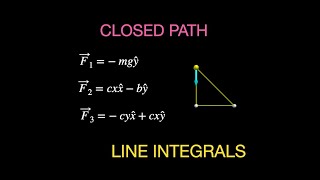
Vector Fields - Calculating the Line Integral Work Around Closed Paths
Explore vector fields and calculate line integral work around closed paths using analytical and numerical methods with Python.
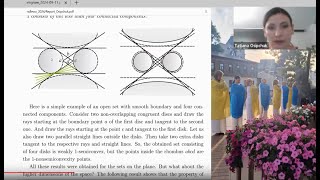
On Weak 1-Semiconvexity of Open Sets in Euclidean Spaces
Explore weak 1-semiconvexity in Euclidean spaces, examining its properties, connections to linearly accessible domains, and implications for set disconnectedness in higher dimensions.

Overview of Isatis.neo - Geostatistical Software for Data Analysis and Modeling
Explore Isatis.neo, a comprehensive geostatistical software for data analysis, estimation, and simulation in mining, oil and gas, and environmental applications. Learn its layout, tools, and key features.

The Math Every Programmer Needs - Practical Applications of Discrete Math in Ruby
Discover practical discrete math concepts to enhance your programming skills, from Boolean algebra to graph theory, without complex equations.
The Queue Continuum: Applied Queuing Theory - RailsConf 2022
Explore queuing theory, parallelism, and concurrency in Rails applications through Star Trek-themed examples, focusing on Sidekiq and Puma optimization.
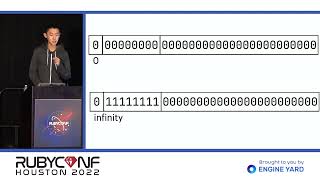
1.5 is the Midpoint Between 0 and Infinity - Binary Search on Floating-Point Ranges in Ruby
Explore binary search, IEEE 754 floating-point numbers, and Ruby's clever trick for binary search on floating-point ranges.
Unraveling the Web of Relationships: Understanding Graph Data
Explore graph theory basics, real-world applications, and the growing importance of graph databases in solving complex data challenges across industries.
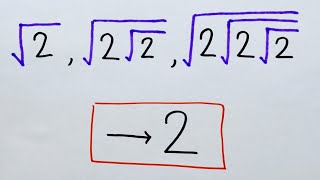
A Cuter Way to Undo Square Roots
Explore a charming sequence of nested square roots converging to 2, using the monotone convergence theorem and induction for an elegant mathematical proof.
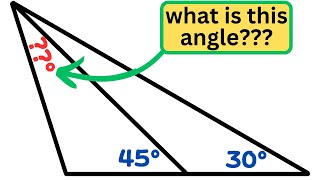
Find the Missing Angle - Geometry Problem Solving
Solve a geometry problem by finding the missing angle using logical reasoning and mathematical principles.
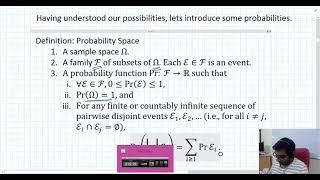
Basic Definitions in Probability Theory - Introduction and Experiment
Learn fundamental probability concepts through clear definitions and practical experiments, enhancing your understanding of statistical principles.
The Central Limit Theorem and its Applications - Part 1
Explore the Central Limit Theorem, its applications, and the concept of standard error of the mean in statistical analysis.
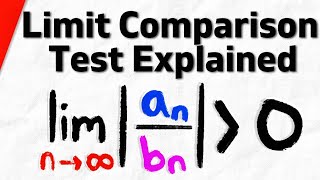
Limit Comparison Test for Infinite Series - Calculus 2
Master the limit comparison test for infinite series convergence and divergence. Learn the proof, apply it to examples, and enhance your calculus skills in this concise tutorial.
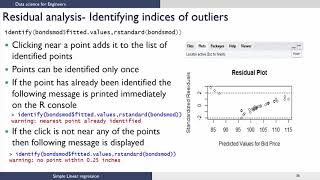
Simple Linear Regression Model Assessment - Continued
Assess simple linear regression models through continued exploration of key concepts and techniques for evaluating model performance and validity.
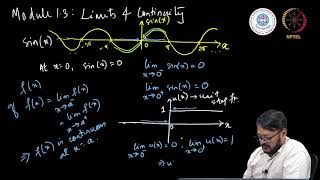
Limits and Continuity - Lecture 3
Explore limits and continuity concepts in calculus, enhancing mathematical understanding and problem-solving skills.
Integration Algorithms
Master integration algorithms for solving complex mathematical problems and enhancing computational skills.
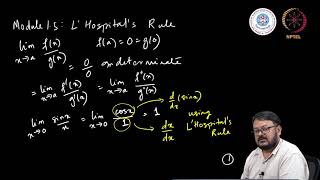
L'Hospital's Rule - Lecture 5
Master L'Hospital's Rule for solving indeterminate forms in calculus, enhancing your problem-solving skills in limits and derivatives.
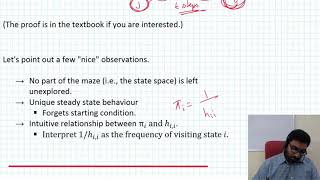
Stationary Distribution of a Markov Chain
Explore the concept of stationary distribution in Markov chains, understanding its properties and applications in probability theory and stochastic processes.
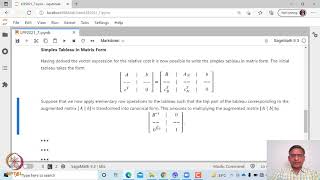
Simplex Methods in Matrix Form
Learn matrix-based simplex methods for efficient linear programming problem-solving, enhancing your optimization skills and mathematical understanding.
Time Sampled M/M/1 Queue and Burke's Theorem - Lecture 66
Explore Burke's Theorem and M/M/1 Queue concepts, including reversibility and time sampling, to enhance understanding of queueing theory.
Issues in Hypothesis Testing - Part 1
Explore key issues in hypothesis testing, including error types, biases, and experimental design strategies for more robust scientific research.