The Finite Slope Part of Overconvergent Cohomology & Coherent Sheaves on Spaces of
Explores overconvergent cohomology, eigenvarieties, and coherent sheaves in p-adic automorphic forms. Discusses a conjecture on computing coherent sheaves using Galois representation stacks and its relation to p-adic Langlands program.
Tony Feng- A New Approach to Breuil-Mezard Cycles
Explore a novel local and group-theoretic approach to the Breuil-Mezard Conjecture, connecting it to quantum groups and homological mirror symmetry in algebraic number theory.
Lucas Mann- Representation Theory via 6-Functor Formalisms
Explore abstract 6-functor formalisms and their application to representation theory of locally profinite groups, shedding light on classical results and p-adic Lie group representations.
The Weight Part of Serre's Conjecture and the Emerton-Gee Stack
Explore the Breuil-Mezard conjecture's impact on local deformation rings and its connection to Serre's conjecture, focusing on recent advancements in moduli stack theory and p-adic Galois representations.
Representations of P-Adic Groups and Hecke Algebras
Explore p-adic group representations and Hecke algebras, focusing on supercuspidal representations, Bernstein blocks, and their equivalence to depth-zero blocks through Hecke algebra isomorphisms.
One-Dimensional Mod P Quaternionic Representations
Explore mod p cohomology of Lubin-Tate and Drinfeld spaces, and Hecke eigenspaces in quaternionic Shimura curves, using recent advancements in functor formalism and finiteness results.

Introduction to Theory and Numerics of Partial Differential Equations - Lecture 2
Explore numerical methods for solving partial differential equations, focusing on techniques essential for gravitational wave astronomy and computational relativity.
Categorical Local Langlands for GL_n - The Irreducible Case with Integral Coefficients
Explore the Fargues-Scholze conjecture for GL_n, focusing on irreducible parameters with integral coefficients. Learn about category localizations and L-packets in this advanced mathematical lecture.
Explicit Mod-Ell Categorical Local Langlands Correspondence for Depth-Zero Supercuspidal
Explore the explicit mod-ℓ categorical local Langlands correspondence for depth-zero supercuspidal representations of GL_2, focusing on moduli spaces and smooth representations.
Covering Dimension for Cuntz Semigroups
Explore the concept of covering dimension in Cuntz semigroups, a key topic in operator algebra. Gain insights into this advanced mathematical subject through an expert presentation.
The Global Glimm Problem
Explore the Global Glimm Problem in operator algebra with Eduard Vilalta, delving into advanced mathematical concepts and their applications in this seminar from the Fields Institute.
Introduction to Theory and Numerics of Partial Differential Equations - Lecture 3
Explore numerical methods for solving partial differential equations, focusing on techniques essential for gravitational wave astronomy and computational relativity.
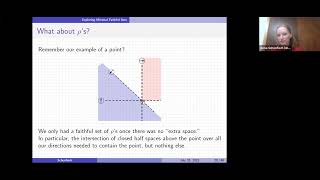
Ordering Descriptor Types by Their Ability to Faithfully Represent Shapes
Explore topological descriptors in shape comparison, focusing on augmented vs non-augmented types and their ability to faithfully represent simplicial complexes. Accessible discussion with interesting open questions and visuals.
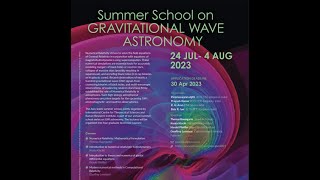
Introduction to Theory and Numerics of Partial Differential Equations - Lecture 1
Explore fundamental concepts and numerical techniques for solving partial differential equations, essential for modeling complex physical phenomena in gravitational-wave astronomy and astrophysics.
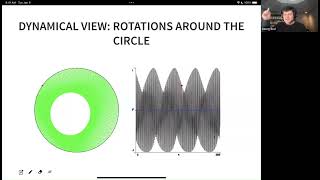
Topology in Digital Sound Synthesis
Exploring topological concepts in digital sound synthesis, from oscillatory algorithms to wave equations and filter theory, with applications in computational audio generation.
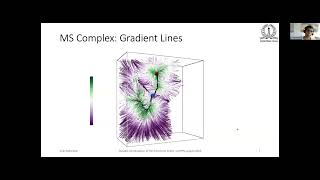
Scalable Computation of the Extremum Graph
Explore scalable computation of extremum graphs, a simplified topological descriptor for scalar functions, with applications in visualization and shape analysis. Learn efficient parallel algorithms for large datasets.
Small-Set Expansion in the 2-Degree Short-Code Graph - The Easier Version
Explore the intricacies of small-set expansion in the 2-degree short-code graph, focusing on an easier version of this complex mathematical concept.
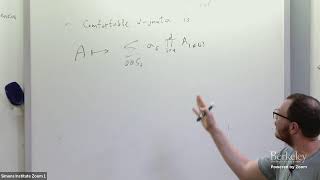
Product Mixing, Quantum Separation, and Comfortable Juntas
Explores product mixing in special unitary groups, solving Gowers' problem and its applications in quantum communication, with sharp results on subset distributions in SU_n.

The Genius Equation - Deep Inside Ramanujan's Mind
Explore Ramanujan's mathematical genius through a deep dive into one of his beautiful identities, unraveling complex concepts and revealing the workings of a brilliant mind.
Conway's Tangles by Michael Lacey
Explore Conway's method of tangling ropes, associating each tangle with a rational number. Learn how twists and rotations create tangles, and discover their remarkable additive properties through interactive demonstrations.
Representation Theory in TCS and Extremal Combinatorics
Explore how Representation Theory extends Boolean function theory, leading to new insights in theoretical computer science and extremal combinatorics.