Learning From Ranks, Learning to Rank - Jean-Philippe Vert, Google Brain
Explore differentiable approaches to integrate permutations, sorting, and ranking in machine learning, focusing on embedding techniques and relaxation of ranking operators.
Can Learning Theory Resist Deep Learning? - Francis Bach, INRIA
Exploring global convergence of gradient descent in non-convex optimization for deep learning, highlighting challenges in bridging theory and practice in machine learning algorithms.
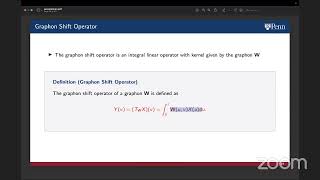
Learning by Transference in Large Graphs
Explore graph theory, convergence, and transferability in large networks. Learn about graph neural networks, filters, and applications in multi-robot systems and signal processing.
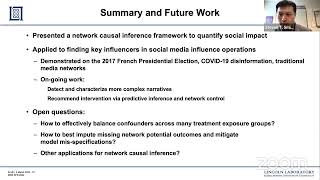
Causal Inference on Networks to Characterize Disinformation Narrative Propagation
Explore techniques for detecting and analyzing disinformation spread on social networks using causal inference, focusing on network construction, influence scoring, and bot detection.

Optimal Control of Excitable Systems Near Criticality
Explore optimal control of neural networks near criticality, examining how network structure and dynamics impact control efficacy. Insights into controlling population firing rates and mitigating noise in neural systems.

Promoting Global Stability in Models of Quadratic Nonlinear Dynamic
Explore innovative algorithm for identifying globally stable fluid and plasma flow models, featuring presentation and Q&A on recent research in nonlinear dynamics and vortex shedding.
Pendulum Simulation: In Search of Chaos - Part 6
Explore chaos in double pendulum systems through simulation, analyzing different initial conditions and observing complex behavior patterns.

The Lonely Runner Conjecture - Simulation and Explanation
Explore the intriguing Lonely Runner Conjecture through simulation, understanding its simplicity and the challenge of proving it conclusively.

Why π Is in the Normal Distribution - Beyond Integral Tricks
Explore the mathematical origins of π in the normal distribution through geometric insights, classic proofs, and the Herschel-Maxwell derivation, offering a deeper understanding beyond integral tricks.
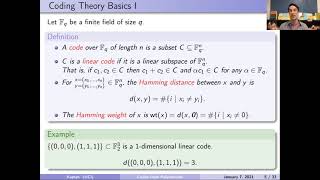
Codes from Polynomials Over Finite Fields
Explore polynomial-based coding theory, focusing on Reed-Solomon and Reed-Muller codes, their properties, and applications in error correction for reliable data transmission over noisy channels.
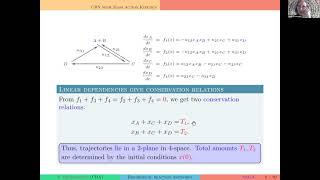
Families of Polynomials in Biochemical Reaction Networks
Exploring polynomial systems in biochemical reaction networks, focusing on computational techniques for analyzing families of polynomials with combinatorial structures derived from reaction digraphs.
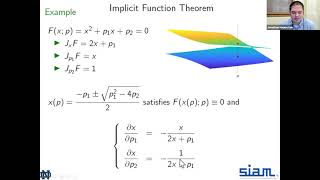
Applications of Homotopy Continuation in Science and Engineering
Explore homotopy continuation in numerical algebraic geometry and its applications in chemistry, mechanical engineering, and biological modeling. Learn about tracking solutions to parameterized nonlinear equations.
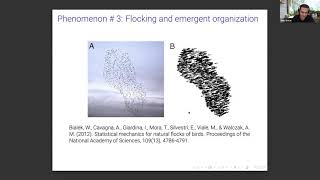
Comprehensive Fluids, Entropy Hierarchies, and Flocking - SIAM PDE Seminar
Exploring compressible fluid equations, entropy hierarchies, and flocking dynamics. Covers Navier-Stokes models, nonlocal collective dynamics, and mathematical proofs for fluid behavior and emergent organization.
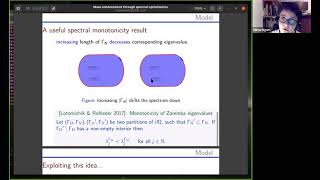
Wave Enhancement Through Spectral Optimization - 33rd IMAGINE Seminar
Explore efficient optimization of wave transmission in cavities through boundary condition adjustments, using spectral analysis and layer potential methods for accurate eigenvalue calculations.
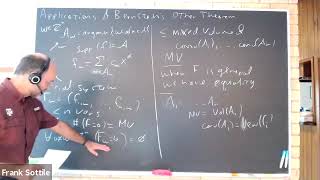
Applications of Bernstein's Other Theorem in Geometry and Algebra
Explore applications of Bernstein's Other Theorem in polynomial systems, focusing on non-general yet Bernstein-general cases from various fields, and their optimal solution methods.
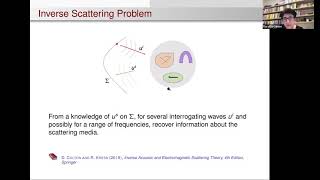
Spectral Problems in Inverse Scattering Theory - 21st IMAGINE OneWorld SIAM-IS Seminar
Explore scattering theory's spectral problems, focusing on poles, non-scattering frequencies, and transmission eigenvalues. Learn how these relate to scattering operators and material properties in inhomogeneous media.
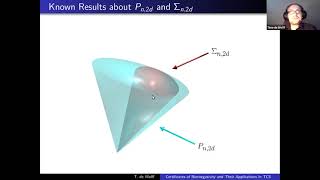
Certificates of Nonnegativity and Their Applications in Theoretical Computer Science
Explore nonnegativity certificates in real algebraic geometry, focusing on sums of squares and sums of nonnegative circuit polynomials, with applications to polynomial optimization and theoretical computer science.
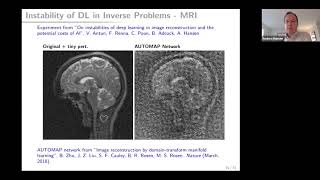
Foundations of Deep Learning and AI: Instabilities, Limitations, and Potential
Exploring deep learning's instability, AI limitations, and potential impacts on scientific computing and medical imaging. Compares AI's current state to early 20th-century mathematics, predicting similar foundational challenges.
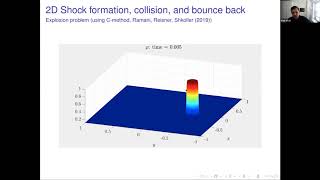
Shock Formation and Vorticity Creation for Compressible Euler
Exploration of shock formation and vorticity creation in compressible Euler equations, featuring constructive proofs, self-similar variables, and analysis of singularities in multiple dimensions.
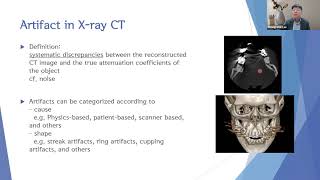
Artifact Suppression in X-ray CT Images - SIAM-IS Virtual Seminar
Explore X-ray CT imaging, artifact suppression techniques, and recent advancements in metal and scattering artifact reduction for improved medical and industrial applications.
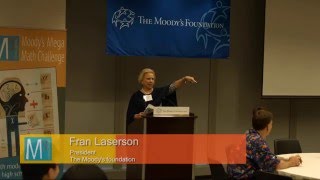
Mathematics in Computer Animation - Pixar's Approach
Pixar engineer explores mathematical techniques behind computer-animated effects, including dynamic simulations for clothing, hair, and 3D interactive animation, showcasing real-world applications in film production.