Rogers-Ramanujan Identities - The Empirical Hypothesis
Proof of the empirical hypothesis for q-series constructed from Rogers-Ramanujan identities, exploring structural properties and advancing understanding of these mathematical relationships.
Abstract Algebra - A PID That Is Not a Euclidean Domain
Explore a principal ideal domain that's not Euclidean, using Dedekind-Hasse Norm and universal side divisor concepts to demonstrate this intriguing algebraic property.
A Trigonometric Integral
Explore strategies for solving complex trigonometric integrals using recursively defined sequences, enhancing your mathematical problem-solving skills.
Abstract Algebra - If D is a UFD then D[x] is a UFD
Explore the proof that polynomial rings over unique factorization domains are also UFDs, covering key concepts like Gauss' lemma and polynomial factorization in integral domains.
The Euclidean Algorithm - Number Theory
Explore the Euclidean Algorithm, a fundamental concept in number theory, and its applications in finding greatest common divisors efficiently.
The Division Algorithm - Number Theory
Explore the division algorithm in number theory, covering natural numbers, division with remainder, and related concepts through clear explanations and exercises.
Mathematical Induction - Number Theory
Explore mathematical induction in number theory through examples, proofs, and practice problems. Learn to apply this powerful technique to prove statements about integers and sequences.
Problem Solving - Techniques from Number Theory
Explore key Number Theory concepts and techniques for solving math competition problems, with practical examples including a 1985 AIME question.
No Simple Groups of Order 66 or 144
Explore advanced group theory using Sylow's Theorems to prove the non-existence of simple groups with specific orders, demonstrating powerful algebraic techniques.
Some Important Facts About Congruence Modulo N
Explore key properties of congruence modulo n, a fundamental equivalence relation in number theory. Learn arithmetic properties and computational techniques for this important concept.
Permutation Orbifolds of Vertex Operator Algebras
Explore permutation orbifolds in vertex operator algebras, delving into advanced algebraic structures and their applications in mathematical physics and string theory.
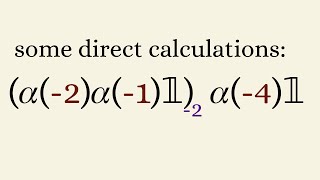
Some Example Calculations in the Heisenberg Vertex Algebra
Explore in-depth calculations within the Heisenberg vertex algebra, demonstrating advanced mathematical concepts and techniques in this specialized field of study.
The Number Theory You Need to Learn Abstract Algebra
Explore essential number theory concepts like division algorithm, Euclidean algorithm, and congruence modulo n, laying the foundation for abstract algebra studies.
Brush Up on Number Theory Tricks
Explore a viewer-suggested number theory problem, enhancing your problem-solving skills and deepening your understanding of mathematical concepts.
Proofs by Mathematical Induction
Explore the principle of mathematical induction through clear explanations and diverse examples, enhancing your ability to construct rigorous proofs in mathematics.
Basic Proofs Involving Sets
Learn techniques for proving fundamental set theory results, enhancing your mathematical reasoning skills and deepening your understanding of set operations and relationships.
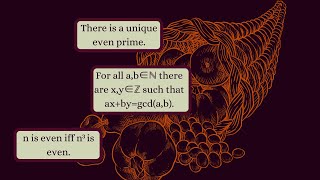
A Cornucopia of Proofs
Learn various proof-writing techniques with Michael Penn in less than an hour. Randolph College Math and Science.
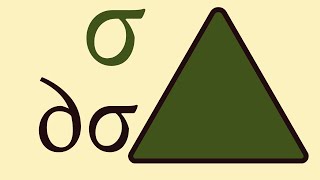
Differential Forms - Boundaries of M-Cells and M-Chains
Explore the concept of boundaries in differential forms, focusing on m-cells and m-chains. Learn to calculate examples and understand their mathematical significance in this concise tutorial.
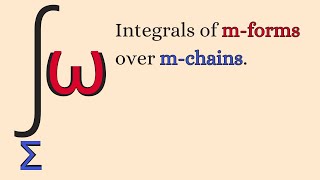
Differential Forms - Integrals of M-Forms Over M-Chains
Explore m-cells, m-chains, and integration of differential forms over various dimensions, with practical examples for 0, 1, and 2-forms and chains.
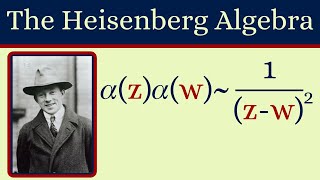
The Heisenberg Algebra Part 1
Introduction to the Heisenberg vertex algebra, an algebraic model of one free boson. Explore the foundations of this complex mathematical concept and its applications in quantum mechanics.
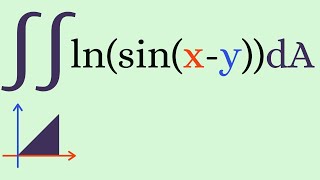
An Aesthetic Double Integral
Explore an elegant calculation of a double integral, showcasing refined mathematical techniques and aesthetic problem-solving approaches in advanced calculus.