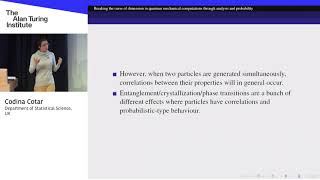
Breaking the Curse of Dimension in Quantum Mechanical Computations Through Analysis and Probability
Explore quantum mechanical computations, focusing on breaking dimensional constraints through analysis and probability. Learn about density functional theory and recent approaches to tackle existing issues.
Time Series Class - Part 1 - Dr Ioannis Papastathopoulos, University of Edinburgh
Learn fundamental concepts and advanced techniques for analyzing time series data, including ARMA models, state-space models, and neural networks for forecasting and inference.
Data Science and Data System - Dr. Amy Braveman, NASA Jet Propulsion Laboratory
Explore NASA's Earth observation data systems, statistical challenges in climate science, and innovative approaches to analyzing complex environmental datasets.
Time Series Class - Part 1 - Dr. Ioannis Papastathopoulos, University of Edinburgh
Learn fundamental concepts and advanced techniques in time series analysis, including ARMA models, state-space models, and neural networks for forecasting and inference.
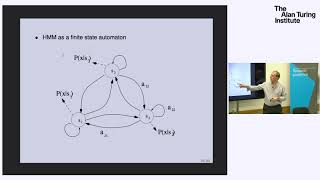
Time Series Class - Part 2 - Professor Chris Williams, University of Edinburgh
Explore time series analysis, from moving average models to advanced state-space techniques and recurrent neural networks. Gain practical skills in parameter estimation, forecasting, and applying models to real-world data.
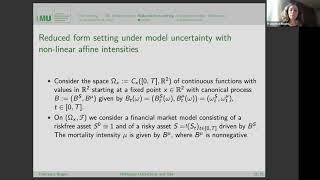
Reduced Form Setting Under Model Uncertainty With Nonlinear Affine Intensities - Prof Francesca Biagini
Explores reduced-form market models with financial assets and life insurance liabilities under model uncertainty, focusing on mortality intensities and longevity bonds. Discusses arbitrage-free pricing and contingent claims in this framework.
Trustworthy Communication of Statistics and Risk in the Age of COVID-19
Explore trustworthy communication of COVID-19 statistics and risks, focusing on official releases, background actuarial risk, and lessons for effective public understanding during crises.
TMCF Workshop Use-Cases - Counterfactual CPMS & Emerging COVID Work, Niels Peek
Exploring causal inference in AI prediction algorithms for decision-making, focusing on 'what if' scenarios in healthcare and insurance, with applications to COVID-19 pandemic response.
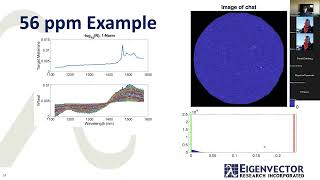
Anomaly Detection in Hyperspectral Imaging - Neal Gallagher
Explore advanced anomaly detection techniques in hyperspectral imaging, focusing on GLS, ELS, and WPCA methods for improved sensitivity and selectivity in detecting minor signals within complex mixtures.

Time Travel Paradoxes in Doctor Who and Futurama - Sci-Phi: Science Fiction as Philosophy
Explore time travel paradoxes through popular sci-fi, examining philosophical implications, Einstein's relativity, and potential solutions like branching timelines and predestination, challenging our understanding of causality and reality.
The 10 Equations That Rule the World - With David Sumpter
Explore 10 key mathematical equations and their real-world applications in finance, relationships, social media, and personal development with Professor David Sumpter.

Voting & the Electoral College - Logic, Riddles, & Paradoxes in Math and History
Explore paradoxical election outcomes, Arrow's impossibility theorem, and the Electoral College system. Analyze voting methods, mathematical proofs, and counterintuitive results in political decision-making.

Mind-Body Philosophy of the East and West - Spiritual Dualism in the History of Thought
Explore the historical evolution of the soul concept in Eastern and Western thought, from ancient Greek philosophy to modern psychology, and its gradual dismissal in contemporary science.
Simulation - The Challenge for Data Science
Exploring the fusion of simulation models and machine learning for policy analysis, addressing challenges in parameter estimation and initialization for complex systems forecasting.
Negativity and Semantic Change - Will Hamilton, Stanford University
Explore dynamic word embeddings to test semantic instability in negative vs. positive language, with implications for sentiment analysis tools and linguistic evolution.
Data Science Applications - Environment/Ecology
Explore statistical modeling techniques for ecological data, focusing on hidden Markov models, Bayesian inference, and capture-recapture methods. Learn to analyze and interpret complex environmental datasets.
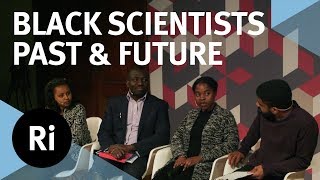
Black Scientists - Past, Present and Future
Panel discussion exploring diversity in science, focusing on Black scientists' contributions, challenges, and the impact of representation on research and society.
Affine Spline Insights into Deep Learning - Richard Baraniuk, Rice University
Explore deep learning through affine splines, understanding neural networks as matched filterbanks and partition-based signal distances. Gain insights into data augmentation and future research directions.
Deep Learning Volatility - Blanka Horvath, Kings College London
Explore deep learning for option pricing and calibration, including neural network perspectives, rough volatility, and model recognition in financial mathematics.
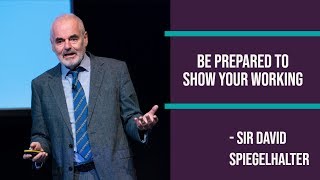
Be Prepared to Show Your Working! - Professor Sir David Spiegelhalter
Explore algorithmic decision-making transparency, validation, and explainability with Professor Spiegelhalter. Learn about the importance of demonstrating trustworthiness and intelligent transparency in automated advice systems.
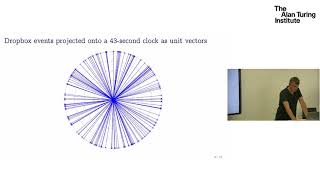
Statistics in Cyber-Security - Dr Nick Heard, Imperial College London
Explore statistical approaches for cyber-security, from micro-level models to full network graph representations, to identify illegitimate network activity using enterprise data sources.