
Pluralistic Alignment: A Roadmap for Integrating Diverse Human Values in AI Systems
Explore the concept of pluralistic AI alignment, focusing on integrating diverse human values into AI systems through modular specialists and improved computational value-modeling approaches.
Prover-Verifier Games for Improving LLM Output Legibility
Explore how prover-verifier games enhance LLM output clarity and trustworthiness, focusing on mathematical problem-solving and human verification techniques.
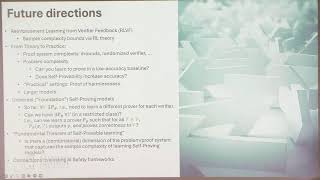
Self-Proving Models: Learning Algorithms with Interactive Proof Systems
Explore self-proving models and interactive proof systems for ensuring AI output correctness, focusing on algorithms, learning complexity, and practical applications in computational tasks.
Defense Against Prompt Injection Attacks in LLM-Integrated Applications
Explore effective strategies for securing LLM applications against prompt injection attacks through structured queries and specialized instruction tuning techniques.
Mitigating Backdoors in Machine Learning Models - Security and Defense Strategies
Explore techniques for defending against undetectable backdoors in machine learning systems through black-box mitigation strategies, focusing on binary classification and regression models.
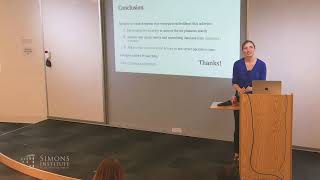
Private Retrieval-Augmented Generation: Secure Search Systems for LLMs
Explore secure Retrieval-Augmented Generation through Compass, a cryptographic system enabling private semantic search with high accuracy while protecting sensitive data and queries.
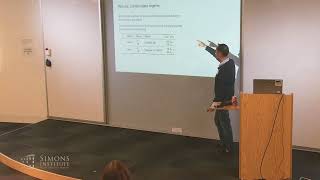
Differentially Private Synthetic Data for Private LLM Training
Explore cutting-edge techniques for generating private synthetic data in LLM training, focusing on differential privacy methods and their practical applications in AI development.

Scalable Extraction of Training Data from Production Language Models
Explore techniques for extracting training data from language models, focusing on breaking alignment mechanisms and understanding privacy implications in AI systems.
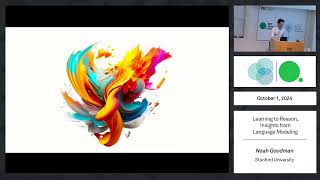
Learning to Reason - Insights from Language Modeling
Explore the fascinating intersection of language modeling and reasoning processes through Stanford researcher Noah Goodman's insightful analysis of cognitive learning mechanisms.
Trillion Dollar Words in Julia - Natural Language Processing for Financial Markets
Explore how to predict financial market impacts from Federal Reserve communications using Julia and RoBERTa models, with practical implementations for analyzing monetary policy language.
SpeciesDistributionModels.jl - A Species Distribution Modeling Workflow in Julia
Discover how to model species distributions using Julia's powerful ecosystem, featuring fast computation, interactive visualization, and integration with MLJ for enhanced ecological research and analysis.
Physics-Informed Automatic Differentiation in Scientific Simulations
Explore how automatic differentiation intersects with physical symmetries and numerical analysis in scientific simulations, focusing on materials science applications in DFTK.jl.
What's New in Trustworthy AI in Julia (Taija) - JuliaCon 2024
Discover the latest developments in Julia's Trustworthy AI ecosystem, exploring advancements in model explainability, algorithmic recourse, uncertainty quantification, and Bayesian deep learning through the Taija framework.
Seamless Transition from Single-core Python to Julia Multi-GPU
Discover how to transform single-core Python code into scalable Julia applications for GPU supercomputers, with focus on automatic verification and parallel computing optimization.
Solving Fractional Differential Equations with FractionalDiffEq.jl
Discover how to solve complex fractional differential equations using FractionalDiffEq.jl, a powerful Julia package that integrates with SciML for advanced mathematical modeling and scientific computing.
Real-Time Airborne Magnetic Navigation with MagNav.jl
Discover how MagNav.jl enables real-time magnetic navigation by compensating aircraft magnetic fields and implementing advanced navigation filters using Julia's powerful features.
Enhancing Old Videos to Full HD Using AI Tools - Video Restoration Tutorial
Discover how to transform old, low-quality videos into full HD using AI-powered video enhancement tools, Python libraries, and GPU processing for superior resolution and clarity.
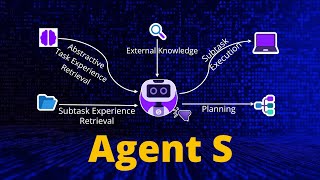
Agent-S: Understanding GUI Agents and Their Components
Explore the mechanics of GUI agents through Agent-S, examining hierarchical planning, memory systems, and computer interfaces for enhanced agent interactions.
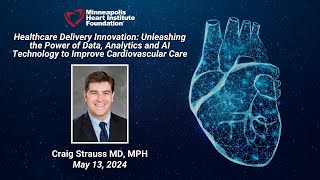
Unleashing the Power of Data, Analytics and AI Technology to Improve Cardiovascular Care
Discover how data analytics and AI technologies revolutionize cardiovascular healthcare delivery, enhancing patient outcomes and transforming treatment approaches in modern cardiology.
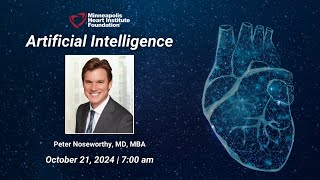
Application of Artificial Intelligence to ECG Analysis
Discover how artificial intelligence transforms ECG interpretation and analysis, exploring cutting-edge applications in cardiovascular diagnostics and patient care through expert medical insights.

Artificial Intelligence Applications in Cardiac Imaging
Discover how AI transforms cardiac imaging through practical applications, diagnostic improvements, and emerging technologies in modern cardiology practice.