
Getting Started with TensorFlow 2.0 - Google I/O'19
Explore TensorFlow 2.0's user-friendly APIs for creating neural networks. Learn when to use Keras Sequential, Functional, and Subclassing APIs through practical code examples.
Machine Learning on Your Device - The Options
Explore TensorFlow's options for integrating machine learning into mobile apps and edge devices, from model training to deployment using TensorFlow Lite.
Inside TensorFlow - TF Input Pipeline
Explore TensorFlow's tf.data input pipeline, covering data sources, transformations, performance optimizations, and advanced features for efficient data handling in machine learning workflows.

TensorFlow Extended - TFX Overview and Pre-Training Workflow
Explore TensorFlow Extended's pre-training workflow, focusing on data validation and transformation for robust machine learning pipelines. Learn key components and best practices for efficient ML development.

Swift for TensorFlow - The Next-Generation Machine Learning Framework
Explore language-integrated automatic differentiation and optimized tooling in Swift for TensorFlow, enhancing machine learning productivity and innovation.

Deep Learning for Fundamental Sciences Using High-Performance Computing
Exploring deep learning applications in fundamental sciences using high-performance computing to uncover universe secrets and improve discovery sensitivity.
Tensor2Tensor - TensorFlow at O’Reilly AI Conference, San Francisco '18
Explore state-of-the-art deep learning models and datasets with Tensor2Tensor, accelerating ML applications like translation, parsing, and image captioning.
TensorFlow for JavaScript - TensorFlow at O’Reilly AI Conference, San Francisco '18
Explore TensorFlow.js: Learn to train, deploy, and perform transfer learning in browsers and Node.js. Includes live demos and practical insights for machine learning workflows.
Distributed TensorFlow Training - Google I/O 2018
Learn to scale TensorFlow training across multiple GPUs and machines efficiently. Explore distribution strategies, performance optimization techniques, and practical implementation using Google Cloud.

Advances in Machine Learning and TensorFlow - Google I/O '18
Explore cutting-edge machine learning applications in robotics, astronomy, and art through short presentations by top TensorFlow researchers at Google I/O '18.

TensorFlow and Deep Reinforcement Learning, Without a PhD - Google I/O '18
Learn to implement deep reinforcement learning with TensorFlow, teaching a neural network to play Pong using only pixel data. No prior expertise required.
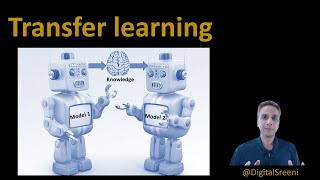
Introduction to Transfer Learning
Explore transfer learning to adapt pre-trained networks for microscopy applications, enhancing accuracy with limited labeled data and reducing training time.
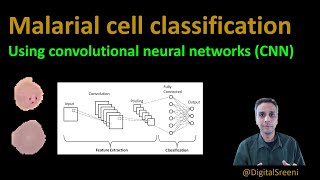
Malarial Cell Classification Using CNN
Learn to classify malarial cells using CNN in Python. Covers dataset acquisition, TensorFlow setup, network design, and result analysis for detecting parasitized and healthy cells.
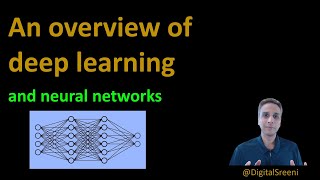
An Overview of Deep Learning and Neural Networks
Comprehensive introduction to deep learning concepts, covering neural networks, convolution, pooling, normalization, and more. Includes code examples for practical implementation.
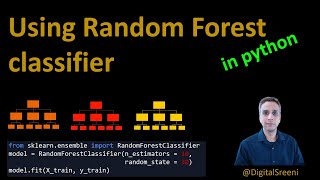
How to Use Random Forest in Python
Learn to implement Random Forest in Python for data analysis, including data importing, feature engineering, and model fitting techniques.
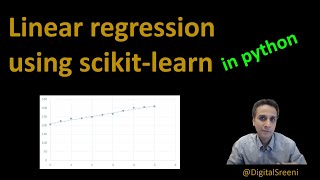
Linear Regression Using Sci-Kit Learn in Python
Learn to implement linear regression using Sci-Kit Learn in Python, from data import to model creation, evaluation, and prediction. Hands-on coding with real-world data.
What Is Machine Learning Anyway?
Explore the fundamentals of machine learning, its applications in microscopy, and different types including supervised and unsupervised learning.
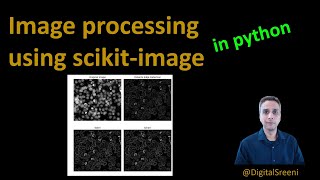
Introduction to Image Processing Using Scikit-Image in Python
Learn essential image processing techniques using scikit-image in Python, including resizing, edge detection, and segmentation for microscopy-based assays like wound healing.
Convolutional Neural Networks
Explore convolutional neural networks for computer vision, covering feature extraction, network architecture, and real-world applications like self-driving cars in this comprehensive lecture.

MIT 6.S191 - Recurrent Neural Networks
Explore recurrent neural networks, LSTMs, and attention mechanisms for sequence modeling. Learn backpropagation through time, gradient issues, and practical applications in deep learning.

Introduction to Deep Learning
Comprehensive introduction to deep learning fundamentals, covering perceptrons, neural networks, loss functions, gradient descent, backpropagation, and regularization techniques.