A Quick Guide to Machine Learning
Explore foundational machine learning concepts and their practical applications using Visual Studio Code. Learn through demos, model training, and discussions on responsible AI.
VS Code, Azure ML, and GitHub Codespaces
Configure VS Code for Azure ML projects on GitHub Codespaces, a cloud-based development environment. Learn setup, extension management, and terminal customization for efficient cloud-based machine learning workflows.
Evolution of Integration - Solving Enterprise Challenges
Explore enterprise integration evolution, patterns, and solutions. Learn about API management, cloud integration, scalability, event-driven messaging, and integrating ML and low-code development for business success.
MLOps Platforms From Zero - Databricks, MLFlow-MLRun-SKLearn
Comprehensive guide to building MLOps platforms using Databricks, AutoML, SKLearn, and AWS. Covers end-to-end process from project setup to model deployment, including CI/CD, experimentation, and containerization.
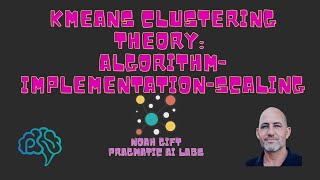
K-Means Clustering - Theory, Algorithm, Implementation, Scaling
Comprehensive exploration of k-means clustering, covering theory, implementation, and scaling techniques. Includes hands-on demonstrations and practical applications using cloud computing resources.
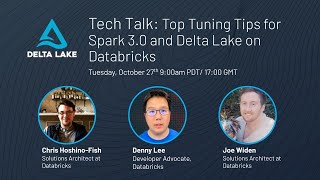
Tech Talk - Top Tuning Tips for Spark 3.0 and Delta Lake on Databricks
Learn top tuning tips for Apache Spark 3.0 and Delta Lake on Databricks. Discover optimal join strategies, machine sizing, merge operation speedups, and job simplification techniques for enhanced big data processing.

Deep Learning - All Optimizers in One Video - SGD with Momentum, Adagrad, Adadelta, RMSprop, Adam Optimizers
Comprehensive exploration of deep learning optimizers, covering gradient descent, SGD, momentum, Adagrad, Adadelta, RMSprop, and Adam, with detailed explanations and comparisons.
Implementation of End to End Kaggle Machine Learning Project With Deployment
Comprehensive guide to implementing a machine learning project for car price prediction, covering data exploration, model fitting, and deployment on Heroku.
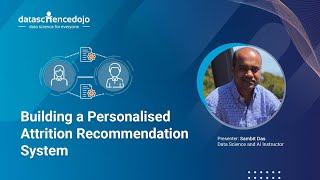
Building a Personalised Attrition Recommendation System
Comprehensive guide to building an attrition recommendation system, covering data analysis, predictive modeling, and strategy development to prevent employee churn and improve workforce retention.
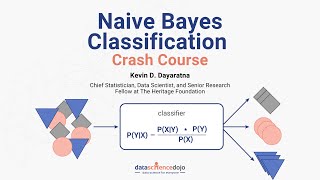
Crash Course on Naive Bayes Classification
Comprehensive introduction to Naive Bayes classification, covering theory and practical applications through R coding examples, from probability basics to real-world predictive models.
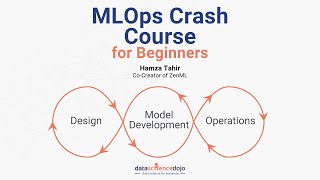
MLOps Crash Course for Beginners
Learn to create and deploy reproducible MLOps pipelines, covering key concepts like continuous training, drift detection, and model deployment for real-world data science value beyond Jupyter notebooks.
Finding the Tallest Tree - Comparing Tree-Based Models
Explore various tree-based models in R, comparing decision trees, random forests, and boosted trees. Learn about different packages, their implementation, and evaluate models based on user-friendliness, accuracy, and speed.
Ace the Data Science Interview with Nick Singh
Learn strategies to excel in data science interviews, from landing interviews to acing technical questions and case studies. Gain insights on portfolio building, cold-emailing, and mastering various interview components.
MLOps Masterclass - Theory to DevOps to Cloud-Native to AutoML
Comprehensive guide to MLOps: from theory to implementation, covering DevOps, cloud-native solutions, and AutoML. Learn to build, deploy, and manage machine learning systems across various platforms and technologies.
AI & ML Workflows with Kubernetes
Explore strategies to accelerate and automate AI/ML workflows using Kubernetes, leveraging open-source tools like Jupyter Notebooks and TensorFlow for efficient development and deployment.
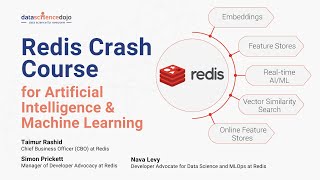
Redis Crash Course for Artificial Intelligence and Machine Learning
Explore Redis for AI/ML: Learn key-value stores, real-time deployment, feature stores, and vector databases. Gain practical skills for efficient data management in machine learning applications.
Building a Business Case for Your Machine Learning Idea
Learn a 10-step checklist to build a business model for your machine learning idea, covering customer identification, problem definition, data sources, ethical considerations, pricing, and revenue generation.

Building a Music Recommendation Engine
Learn to build a music recommendation engine using AudioSet dataset, embedding generation, and ANNOY algorithm. Hands-on coding and practical implementation for personalized music suggestions.

Gradient Descent, How Neural Networks Learn
Explore gradient descent and neural network learning through animations, examples, and expert insights. Gain a deeper understanding of cost functions, network analysis, and cutting-edge research in machine learning.

Taylor Series
Explore the power of Taylor polynomials for approximations and analysis, covering cos(x), e^x, geometric interpretations, and convergence issues in this animated math lesson.

How to Create a 2D Liquid Reveal in Cinema 4D
Learn to create stylish 2D liquid reveals in Cinema 4D using Sketch Materials, 3D gradients, Xpresso, and Sketch & Toon opacity. Master techniques for print offset looks and animated wipe transitions.