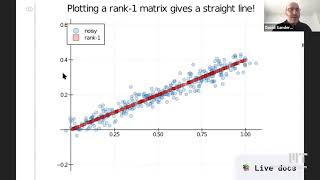
Principal Component Analysis - Lecture 8
Explore Principal Component Analysis: from matrix rank to SVD. Learn to measure data cloud size, understand correlated data, and navigate high-dimensional spaces using statistical techniques.
Transformations and Automatic Differentiation in Computational Thinking - Lecture 3
Explore transformations and automatic differentiation in Julia, covering linear and non-linear transformations, function types, and applications in machine learning, with practical examples and visualizations.
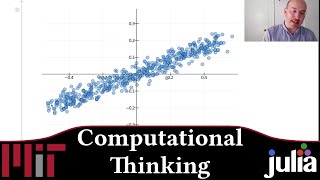
Understanding Structure in Data - Week 3
Explore data structure analysis using Julia, covering matrix rank, data visualization, PCA, and building a simple recommendation engine. Gain practical insights into advanced data science concepts.
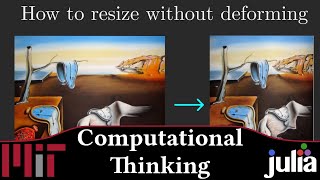
Seam Carving and Dynamic Programming - Week 2 - MIT Fall 2020
Explore seam carving algorithm for intelligent image resizing, covering edge detection with gradients and optimal path finding using dynamic programming.
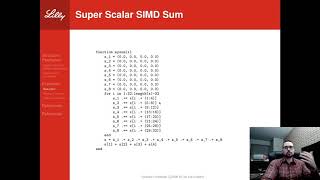
Loop Analysis and Vectorization in Julia - JuliaCon 2020
Explore LoopVectorization.jl for efficient loop representation, cost modeling, and vectorization strategies in Julia, enhancing performance through intra-core parallelism and SIMD operations.
Flux - The Elegant Machine Learning Library for Julia
Explore Flux, an intuitive machine learning library for Julia, featuring state-of-the-art performance, automatic differentiation, and innovative compiler technology for efficient and flexible ML development.

Tricks and Tips in Numerical Computing - Keynote
Explore advanced numerical computing techniques, from complex differentiation to low-precision arithmetic, with insights on error analysis, matrix operations, and IEEE standards for improved computational accuracy and efficiency.
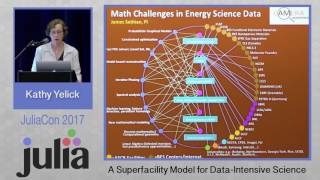
A Superfacility Model for Data-Intensive Science
Explore data-intensive science challenges, high-performance computing, and the role of programming languages like Julia in addressing big data and computational demands in scientific research.
Applied Hydrodynamic Modelling
Explore hydrodynamic modeling applications in environmental planning and structural design through case studies of the Coorong estuary and Brisbane River, highlighting unique approaches and key lessons learned.

End to End Machine Learning Project Implementation with Dockers, GitHub Actions and Deployment
Comprehensive guide to implementing a machine learning project, covering data analysis, model training, web application development, and deployment using Docker and GitHub Actions.

Complete Machine Learning in 6 Hours - Krish Naik
Comprehensive machine learning tutorial covering key algorithms, techniques, and practical implementations for regression, classification, clustering, and ensemble methods.
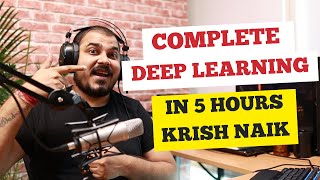
Deep Learning Indepth Tutorials With Krish Naik
Comprehensive deep learning tutorial covering key concepts, techniques, and practical implementations, from perceptrons to CNNs, with hands-on examples and expert insights.
How to Deploy an ML App on Azure App Service
Learn to develop and deploy an interactive machine learning app on Azure, covering UI creation, model development, and CI/CD configuration for seamless production deployment.

Writing Unit Tests for Data Science Code
Learn best practices for unit testing data science code, including handling data inputs, model training, and evaluation. Gain insights on bridging software engineering and data science for more robust ML applications.

From Data to Dashboard - Make an Interactive Model
Learn to create an interactive dashboard from raw data using Python. Master data cleaning, exploration, modeling, and visualization techniques for real-world data science projects.

How to Validate Your Model & Data and Easily Avoid Common ML Pitfalls
Explore common ML pitfalls and learn effective strategies for model and data validation. Gain practical insights on avoiding biases, data leakages, and performance instability through hands-on demonstrations and real-life examples.

Crash Course on Transfer Learning
Explore transfer learning in deep learning models, including its concept, applications, benefits, and methods. Learn how models leverage prior knowledge for improved performance and efficiency.

Putting MLOps into Practice
Streamline your machine learning lifecycle with MLOps best practices, from project initiation to model deployment and monitoring. Learn practical implementation strategies and reference architectures.

Introduction to Hierarchical Clustering with College Scorecard Data
Learn hierarchical clustering using College Scorecard data to group similar schools. Explore clustering methods, data preparation, and practical application for student decision-making in higher education.
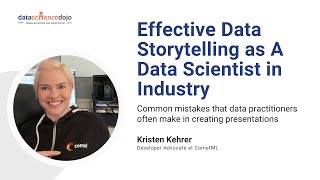
Effective Data Storytelling as a Data Scientist in Industry
Learn effective data storytelling techniques for industry presentations. Avoid common mistakes, improve communication of ML models, and craft compelling data stories to enhance stakeholder relationships.
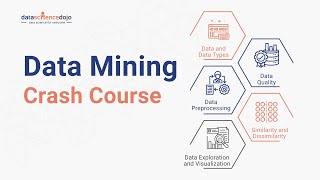
Data Mining Crash Course
Comprehensive overview of data mining essentials, covering data types, quality, preprocessing, similarity analysis, and visualization techniques for effective data-driven decision making.