
Privacy-Preserving Machine Learning with Fully Homomorphic Encryption
Explore Fully Homomorphic Encryption for privacy-preserving machine learning, enabling zero-trust interactions and secure model deployment on untrusted servers.
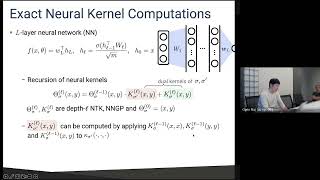
Fast Neural Kernel Embeddings for General Activations
Explore fast sketching methods for approximating multi-layered NNGP and NTK matrices with various activation functions, overcoming limitations of prior works and achieving significant speedups.
Tree Learning: Optimal Algorithms and Sample Complexity - Hierarchical Clustering and PAC Learning
Explore optimal algorithms and sample complexity for learning hierarchical tree representations from labeled data, covering PAC learning, online learning, and efficient tree classifier construction.

Auto-bidding in Online Advertising: Campaign Management and Fairness
Explore auto-bidding strategies in digital advertising, focusing on conversion maximization, ROI constraints, and fairness in auction outcomes. Learn efficient algorithms for multi-channel optimization.

A Nearly Tight Analysis of Greedy k-means++
Explore the greedy k-means++ algorithm's performance, analyzing its approximation guarantees and comparing it to the original k-means++ method for solving the k-means problem.
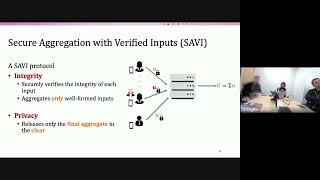
EIFFeL - Ensuring Integrity for Federated Learning
Explore secure federated learning with EIFFeL, a framework ensuring update privacy and integrity while detecting and removing malformed data to prevent model poisoning.
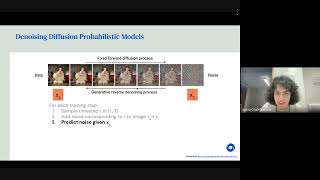
Differentially Private Diffusion Models Generate Useful Synthetic Images
Explore privacy-preserving synthetic image generation using diffusion models. Learn techniques for fine-tuning pre-trained models to achieve state-of-the-art results on CIFAR-10 and Camelyon17 datasets.
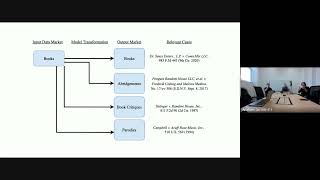
Foundation Models and Fair Use - Legal and Ethical Implications
Explore legal and ethical implications of training foundation models on copyrighted material. Analyze fair use doctrine, potential risks, and technical mitigations for model development and deployment.
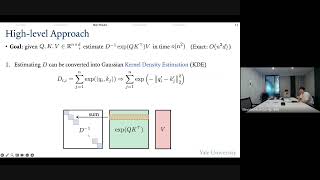
Accelerating Transformers via Kernel Density Estimation - Google TechTalk
Explore efficient Transformer acceleration using kernel density estimation. Learn innovative techniques for handling long sequences and improving performance in deep learning models.
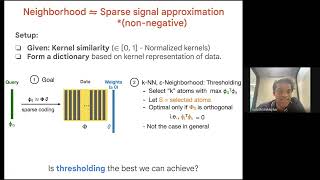
Revisiting Nearest Neighbors from a Sparse Signal Approximation View
Explore nearest neighbor methods from a sparse signal approximation perspective, uncovering improved neighborhood definitions and their applications in graph-based signal processing and machine learning.
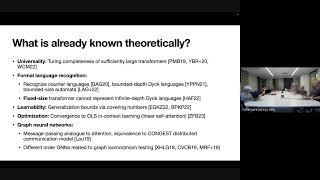
Representational Strengths and Limitations of Transformers
Explore the mathematical analysis of attention layers in transformers, comparing their representation power to other architectures and examining complexity parameters in various tasks.
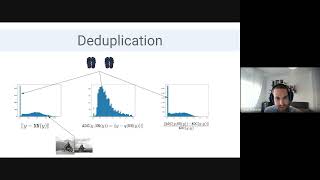
Efficient Training Image Extraction from Diffusion Models
Explore efficient techniques for extracting training images from diffusion models, addressing privacy concerns and copyright issues while uncovering insights into image duplication and template copying.
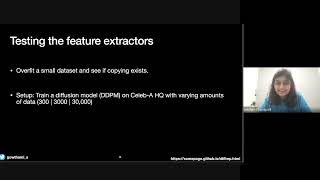
Understanding and Mitigating Copying in Diffusion Models
Explore frameworks for detecting replication in diffusion models, identify memorization factors, and learn techniques to reduce data replication during training and inference.
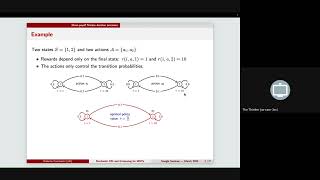
Fixed-point Error Bounds for Mean-payoff Markov Decision Processes
Explore optimal transport techniques for deriving finite-time error bounds in reinforcement learning, focusing on mean-payoff Markov decision processes and stochastic fixed point iterations.
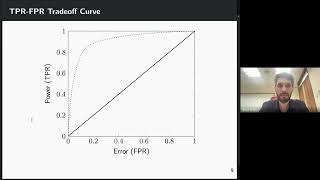
Low Cost High Power Membership Inference Attacks
Explore robust, efficient membership inference attacks for machine learning privacy risk assessment. Learn to differentiate population and training data with minimal computational overhead.
The Data Minimization Principle in Machine Learning
Explore data minimization in machine learning, its challenges, and practical implementations. Examine optimization-based formalization and applications in high-stakes domains, revealing insights on privacy and efficiency.
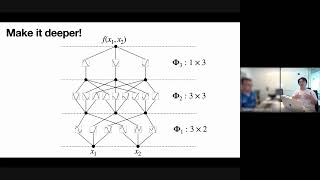
Kolmogorov-Arnold Networks - Alternatives to Multi-Layer Perceptrons
Explore Kolmogorov-Arnold Networks as alternatives to MLPs, offering improved accuracy and interpretability in data fitting and PDE solving. Discover their potential for scientific collaboration and law discovery.

Privacy Preserving Machine Learning with Fully Homomorphic Encryption
Explore Fully Homomorphic Encryption's role in advancing secure, privacy-preserving machine learning applications, focusing on Concrete ML and its integration with other technologies.

Robust Distortion-free Watermarks for Language Models
Explore robust watermarking techniques for language models, focusing on edit-resistant methods that preserve text distribution. Learn about key-based protocols and their applications.
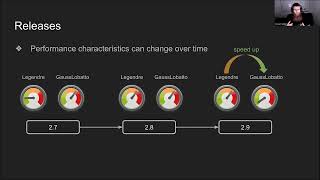
Configuration-Aware Performance Analysis for High-Performance Computing Frameworks
Explore configuration-aware performance analysis for HPC frameworks, focusing on feature selection impact and identifying performance regressions across software releases.
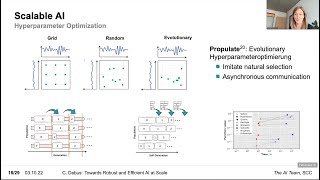
Towards Robust and Efficient AI at Scale
Explore robust, efficient AI for scientific time series forecasting. Learn scalable transformer architectures, energy optimization, and balancing performance with sustainability in large-scale AI applications.