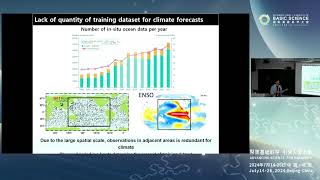
Deep Learning for Global Climate Monitoring and Predictions
Explore advanced deep learning techniques for climate prediction, including few-shot learning and data assimilation, to enhance accuracy in global climate monitoring and forecasting.
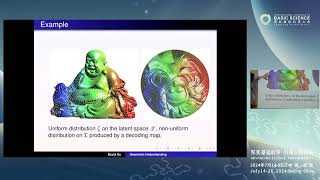
A Geometric View of Optimal Transport and Generative Models - ICBS 2024
Explore geometric interpretations of optimal transport theory and its application to generative models, analyzing Sora's principles and proposing improvements for physical accuracy.
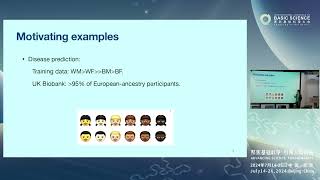
Multi-dimensional Domain Generalization with Low-Rank Structures
Explore novel tensor-based approach for robust domain generalization in linear regression, addressing challenges in underrepresented populations and achieving reliable, interpretable results with theoretical guarantees.
Reproducible ML Experimentation with Rubicon-ML
Explore reproducible ML experimentation using rubicon-ml, an open-source Python library for capturing and storing model training information in a searchable way, ensuring full reproducibility and audit-ability.
What's New with rubicon-ml? Capital One's Solution for Logging the ML Lifecycle
Explore rubicon-ml, Capital One's open-source solution for standardizing ML lifecycle logging. Learn to integrate it with popular libraries for efficient model development, monitoring, and governance.
The Search for Transparency and Accountability in the Age of AI - RAI and XAI as Essential Tools
Explore responsible AI and explainable AI as crucial tools for building ethical, transparent, and trustworthy AI systems. Uncover their synergy in addressing fairness, accountability, and interpretability challenges.
Detect Anything with DarkNet/YOLO
Explore the Darknet/YOLO framework for Computer Vision, its history, and practical applications through examples. Learn how to detect objects in images and videos.
An AI-Powered Journey to Learning Python
Explore how AI tools like GitHub Copilot and ChatGPT can enhance the process of learning Python, with insights and stories to apply to your own tech learning journey.
Spinning Your Drones with Cadence Workflows, Apache Kafka and TensorFlow
Explore building a real-time drone delivery app using Cadence and Apache Kafka, then apply TensorFlow for machine learning on streaming data to predict busy shops.

An Interdisciplinary Expert Pool for Natural Language Understanding
Explore an innovative cross-disciplinary approach to address ethical challenges in AI language models, focusing on data representation, fairness, and responsible innovation.
Deep Learning for Self-Driving Cars
Explore deep learning's role in autonomous driving software, addressing challenges and research in reducing traffic fatalities through AI-driven solutions.
Retrieval Augmented Generation for Threat Intelligence
Explore how Recorded Future built a retrieval augmented generation system using LLMs as an interface to their threat intelligence graph, addressing challenges in real-time data leveraging, reliability, and speed.

Red Teaming Language Model Detectors with Language Models
Explore strategies to compromise LLM detectors using synonym replacement and instructional prompts, revealing vulnerabilities in text detection systems and emphasizing the need for robust safeguards.

Do Androids Know They're Only Dreaming of Electric Sheep?
Explore transformer language models' internal representations to detect and analyze hallucinatory behavior in AI-generated content, with insights on task-dependent patterns and evaluation methods.

The Data Provenance Initiative: A Large Scale Audit of Dataset Licensing and Attribution in AI
Explore a comprehensive audit of 1800+ text datasets, examining legal and ethical risks in AI data practices. Gain insights into dataset lineage, licensing, and the divide between open and closed datasets.
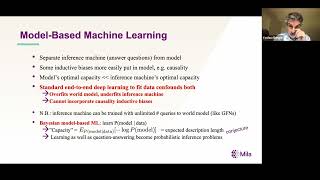
Large Neural Nets for Amortized Probabilistic Inference in Highly Multimodal Distributions
Explore amortized probabilistic inference using large neural networks for complex distributions. Learn about GFlowNets and their potential to improve AI systems with Bayesian and causal understanding.
Making GenAI Safe, Trustworthy and Fit for Purpose with Auto Alignment
Enhance fairness, robustness, and safety of generative AI through alignment templating. Learn to measure model performance, improve with minimal human intervention, and adapt for specific use cases.
Unleashing the Full Potential of Your Recommender System in Production
Improve recommender systems through production monitoring, data insights, and drift detection to enhance performance and drive better business outcomes.
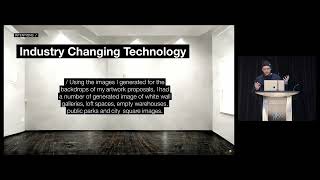
Tips and Tricks for Intentional Text-to-Image Generation
Explore creative ML evolution in arts, observing model biases and future impacts on creative fields and popular culture through an artist's reflective perspective.
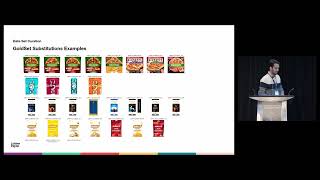
Solving Product Substitutions in Grocery E-Commerce Through Self-Supervised Machine Learning
Explore innovative self-supervised ML techniques for solving product substitution challenges in grocery e-commerce, improving customer experience and business metrics.
Outracing Champion Gran Turismo Drivers With Deep Reinforcement Learning
Explore deep reinforcement learning techniques used to train AI agents that outperform world-class e-sports drivers in Gran Turismo racing simulations.