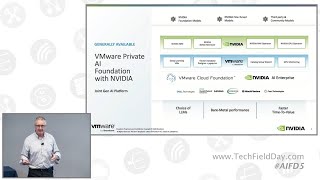
VMware Private AI Foundation with NVIDIA - Technical Overview and Demo
Discover how VMware's Private AI Foundation with NVIDIA streamlines AI development through automated infrastructure management, RAG capabilities, and simplified GPU resource allocation for enterprise applications.
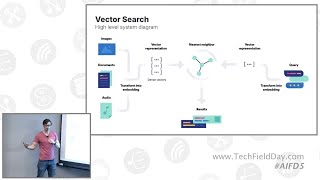
Elasticsearch Vector Database - Introduction to Vector Search and HNSW Algorithm
Dive into Elasticsearch's evolution from a search engine to a powerful vector database, exploring HNSW algorithms, vector compression, and hybrid search capabilities for enhanced data retrieval.
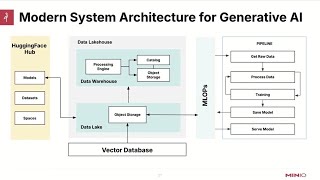
MinIO Enterprise Object Store: AI Features and RAG Deployment Demo
Explore MinIO's enterprise object store capabilities for AI workloads, featuring advanced observability, security, and performance tools for managing massive-scale data operations across cloud environments.
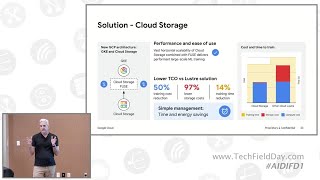
Google Cloud Storage Solutions for AI and ML Workloads - Performance Optimization and Management
Discover how Google Cloud Storage optimizes AI/ML workloads through GCS FUSE, Anywhere Cache, and Parallel Store features, enhancing performance and reducing training costs for machine learning development.
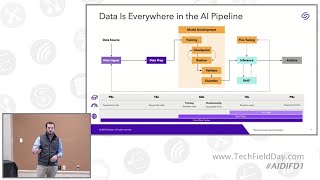
Data Infrastructure's Impact on AI Value Creation
Explore how data infrastructure shapes AI development, from training data quality to edge computing deployment, emphasizing storage solutions and performance optimization across the complete AI pipeline.
Benefits of FC-NVMe for Containerized Machine Learning Models
Discover how FC-NVMe optimizes containerized machine learning models, exploring Docker fundamentals, ML storage requirements, and performance benefits for efficient model training and deployment.
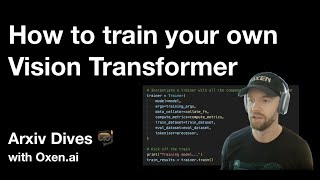
Training Vision Transformers for Real-Time Image Classification
Master Vision Transformer implementation for real-time emotion classification in video, including hands-on training techniques and comparison with CLIP for zero-shot classification tasks.
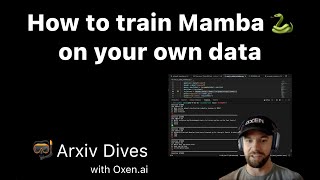
How to Fine-Tune Mamba for Question Answering
Dive into practical Mamba language model fine-tuning for question-answering tasks, from basic prompt engineering to complete model training implementation.
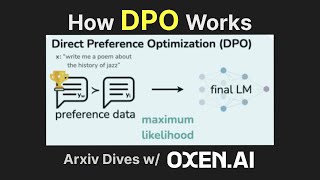
Direct Preference Optimization (DPO) vs RLHF - Understanding Language Model Training
Delve into Direct Preference Optimization (DPO) and discover how it eliminates the need for separate reward models in language model training, offering a more efficient alternative to RLHF.
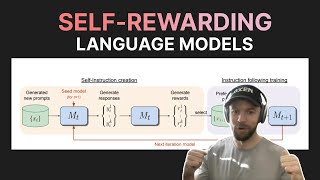
Deep Dive Into Self-Rewarding Language Models - Training Models as Their Own Judges
Explore how language models can be trained to evaluate and improve themselves, eliminating the need for human-labeled data while achieving superior performance in AI development and training.
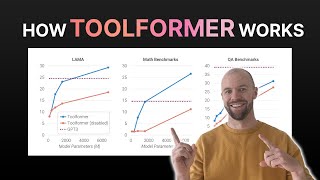
Teaching Language Models to Use Tools - Deep Dive into Toolformer
Explore how language models can self-learn to utilize tools through API calls, covering architecture, training data generation, filtering mechanisms, and experimental results from Meta's Toolformer paper.
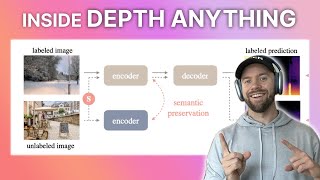
Depth Anything: Single Image Depth Map Generation Using Neural Networks
Explore neural network techniques for generating accurate depth maps from single images, covering architecture, evaluation methods, and real-world applications of the Depth Anything model.
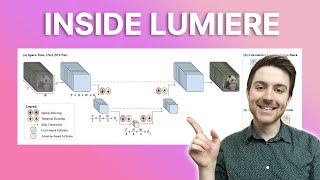
Understanding Lumiere: A Space-Time Diffusion Model for Video Generation
Explore Lumiere's innovative space-time diffusion model for video generation, covering its architecture, solutions to common problems, and practical applications in coherent motion synthesis.
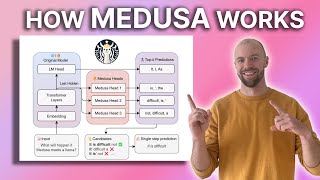
Understanding Medusa: A Framework for LLM Inference Acceleration with Multiple Decoding Heads
Dive into the mechanics of Medusa, a framework that accelerates LLM inference through parallel token prediction and tree-based attention, enhancing AI model performance and efficiency.

Understanding Diffusion Transformers and the Technology Behind Sora
Dive into the technical foundations behind OpenAI's Sora, exploring diffusion transformers, U-Nets, and latent diffusion models that power this groundbreaking video generation technology.
Fine-Tuning Self-Rewarding Language Models with Mistral 7B
Dive into implementing Meta's Self-Rewarding Language Model with Mistral 7B, covering fine-tuning techniques, data preparation, prompt generation, and practical demonstrations.
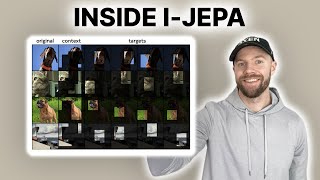
Understanding I-JEPA: A Non-Generative Approach to Self-Supervised Learning from Images
Dive into Meta AI's I-JEPA framework for self-supervised image learning, exploring its architecture, methodology, and advantages over traditional approaches in computer vision and neural networks.
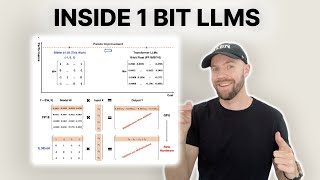
Understanding 1-Bit Large Language Models - From Theory to Implementation
Dive into the revolutionary concept of 1-bit Large Language Models, exploring how weights can be represented with simple integers (0, 1, -1) instead of complex floating-point numbers.
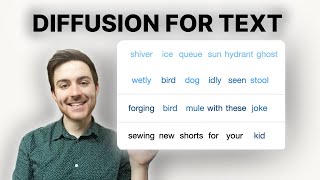
Understanding Text Generation Through Diffusion Models - From Theory to Implementation
Dive into discrete diffusion modeling for text generation, exploring probability distributions, score-based modeling, and practical applications in generative AI that rival GPT-2's capabilities.
Training LLMs with Diffusion Techniques - From Theory to Implementation
Dive into implementing text generation using discrete diffusion modeling, covering implementation details from basic concepts to training scripts for creating GPT-2 competitive models.
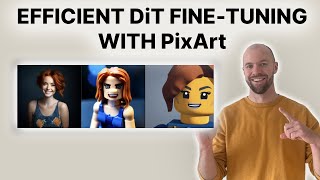
Efficient Text-to-Image Generation with PixART-α DiT Fine-Tuning
Dive into efficient text-to-image generation using PixART-α, exploring fine-tuning techniques, design principles, and practical implementation steps for diffusion transformers.