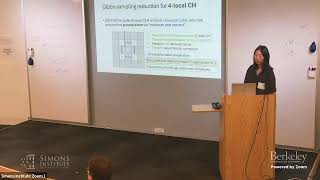
Gibbs State Preparation for Commuting Hamiltonian - Mapping to Classical Gibbs Sampling
Explore quantum Gibbs state preparation through mapping commuting Hamiltonians to classical systems, focusing on efficient sampling methods and applications in quantum computing.
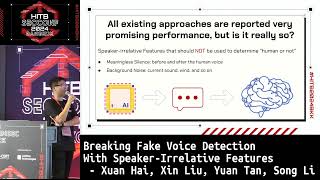
Breaking Fake Voice Detection with Speaker-Irrelative Features
Delve into advanced techniques for bypassing fake voice detection systems through Speaker-Irrelative Features, achieving over 80% success rate by manipulating background noise and mute segments.
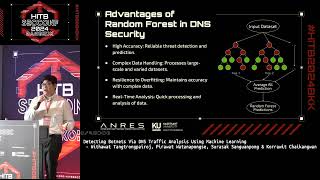
Detecting Botnets via DNS Traffic Analysis Using Machine Learning
Discover advanced techniques for detecting botnet-infected devices through DNS traffic analysis, combining natural language processing and machine learning for enhanced network security monitoring.
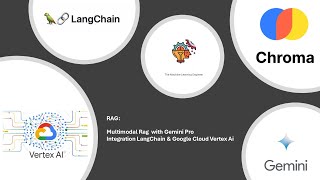
Multimodal RAG with LangChain, VertexAI, Gemini Pro and Chroma
Aprende a construir aplicaciones RAG multimodales utilizando LangChain, VertexAI y Chroma para procesar eficientemente datos no estructurados como PDFs e imágenes.
Multimodal RAG with LangChain, VertexAI, Gemini Pro and Chroma
Master building multimodal RAG systems using LangChain and VertexAI SDK to process PDFs and images, implementing advanced data retrieval techniques with Chroma vector storage.
Multimodal RAG with LlamaIndex, Google AI, Gemini Pro and Qdrant
Explore cómo crear aplicaciones RAG multimodales utilizando LlamaIndex, Google AI Studio SDK y Gemini Pro para extraer información estructurada de imágenes con Qdrant como vector store.
eBPF-Powered Observability for Sustainable Computing
Discover how to build eBPF-powered observability solutions for sustainable computing, optimizing AI/ML workloads on Kubernetes to reduce energy consumption and environmental impact while maintaining performance.
Exploring Pillars of Trustworthy AI: Robustness and Fairness
Discover how to build robust and fair AI models by exploring vulnerabilities, implementing defense strategies, and addressing bias in machine learning systems through practical techniques.
Helping the PyTorch Community Improve the Security Posture of this Popular AI Framework
Discover how to enhance PyTorch's security through OpenSSF Best Practices, dependency management, and proactive measures for safer AI framework implementation and neural network development.
Data Prep Kit: A Comprehensive Cloud-Native Toolkit for Scalable Data Preparation in GenAI Applications
Discover how to prepare and transform text and code datasets for LLM training using Data Prep Kit, an open-source toolkit that enables scalable data preparation for GenAI applications.
Open Source LLMs in the Cloud - Scalable Solutions
Explore scalable deployment strategies for open-source LLMs in cloud environments, comparing Python solutions, native runtimes, and WebAssembly approaches for optimal performance and resource efficiency.
Democratizing Diffusion Models with Diffusers
Discover how to create and edit photo-realistic images using Diffusers, an open-source Python library that makes advanced image generation accessible through diffusion models.
Optimize Your AI Cloud Infrastructure: A Hardware Perspective
Dive into hardware-level optimization techniques for AI cloud infrastructure, exploring GPU clusters, NUMA topology, and performance tuning strategies using H100 clusters and MLPerf benchmarks.
Unlocking Local LLMs with Quantization
Discover how quantization optimizes LLMs for local deployment, from pre-training techniques to fine-tuning methods and inference optimization using cutting-edge approaches and community tools.
Optimizing RAG Systems for Business Applications
Master the implementation of RAG systems in enterprise settings, from dynamic chunking to custom embedding models, while learning optimization techniques for enhanced AI response accuracy and relevance.
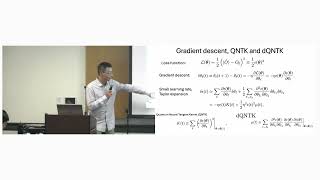
Dynamical Transition in Controllable Quantum Neural Networks with Large Depth
Delve into quantum neural networks' training dynamics, exploring transcritical bifurcation transitions, Lotka-Volterra equations, and experimental validations on IBM quantum devices.

Harnessing Quantum Dynamics for Inference on Data Embedded in Weak Signals
Explore quantum dynamics for data processing, focusing on noise management in physical neural networks and innovative approaches to quantum measurement and sampling challenges.
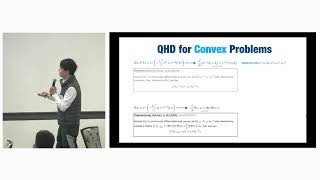
Quantum Dynamics for Continuous Optimization - Quantum Hamiltonian Descent
Explore quantum Hamiltonian descent algorithms for solving complex optimization problems, focusing on practical applications and implementation through the QHDOPT software package.

Write Your Own AI Agent with Monte Carlo Tree Search - Building a Tic-Tac-Toe Game
Master Monte Carlo Tree Search algorithm implementation by building a Tic-Tac-Toe AI agent, exploring its applications in modern AI systems like AlphaGo and O1 models.
Machine Learning Integration with Knowledge Systems
Explore the intersection of symbolic methods and deep learning, focusing on integrating machine learning with knowledge-based approaches for advancing artificial intelligence.

Comparing Human and AI-Constructed Models of a Neural Circuit
Explore groundbreaking research comparing neural circuit models developed by humans and AI, examining their implications for neuroscience and artificial intelligence advancement.