Model Openness Framework: The Path to Openness, Transparency and Collaboration in Machine Learning Models
Explore the Model Openness Framework for machine learning, promoting transparency and collaboration. Learn about its classification system, implementation tools, and benefits for AI ecosystem development.
VeScale - A PyTorch Native LLM Training Framework
Explore a novel PyTorch-native framework for LLM training, combining automatic parallelism and ease of use. Scale your models efficiently with single-device code and transparent nD parallelization.

Question Answering over Documents with RAG - Lecture 6.4
Explore Retrieval-Augmented Generation (RAG) to enhance LLMs with external data, improving accuracy and relevance in corporate settings. Learn to set up and query a RAG system using sample employee data.

Explaining OpenAI's O1 Reasoning Models - Analysis and Demonstration
Explore OpenAI's o1 models: their reasoning capabilities, trade-offs, and performance in various tasks. Includes demos and pricing information for practical understanding.
Developing Local AI Copilots with LangChain, NVIDIA NIM, and FAISS - LLM App Development
Learn to build a local AI copilot using LangChain, NVIDIA NIM, and FAISS. Covers document processing, vector storage, inference with Llama 3, and LangChain orchestration for responsive LLM applications.

Creating Custom Flux AI Photos Without LoRA Using PuLID Technique
Learn to generate personalized Flux AI photos quickly using PuLID technique, without fine-tuning or LoRA. Create custom AI images efficiently with this innovative method.
Effortless Scalability: Orchestrating Large Language Model Inference with Kubernetes
Explore automated deployment of large language models on Kubernetes, leveraging CRDs for seamless management and optimizing GPU utilization through preset configurations and auto-provisioning.
Model Openness Framework: The Path to Openness, Transparency and Collaboration in Machine Learning Models
Explore the Model Openness Framework, a system for rating machine learning models based on openness and completeness, promoting transparency and collaboration in AI development.

Tackling Operational Time-to-Market Decelerators in AI/ML Projects
Explore strategies to accelerate AI/ML project deployment by addressing operational challenges, focusing on MSP collaboration and open-source tool management in hybrid and multicloud environments.
Model Reparametrization with StructuralIdentifiability.jl - JuliaCon 2024
Explore StructuralIdentifiability.jl's new features for rapid identification of identifiable functions and model reparametrization, enhancing modeling and control practices.
Julia Community Reshapes Computation in Geosciences
Explore Julia's impact on geosciences: ecosystem tools, hardware acceleration, and collaborative initiatives revolutionizing Earth observation and software development in the field.

FMIExchange.jl - Foreign Models Through a Familiar Interface
Explore FMIExchange.jl for seamless integration of FMI-compliant models with Julia's DifferentialEquations.jl, enabling multi-model simulations and advanced control strategies in complex systems.

ProcessSimulator.jl - A Differentiable Chemical Process Simulator
Differentiable chemical process simulator leveraging symbolic transformations and automatic differentiation for robust flowsheeting, thermodynamic property calculations, and system-level optimization in Julia.

Combined Stochastic Models for Cancer Patient Trajectories
Integrating diverse clinical data into a unified stochastic model for cancer patient trajectories, combining tumor growth, metastasis, and survival data using Julia for simulation and Bayesian inference.

JSOSuite.jl - One-Stop Solution for Optimization
Explore JSOSuite.jl, a comprehensive optimization package offering automatic solver selection, research-level algorithms, and flexible modeling interfaces for various problem types in Julia.

RxEnvironments - Reactive Multi-Agent Environments
Explore reactive programming for multi-agent environments in Julia. Learn to model complex agent-environment interactions using RxEnvironments.jl, overcoming limitations of traditional reinforcement learning frameworks.

Interpretable Hierarchical Calibration of Agent-Based Models
Explore scientific machine learning's fusion of traditional modeling and ML, focusing on neural network surrogates for agent-based models in epidemiology and automated hierarchical calibration.
RouteLLM - Learning to Route Large Language Models with Preference Data
Optimize LLM deployment with dynamic routing, balancing cost and performance. Learn to train routers using preference data, achieving significant cost reduction while maintaining quality responses.

Covariate Shift - Challenges and Good Practice in Machine Learning
Explore challenges and best practices in covariate shift, a crucial concept in machine learning, with insights on improving model performance and adaptability in changing data distributions.
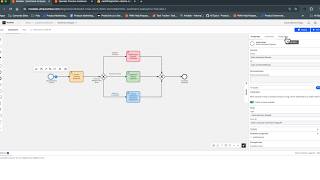
Configuring and Using the Camunda Hugging Face Connector for Customer Sentiment Analysis
Learn to configure and use Camunda Hugging Face Connector for analyzing customer sentiment in BPMN processes. Integrate machine learning to improve customer interactions and automate decision-making based on sentiment analysis.

Flux.1 ControlNet Union and Hyper-SD Performance in ComfyUI
Explore Flux.1's Union ControlNet in ComfyUI, featuring multiple control types and new LoRA models for enhanced image generation with cartoon-realism blend.