The Long-Run Distribution of Stochastic Gradient Descent: A Large Deviations Approach
Explore the long-run behavior of stochastic gradient descent in non-convex problems, analyzing state space visitation patterns and energy level distributions.
Error Bounds for Mean-Payoff Markov Decision Processes
Explore optimal transport techniques for error bounds in reinforcement learning, focusing on mean-payoff Markov decision processes and stochastic fixed point iterations.
Proximal Gradient Methods for Nonsmooth Nonconvex Minimax - A Unified Convergence Analysis
Explore proximal gradient methods for nonsmooth nonconvex minimax problems, analyzing convergence and complexity through a unified framework for parallel and alternating schemes.
Nonconvex Optimization and the Curse of Local Minima - Lessons Learned from Orbital Tomography
Explore nonconvex optimization algorithms, focusing on quality of fixed points in orbital tomography. Gain insights into evaluating algorithm effectiveness beyond convergence speed.
Stochastic Algorithms for Constrained Continuous Optimization
Explore stochastic-gradient-based algorithms for constrained continuous optimization, focusing on interior-point and sequential-quadratic-programming methods with convergence guarantees and practical applications.
Hessian-Aware Stochastic Differential Equation Modeling of SGD
Explore a novel SDE model for SGD that incorporates Hessian information, improving accuracy in capturing escaping behaviors and achieving exact recovery for quadratic objectives.
Bilevel Optimization Problems: Algorithms and Theory
Explore recent developments in bilevel optimization algorithms, their theoretical analysis, and challenges in machine learning and data science applications.
Optimization of Functions with Low Effective Dimensionality
Explore optimization techniques for functions with low effective dimensionality, focusing on random and deterministic subspace methods for nonconvex problems and efficient subspace learning.
The First Optimal Distributed SGD in the Presence of Data, Compute and Communication Heterogeneity
Explore optimal time complexities for parallel optimization methods with heterogeneous data, compute, and communication. Gain insights into efficient distributed SGD algorithms.
Revisiting Inexact Fixed-Point Iterations for Min-Max Problems - Stochasticity and Cohypomonotonicity
Explore advanced optimization techniques for constrained min-max problems, focusing on inexact fixed-point iterations and stochastic algorithms for nonconvex-nonconcave scenarios.
Sum-of-Minimum Model: Joint Optimization of Specialized Models for Heterogeneous Data
Explore joint optimization of specialized models for heterogeneous data using the sum-of-minimum approach. Learn algorithm design, performance bounds, and applications in various machine learning tasks.
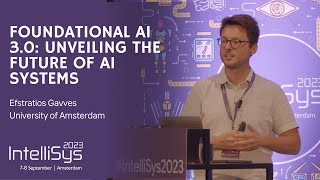
Foundational AI 3.0: Unveiling the Future of AI Systems
Explore AI's evolution from models to systems, focusing on dynamic environments and Foundational Causal Models. Gain insights into the future of AI in robotics, VR/AR, and healthcare.
Unlocking Natural Artificial Intelligence - Bridging AI and Natural Skill Acquisition
Explore natural AI's potential beyond language models. Discover efficient skill learning through environmental interactions and the Free Energy Principle's role in brain computation.
Five Trends in Generative AI - Insights from Tom Mitchell
Explore five key trends in generative AI with Tom Mitchell, including advancements in language models, multimodal systems, and open-source development. Gain insights into AI's future applications and implications.
Towards General Purpose Vision: Insights from Multimodal AI Systems
Explore multimodal AI evolution, from GPT to Visual Programming. Gain insights on integrating text, images, and audio for advanced problem-solving in artificial intelligence systems.
Towards Neuro-Symbolic AI with Knowledge Graphs and Large Language Models
Explore the fusion of neuro-symbolic AI, knowledge graphs, and large language models. Learn how combining these approaches can enhance AI systems' factual understanding and decision-making capabilities.
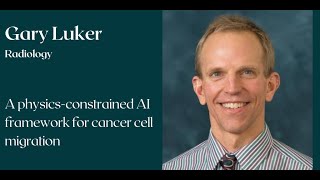
Physics-Constrained AI Framework for Cancer Cell Migration
Explore a physics-constrained AI framework for understanding cancer cell migration, enhancing research in radiology and biomedical engineering.
GENIE: Generative Foundation Models for Automated Climate Science
Explore generative foundation models for automated climate science with Rose Yu's GENIE project, advancing AI applications in environmental research.
Foundation Models for Materials Synthesis
Explore foundation models for materials synthesis, focusing on AI-driven approaches to accelerate discovery and innovation in materials science.
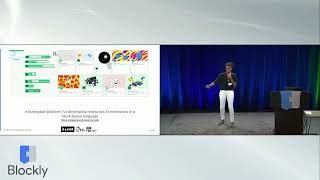
Unleashing Creativity - Blocks and Curricula for K-12 AI Education - Day 2
Explore AI education for K-12 through Blockly, featuring ML blocks, hands-on learning, and innovative curricula designed to democratize opportunities and unleash creativity.
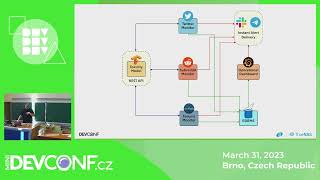
Toxicity Monitoring: Assurance of Community Health
Explore NLP-based toxicity detection for community management, including implementation, long-term value calculation, and impact on open-source project reputation.