
Why is This So Hard? It Should Be Easy - Challenges in Computational Genomics
Explore challenges in computational genomics and learn strategies to overcome complexities in data analysis and interpretation.
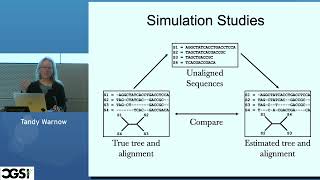
Advances in Large-Scale Multiple Sequence Alignment
Explore cutting-edge techniques in large-scale multiple sequence alignment, focusing on graph clustering, weighted consensus HMM, and phylogeny-aware methods for improved bioinformatics analysis.

Wolfram Optimization - Overview and Advanced Techniques
Explore Wolfram's optimization functions for solving diverse problems, from convex to multidomain, with practical examples and advanced techniques.

Comparison of Papers by Native and Non-Native English Speakers in Physics
Explore linguistic differences in physics papers by native and non-native English speakers, achieving 84% classification accuracy and enhancing scientific communication.

Neural Network Research with Wolfram Language: Exploring Non-Differentiable Boolean Functions
Explore advanced neural network prototyping and research using Wolfram Language, focusing on compact non-differentiable Boolean functions.
Tabular Data Visualization Techniques for n-Dimensional Data
Explore techniques for visualizing n-dimensional data, including projection and pairwise methods, to effectively convey complex information in 2D or 3D plots.

Comparing Social AR Tools: Meta Spark, Lens Studio, and Effect House
Explore key differences between Meta Spark, Lens Studio, and Effect House. Compare interfaces, asset libraries, variables, effects, and machine learning capabilities in these leading Social AR tools.

gRPC and AI: Adapting to Changing Development and Workload Paradigms
Explore AI's impact on development, workloads, and hardware, focusing on gRPC's role in AI and its adaptation to intense model training demands.
Fortifying gRPC Microservices - Beyond JWT with mTLS and SPIFFE
Explore secure gRPC microservices setup using mTLS and SPIFFE. Learn certificate management, key distribution, and modern alternatives to JWT for robust service-to-service authentication.
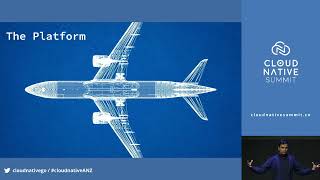
Building Innovative AI/ML Models - Unleashing the Power of Data Mesh Architectures and Platforms
Explore data mesh principles and application platforms to empower AI/ML teams, foster innovation, and streamline model development through democratized data access and collaborative workflows.
Multitask Machine Learning of Collective Variables for Enhanced Sampling of Rare Events
Explore machine learning algorithms for collective variables in enhanced sampling, improving reaction rate calculations and free energy landscapes for complex systems.
Moving Beyond Screening via Generative Machine Learning Models for Materials Discovery
Explore generative machine learning models for materials discovery, moving beyond screening to generate novel structures and chemistries using advanced algorithms and techniques.

Pre-training Molecular Graph Representation with 3D Geometry
Explore molecular graph representation learning, leveraging 3D geometry for enhanced drug and material discovery through self-supervised learning and the GraphMVP framework.

Exploring Chemical Reactions Through Automation and Machine Learning
Explore efficient strategies for generating machine learned potentials to study reaction mechanisms in gas-phase and solution, achieving ab initio accuracy with minimal computational investment.
A Weak Convergence Viewpoint on Invertible Coarse-Graining
Explore weak convergence in invertible coarse-graining, combining force-matching with neural networks to recover fine-grained free energy surfaces in biomolecular systems.

Fully Quantum (Bio)Molecular Simulations - Dream or Reality?
Explore quantum-mechanical and machine learning advances in molecular simulations, their potential impact, and challenges in achieving fully quantum dynamics of complex biomolecular systems.

Solvated Electron: First Principles and Machine Learning Approaches
Explore advanced modeling of solvated electrons using machine learning, overcoming challenges in accuracy and efficiency to study structure, dynamics, and properties across temperatures.

Trust and Loyalty of AI-Based Decisions
Explore the critical aspects of trust and loyalty in AI decision-making processes, examining their implications and challenges.

Reverse Engineering the Visual System
Explorez les mécanismes du système visuel humain à travers une approche d'ingénierie inverse, révélant ses complexités et son fonctionnement fascinant.
Solving Scheduling Problems with Constraint Programming and Graph Neural Networks
Explore innovative approaches combining constraint programming and graph neural networks to tackle complex scheduling challenges.

AI for Physical Models with Geometric Tools
Explore geometric tools for integrating AI into physical models, enhancing understanding and application of advanced modeling techniques.