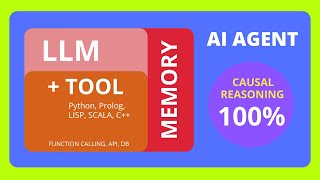
Perfect Reasoning for AI Agents Using ReasonAgain - Symbolic Code Implementation
Discover how to enhance AI agent reasoning through symbolic programming, exploring ReasonAgain's methodology for improving LLM mathematical and logical capabilities across multiple coding languages.

CAP Theorem: Understanding Consistency, Availability and Partition Tolerance in System Design
Explore the fundamental principles of CAP theorem in distributed systems, understanding trade-offs between consistency, availability, and partition tolerance for optimal system design.
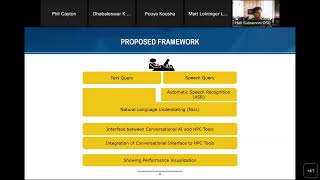
Conversational AI-Enabled User Interface for HPC Tools
Discover how AI-powered conversational interfaces can simplify complex HPC tools, making performance analysis more accessible through natural language commands and improving productivity for both novice and expert users.
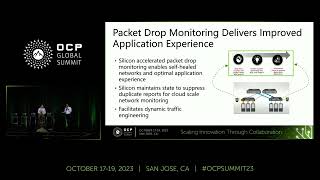
Telemetry-Based Load Balancing of AI/ML Workloads in Self-Healing Networks
Discover how to optimize AI/ML workload performance through telemetry-based load balancing, network self-healing, and in-band monitoring for efficient Ethernet fabric architecture deployment.
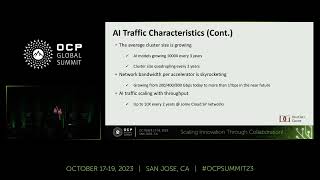
AI Networking Market Overview - Implications for Data Center Infrastructure
Explore the unique characteristics of AI backend networks and their crucial role in connecting accelerated servers for large language models and generative AI workloads.
The Future of AI/ML Innovation Through Row-Scale Disaggregation
Explore how Composable Disaggregated Infrastructure revolutionizes system architecture for AI/ML applications through innovative network fabric design and extended PCIe capabilities.

Open Infrastructure Platforms to Usher in the Age of Generative AI
Explore Meta's infrastructure innovations for GenAI, from MTIA chips to Grand Teton systems, covering deployment strategies, liquid cooling advances, and future data center challenges.
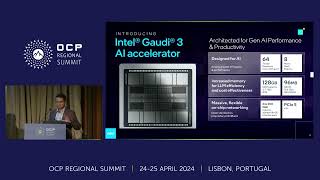
Scaling Systems for Generative AI - Building and Deploying Large Language Models
Discover key strategies for efficiently scaling and deploying generative AI models and large language models across distributed systems using Intel's advanced technologies.
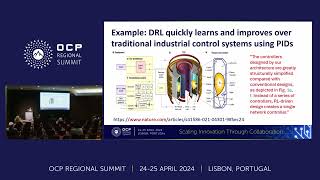
Increasing Energy Efficiency of Server Cooling Using Deep Reinforcement Learning
Discover how Deep Reinforcement Learning optimizes server cooling efficiency, reducing fan energy usage by 40% and achieving 8% overall server energy savings through intelligent thermal management.
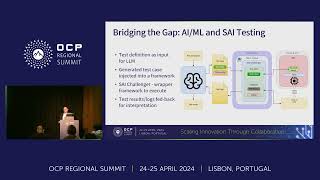
Harnessing the Power of AI/ML to Enhance SAI Testing
Discover how AI/ML algorithms revolutionize SAI testing processes, improving efficiency and coverage for ASIC vendors and OEMs while addressing current testing methodology gaps and automation challenges.
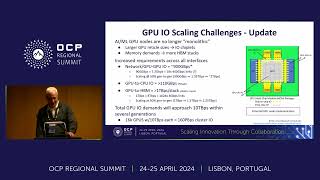
Optical Interconnects for Large-Scale AI Clusters - A Meta Perspective
Explore how optical interconnects and integrated optics solutions address IO challenges in large-scale AI clusters, focusing on Meta's GPU infrastructure and future hardware design requirements.

Augmented Silicon Photonics for Data Center and AI/ML Optical Interconnects
Explore how silicon photonics and III-V materials integration enable higher data throughput and lower power consumption for AI computing through advanced optical interconnect solutions.
Building the Compute Infrastructure of the Future - From Sustainable Silicon to Intelligent Clouds
Explore the evolution of warehouse-scale computing and future innovations in cloud infrastructure, AI-ML computing, and sustainable technology through Google's 25-year journey and upcoming developments.
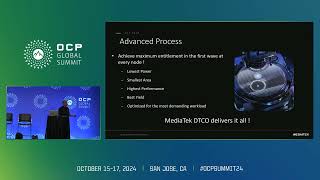
Navigating the AI ASIC Frontier: Trends, Challenges, and Technological Breakthroughs
Explore cutting-edge AI hardware developments and silicon solutions, focusing on data center innovations, technological constraints, and future advancements in AI training infrastructure.
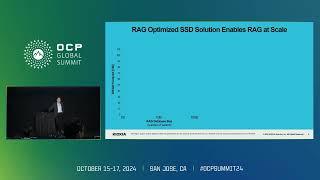
How SSDs Enhance Vector Data Scaling in GenAI RAG Systems
Explore how SSD technology optimizes RAG architectures and vector databases for large-scale LLM deployments, improving inference accuracy and performance in Generative AI systems.
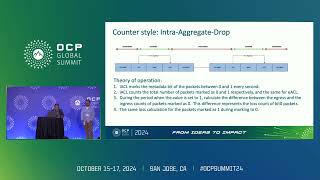
Network Stability Challenges and Solutions in Large-Scale Computing Clusters
Discover advanced network stability techniques for large-scale computing clusters, focusing on AI/ML training optimization, unified monitoring, and innovative congestion control through AMD implementation.
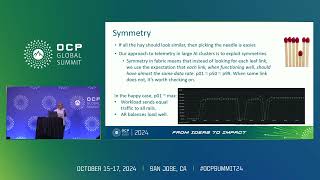
New Approaches to Network Telemetry for AI Performance Optimization
Discover innovative telemetry approaches for optimizing large-scale ML clusters, focusing on workload symmetries and performance metrics specific to AI infrastructure deployment.
Machine Learning Software Ecosystems: Frameworks, Compilers, and Models - Part 1
Explore the landscape of ML frameworks, compilers, and models while understanding performance considerations for various hardware platforms and edge computing requirements.
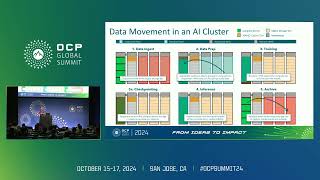
Optimizing High Density Storage for AI and ML Applications
Discover how to optimize high-density storage systems for AI/ML workloads, focusing on data pipelines, GPU utilization, and efficient solid-state storage solutions for large-scale models.
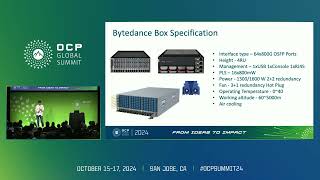
AI/ML Clusters Enabled by a 51.2 Tbps CPO Switch
Discover how Co-Packaged Optics technology revolutionizes AI/ML networks through a 51.2T switch, enabling enhanced bandwidth, reduced power consumption, and improved latency for large-scale GPU clusters.
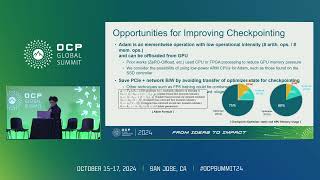
Checkpoint Offloading SSD - Enhancing Performance and Scalability in LLM Training
Discover how checkpoint offloading SSD technology optimizes LLM training by reducing GPU memory usage and improving data movement efficiency between storage components.