We Build a ML Pipeline After We Deploy
Discover essential strategies for building end-to-end machine learning pipelines, covering automation, engineering, debugging, and monitoring using Python libraries.
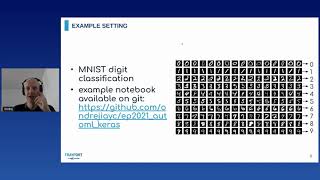
Automated Machine Learning With Keras
Explore automated machine learning with Keras Tuner and AutoKeras, enabling efficient development of high-performance deep learning models while requiring less expertise and effort.

Sound Event Detection with Machine Learning
Aprenda a implementar detección de eventos sonoros con aprendizaje automático, desde la recopilación de datos hasta el entrenamiento de redes neuronales y la evaluación del sistema, utilizando Python y bibliotecas populares.
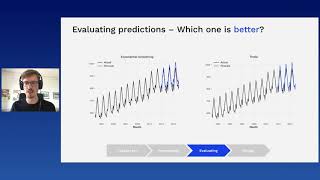
Darts - Unifying Time Series Forecasting Models from ARIMA to Deep Learning
Explore time series forecasting with Darts, a Python library unifying traditional and deep learning models. Learn best practices for preprocessing, backtesting, and achieving quick results in forecasting problems.
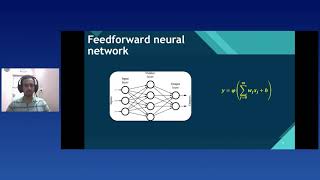
Python and Flutter Application for Colouring and Enhancing Old Photos
Learn to colorize and enhance old photos using Python and Flutter, exploring deep learning models, API development, and mobile app creation for efficient image processing.
Streamlit - The Fastest Way to Build Data Apps
Discover how to rapidly create data science apps using Streamlit, an open-source framework that simplifies development with Python scripts, eliminating the need for front-end coding.
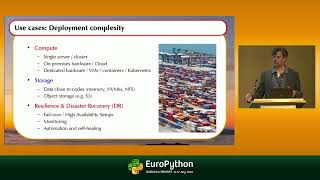
Choosing the Right Database for Your Next Project - Looking at Options Beyond PostgreSQL and MySQL
Explore diverse database options beyond PostgreSQL and MySQL, covering relational, data warehouse, analytics, and machine learning solutions to find the best fit for your Python project.
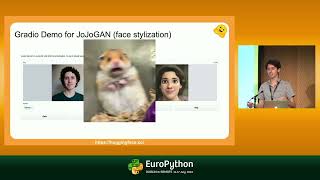
How to Craft Awesome Machine Learning Demos with Python
Learn to create interactive Machine Learning demos using Python, Gradio, and Streamlit. Discover how to craft engaging interfaces and share your models with both ML experts and novices.
An Introduction to Apache TVM
Explore Apache TVM's Python API for deep learning model compilation. Learn installation, features, and practical applications for CPUs and microcontrollers through hands-on demos and examples.
Predicting Urban Heat Islands in Calgary
Learn to predict urban heat islands using satellite imagery and geospatial Python libraries. Explore spatial regression methods, data processing, and visualization techniques for sustainable urban planning.
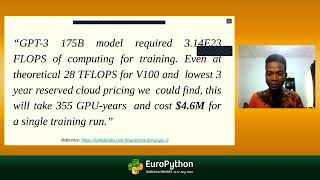
Open Science - Building Models Like We Build Open-Source Software
Explore the concept of developing pre-trained models collaboratively, applying open-source software principles to machine learning for wider participation and continuous improvement.
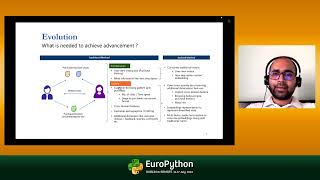
A Network Embeddings Based Recommendation Model with Multi-Factor Consideration
Explore a novel recommendation model using network embeddings and multi-factor analysis. Learn about knowledge transfer across implicit and explicit factors for improved accuracy in real-world applications.
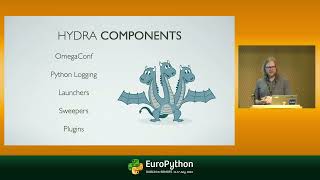
Managing Complex Data Science Experiment Configurations with Hydra
Learn to manage complex data science experiments efficiently using Hydra, an open-source framework that simplifies configuration handling, enhances traceability, and improves reproducibility with minimal boilerplate code.
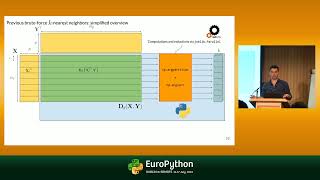
Scaling scikit-learn - Introducing New Sets of Computational Routines
Discover recent performance improvements in scikit-learn, exploring computational patterns, new routine implementations, and future hardware-specialized developments for enhanced machine learning efficiency.
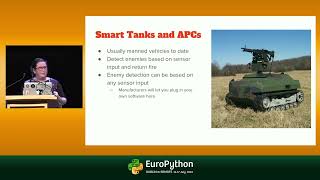
Killer Robots Considered Harmful
Explore the technological, legal, and ethical aspects of autonomous weapons and automated targeting systems in military conflicts, examining their potential impacts and controversies.
Saving Lives with Predictive Geo - AI
Explore geospatial Python libraries for Multi-Criteria Decision making, including imagery dataset processing, overlay analysis, and zonal statistics. Learn to create intuitive geo-visualization portals using vector tiles.
Secure Python ML - The Major Security Flaws in the ML Lifecycle and How to Avoid Them
Uncover critical security risks in machine learning lifecycle, from training to deployment. Learn practical mitigation strategies and tools to secure ML systems effectively.
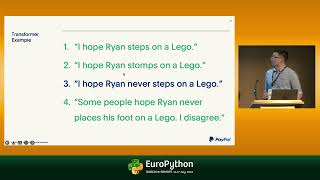
AI for Content Moderation at PayPal
Explore AI-driven content moderation strategies at PayPal, covering challenges, datasets, pre-trained models, and multi-language support for tackling hate speech and toxic content online.
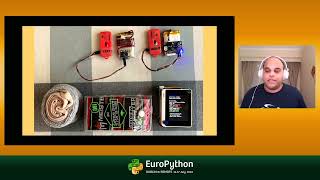
Applying Machine Learning Capabilities to Wearable IoT Devices for Boxing Technique Management
Explore how machine learning algorithms on IoT devices can enhance boxing training using motion sensor data, from problem analysis to algorithm deployment on Arduino.
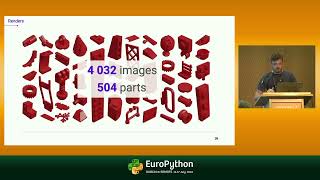
Classifying LEGO Bricks with Machine Learning
Explore the journey of creating a LEGO brick recognition application using Python, covering dataset creation, machine learning approaches, and practical insights for implementation.
I Have to Confess, I Still Love Pandas
Discover the power of Pandas for data science workflows. Learn advantages, efficient usage techniques, and fundamental concepts to enhance your data manipulation skills.