Poisoning Web-Scale Training Datasets is Practical
Explore strategies for creating large datasets and two attacks exploiting these mechanics, revealing vulnerabilities in deep learning models trained on internet-sourced data.
Ethical Machine Learning
Explore ethical considerations in machine learning development, focusing on mitigating bias and implementing governance from the start to ensure responsible AI deployment.
Unlocking Any Door in 21st Century - Immersion in Bio-Security
Explore biometric authentication vulnerabilities, AI/ML risks, and creative hacking techniques. Learn about data privacy threats and strategies to bypass liveness checks in modern security systems.
Sleeping with One AI Open
Explore adversarial attacks on AI/ML systems, their real-world implications, and mitigation strategies. Learn about potential risks and security considerations in AI-driven technologies across various sectors.

Scaling Machine Learning with Spark
Learn to build scalable machine learning solutions using Apache Spark, MLlib, MLflow, TensorFlow, and PyTorch. Explore distributed computing concepts, manage ML lifecycles, and combine Spark with deep learning for end-to-end workflows.

Legacy Systems & Digital Transformations
Experts discuss recognizing legacy systems, common patterns, and strategies for breaking them down to ensure successful digital transformations. Insights on overcoming challenges in modernization projects.

What's the Life Cycle of a Data Scientist?
Explore the daily life, skills, and career path of data scientists through insights from industry experts, covering key aspects of the profession beyond data analysis.

How to Leverage Reinforcement Learning
Explore reinforcement learning's key concepts, industry applications, and implementation challenges with experts Phil Winder and Rebecca Nugent. Gain insights on problem definition, getting started, and managing risks in RL projects.

Machine Learning for Autonomous Vehicles
Explore machine learning applications in autonomous vehicles, covering data requirements, security, language choices, and model deployment considerations with industry experts Oscar Beijbom and Prayson Daniel.

Kubeflow for Machine Learning
Explore Kubeflow's role in enhancing ML tooling with experts Holden Karau and Adi Polak. Discover how this platform improves machine learning workflows and compare it with other distributed computing frameworks like Ray and Dask.
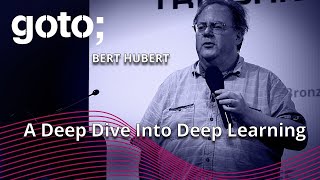
Hello Deep Learning
Explore deep learning from scratch, building an OCR solution for handwritten letters. Learn the fundamentals of machine learning and gain insights into the world of AI and neural networks.
Leveraging the Power of C++ for Efficient Machine Learning on Embedded Devices
Explore practical applications of C++ and TensorFlow Lite for efficient machine learning on embedded devices, including image classification and hand gesture recognition on Raspberry Pi.
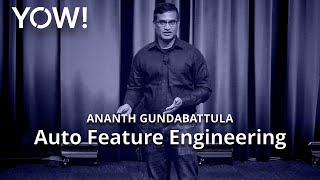
Auto Feature Engineering - Rapid Feature Harvesting Using DFS & Data Engineering Techniques
Explore rapid feature harvesting for machine learning using Deep Feature Synthesis and data engineering techniques to accelerate model development and shorten time-to-market.
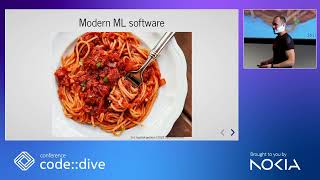
AI Without Python - An Intro to Machine Learning for C++ Programmers
Beginner-friendly introduction to AI and deep neural networks for C++ programmers, exploring alternatives to Python for improved performance in machine learning applications.
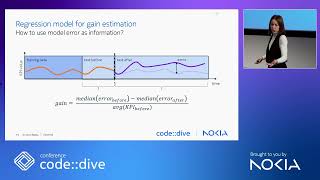
Making ML Model Error an Information Source
Exploring ML model errors as valuable information sources in mobile networks. Innovative approach to assess configuration changes and their impact on performance indicators.
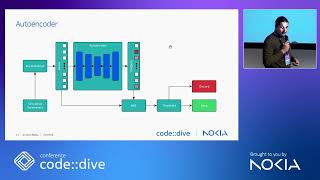
Accelerate Functional Coverage Closure Using Co-simulation and Machine Learning
Explore co-simulation and machine learning techniques to enhance functional coverage closure in complex designs, showcasing a novel autoencoder-based test selection system for efficient verification.
Helton-Howe Trace, Connes-Chern Character, and Quantization
Explore advanced mathematical concepts connecting Helton-Howe Trace, Connes-Chern Character, and Quantization in this insightful lecture by Xiang Tang from Washington University in St. Louis.
Beyond Logs - Real-Time Anomaly Detection with Machine Learning
Explore real-time anomaly detection using machine learning on logs and traces. Learn to treat application data holistically, enabling intelligent monitoring and complex issue identification beyond traditional alerts.
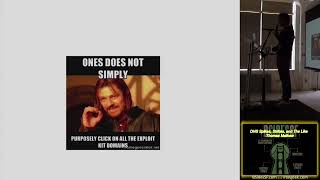
DNS Spikes, Strikes, and The Like
Explore DNS query patterns to identify potential threats using unsupervised learning methods. Learn to analyze traffic trends and distinguish malicious domains from benign spikes.
AutoFR - Automated Filter Rule Generation for Adblocking
Innovative reinforcement learning framework for automated ad-blocking filter rule creation, balancing ad removal and visual integrity while matching EasyList's effectiveness and offering scalability.
Gradient Obfuscation Gives a False Sense of Security in Federated Learning
Explores vulnerabilities in federated learning, demonstrating how gradient obfuscation techniques may not provide adequate privacy protection. Proposes a new attack framework and challenges existing evaluation methods.