
ERICA - Interaction Mining Mobile Apps
Innovative system for capturing app design components, enabling data-driven design through interaction mining. Detects UI changes, records data streams, and creates user interaction traces for improved UX analysis and development.

Interacting with Soli - Exploring Fine-Grained Dynamic Gesture Recognition in the Radio-Frequency Spectrum
Explore novel machine learning for RF-based gesture recognition using Google's Soli sensor. Learn about high-frequency radar sensing and advanced neural network techniques for fine-grained motion detection.

How is Machine Learning and Data Science Transforming Cyber Security
Explore how AI and data analytics are revolutionizing cybersecurity, with insights on future trends, human-machine collaboration, and emerging challenges in the field.
Mem2Img - Memory-Resident Malware Detection via Convolution Neural Network
Innovative framework using convolutional neural networks to detect memory-resident malware, overcoming limitations of traditional antivirus software and handcrafted feature-based approaches.
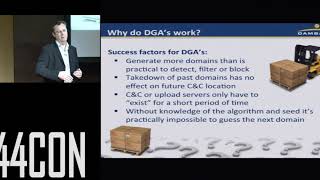
DGA Detection & Optimization
Explore advanced machine learning for network-level DGA detection and the latest crimeware evasion techniques. Learn about botnet elements, forensics, and new detection technologies.

Kill All Humans - Bugs - Machine Learning to the Rescue of Code Review
Explore machine learning techniques for efficient security code reviews, reducing false positives and automating vulnerability classification in large-scale applications.

Burning Down the Haystack to Find the Needle
Explore network flow pattern analysis to detect and prevent contemporary threats, and learn how to build a security analytics program for enhanced threat visibility and response.

Behavioral Security Modeling - Eliminating Vulnerabilities by Building Predictable Systems
Explore behavioral security modeling to build predictable systems, eliminate vulnerabilities, and address cognitive failures in system design. Learn strategies for effective security implementation.
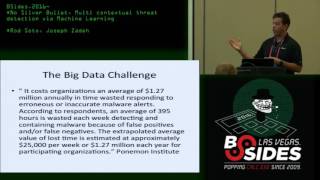
No Silver Bullet - Multi Contextual Threat Detection via Machine Learning
Explore multi-contextual threat detection using machine learning, covering big data processing, modeling adversaries, and building custom solutions for defense at scale.
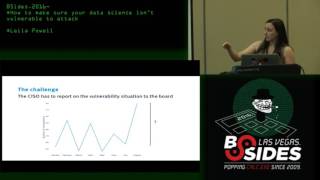
How to Make Sure Your Data Science Isn't Vulnerable to Attack
Learn to protect your data science projects from vulnerabilities through exploration, preparation, algorithm application, and effective communication of insights and risks.

Big Data Is Better Data
Explore the future of machine learning and its impact on technology, design, and human knowledge in this thrilling science talk about big data-driven innovations.
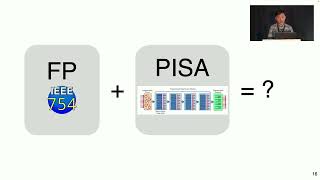
Unlocking the Power of Inline Floating-Point Operations on Programmable Switches
Explore FPISA, a novel floating-point representation for programmable switches, enabling efficient acceleration of machine learning and query processing applications in network hardware.
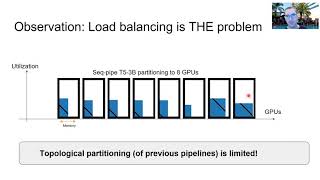
Fine-Tuning Giant Neural Networks on Commodity Hardware with Automatic Pipeline Model Parallelism
Explore fine-tuning giant neural networks on commodity hardware using FTPipe, a system enabling multi-GPU execution through innovative model partitioning and task allocation techniques.
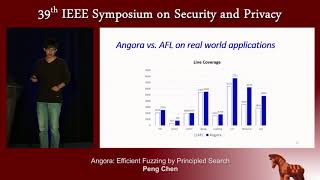
Angora - Efficient Fuzzing by Principled Search
Innovative fuzzing technique combining mutation-based speed with high-quality input generation, outperforming existing fuzzers in bug detection and branch coverage through advanced constraint-solving methods.
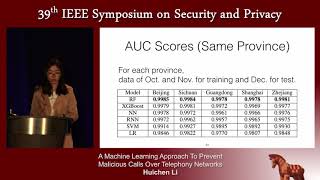
A Machine Learning Approach to Prevent Malicious Calls Over Telephony Networks
Innovative machine learning solution to combat telephony spam and scams, using user-tagged call logs to design effective features for predicting and blocking malicious calls with high accuracy.
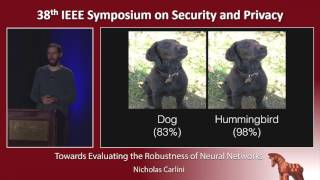
Towards Evaluating the Robustness of Neural Networks
Explores new attack algorithms to assess and challenge the robustness of neural networks against adversarial examples, highlighting vulnerabilities in defensive distillation techniques.
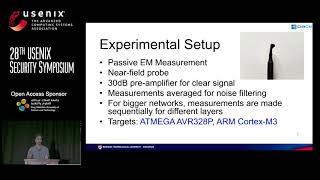
CSI NN - Reverse Engineering of Neural Network Architectures Through Electromagnetic Side Channel
Reverse engineering neural networks through electromagnetic side channels, revealing architecture details like activation functions, layers, neurons, and weights using non-invasive techniques on ARM Cortex-M3 microcontrollers.
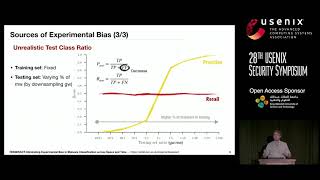
TESSERACT - Eliminating Experimental Bias in Malware Classification Across Space and Time
Unveils TESSERACT framework to eliminate spatial and temporal biases in Android malware classification, improving real-world robustness and revealing counterintuitive performance insights.
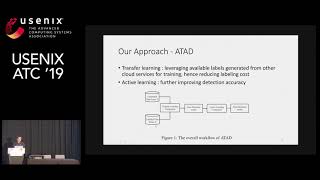
Cross-Dataset Time Series Anomaly Detection for Cloud Systems
Innovative approach combining transfer and active learning for detecting anomalies in cloud systems using limited labeled data, improving efficiency in maintaining service availability.
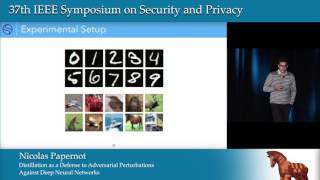
Distillation as a Defense to Adversarial Perturbations against Deep Neural Networks
Introduces defensive distillation to protect deep neural networks from adversarial attacks, reducing attack effectiveness from 95% to 0.5% and increasing robustness by 800% in tests.
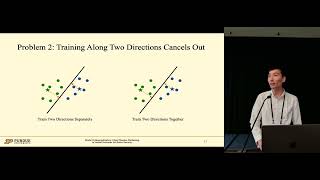
Model Orthogonalization - Class Distance Hardening in Neural Networks for Better Security
Explore a novel technique to enhance neural network security through class distance hardening, improving model robustness against adversarial attacks and ensuring more reliable AI systems.