
Statistical Deobfuscation of Android Applications
Learn techniques for statistically deobfuscating Android apps, including probabilistic graphical models and implementation strategies, to enhance app security and analysis.

The Technology of Storytelling
Explore how intelligent technologies and AI revolutionize storytelling, enhancing human experiences and democratizing elite-level capabilities for global consumers.

Search - How the Data Explosion Makes Us Smarter
Stefan Weitz explores how data explosion and advanced technologies like machine learning, augmented reality, and IoT are revolutionizing search capabilities, leading to smarter decision-making and information symmetry.

Prediction of Music Pairwise Preferences from Facial Expressions
Innovative approach to predict music preferences using facial expressions, outperforming traditional methods. Explores personality influences and adapts models accordingly, balancing accuracy with privacy considerations.
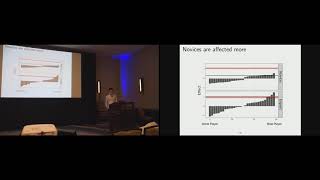
What Can AI Do for Me - Evaluating Machine Learning Interpretations in Cooperative Play
Evaluating machine learning interpretations in cooperative play, focusing on improving human performance through AI assistance in a question-answering task. Explores different interpretation methods and their impact.
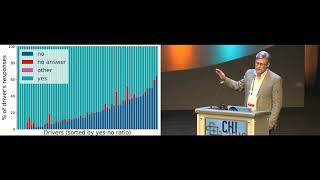
Is Now A Good Time? An Empirical Study of Vehicle-Driver Communication Timing
Empirical study on optimal timing for vehicle-driver communication, analyzing responses and automotive data to improve safety and user satisfaction in smart driving assistants and infotainment systems.
Explaining Decision-Making Algorithms through UI - Strategies to Help Non-Expert Stakeholders
Strategies for explaining decision-making algorithms through UI to non-experts, focusing on improving comprehension and transparency while exploring the impact on trust and user experience.

Bringing Emotional Intelligence to Technology During Covid-19
Explore how AI with emotional intelligence can enhance human connection during the pandemic, improving technology's ability to understand and respond to our emotions.
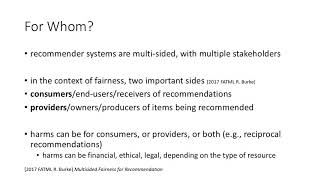
Building User Trust in Recommendations via Fairness and Explanations
Explore techniques to enhance user trust in recommender systems through fairness and explanations, addressing ethical concerns and promoting transparency in AI-driven decision-making.

Minecraft as AI Playground and Laboratory
Explore Minecraft as an AI research platform, focusing on Project Malmo and the MineRL competition to advance sample-efficient reinforcement learning and tackle complex decision-making challenges.
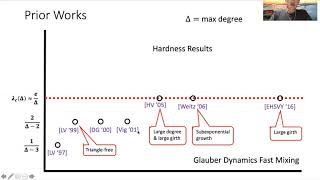
Spectral Independence in High-Dimensional Expanders and Applications to the Hardcore Model
Explore spectral independence in high-dimensional expanders and its application to the hardcore model, focusing on Glauber dynamics, complexity phase transitions, and future research directions.
Applying Computational Analysis to Textual Data from the Wild - A Feminist Perspective
Explore feminist perspectives on computational analysis of textual data, focusing on topic modeling for interpreting diverse experiences of place in breastfeeding reviews.
Fairness and Accountability Design Needs for Algorithmic Support in High-Stakes Public Sector Decision-Making
Exploring challenges and design opportunities for fairness and accountability in algorithmic public sector decision-making, with insights from machine learning practitioners across OECD countries.
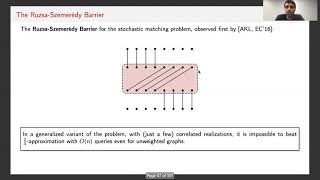
Stochastic Weighted Matching - 1-Epsilon Approximation
Explore stochastic weighted matching algorithms, including Monte Carlo analysis, vertex-independent matching, and greedy approaches for efficient approximation solutions.
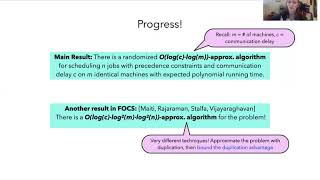
Scheduling with Communication Delays via LP Hierarchies and Clustering
Explore scheduling with communication delays using LP hierarchies and clustering, covering techniques like simplifying assumptions, LP scheduling, and clustering for efficient problem-solving.
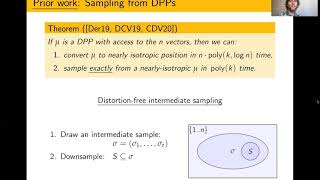
Isotropy and Log-Concave Polynomials
Explore isotropy and log-concave polynomials in accelerated sampling and high-precision counting of matroid bases, covering techniques like negative dependence and instant mixing.
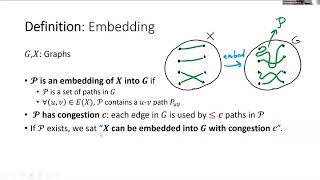
A Deterministic Algorithm for Balanced Cut with Applications to Dynamic Connectivity, Flows, and Beyond
Explore deterministic algorithms for balanced cut, with applications in dynamic connectivity and network flows. Learn about two-way reduction, competition games, and embedding techniques.
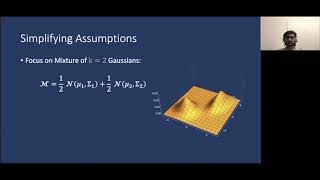
Outlier-Robust Clustering of Gaussians and Other Non-Spherical Mixtures
Explore robust clustering techniques for Gaussian mixtures and non-spherical distributions, covering TV-separation, anti-concentration, and sum-of-squares relaxation methods.
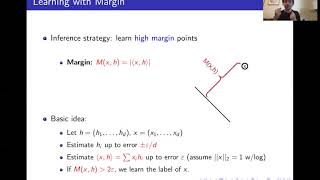
Point Location and Active Learning - Learning Halfspaces Almost Optimally
Explore advanced techniques in machine learning, focusing on point location, active learning, and halfspaces. Gain insights into cutting-edge algorithms and strategies for optimal learning outcomes.
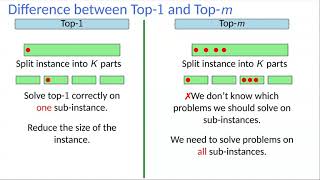
Collaborative Top Distribution Identifications with Limited Interaction
Explore collaborative learning strategies for efficient multi-armed bandit problem-solving, focusing on top-m identifications with limited interactions and error reduction techniques.

A Journey to the Cutting Edge of Bioscience - Cancer as a Case Study
Explore cutting-edge bioscience advancements in cancer care, discussing achievements, barriers, and future discoveries. Experts examine data sharing, research collaboration, and innovative technologies shaping oncology's landscape.