Faces, Flukes, Fins, and Flanks - How Multispecies Re-ID Models are Transforming Our Approach to AI
Explore how multispecies re-identification models revolutionize AI, enhancing our understanding of animal communication and conservation efforts across diverse species.
Symbolic Behavior in AI - Lessons for Whale Communication Research
Explore AI's symbolic behavior and its potential implications for understanding whale communication, drawing insights from recent research and diverse perspectives.
New Directions in Property Testing
Explore recent advancements in property testing algorithms, including new problems and frameworks connected to machine learning theory and high-dimensional data analysis.
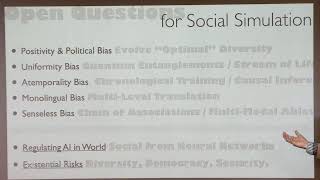
From Simulated Subjectivity to Collective Consciousness in Large Language Models
Explore the evolution of AI from simulated subjectivity to collective consciousness, examining implications for higher-level intelligence across AI, psychology, and neuroscience.
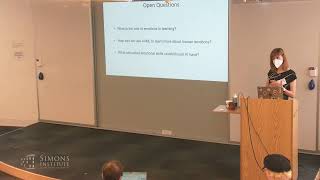
AI and Emotions: Opportunities and Challenges
Explore the potential and challenges of AI emotion perception technologies, their applications, and the importance of responsible development and deployment practices.
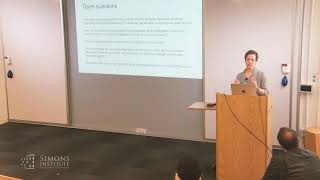
Social Behavior Prediction from Video Observations
Explore AI techniques for predicting social behavior from video data, examining applications in psychology and neuroscience for understanding higher-level intelligence.

Retrospective on Multi-Agent Learning as a Path to Intelligence
Explore the potential of multi-agent learning in advancing artificial intelligence, drawing insights from psychology and neuroscience perspectives.
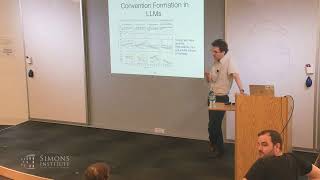
Linguistic Interaction in Humans and Machines - Understanding Higher-Level Intelligence
Exploring methods from cognitive science to study ML models and human cognition, focusing on language-based projects that analyze adaptation and generalization in linguistic interactions.
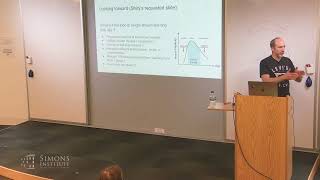
Understanding Higher-Level Intelligence: 10 AIs or 10 Billion AIs
Explore the future of AI: comparing small, specialized models with large, general-purpose systems. Insights from AI, psychology, and neuroscience on higher-level intelligence.
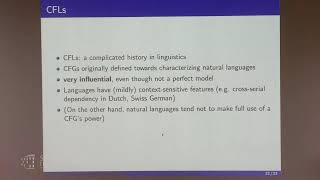
Understanding Higher-Level Intelligence from AI, Psychology, and Neuroscience Perspectives
Explore higher-level intelligence through AI, psychology, and neuroscience perspectives in this thought-provoking discussion featuring insights from experts at Georgia Tech and Carnegie Mellon.
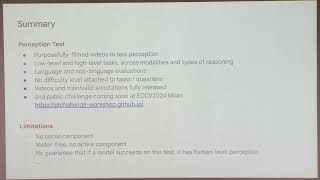
The Perception Test - Understanding Higher-Level Intelligence
Explore AI, psychology, and neuroscience perspectives on higher-level intelligence through Viorica Patraucean's insightful discussion of the Perception Test.
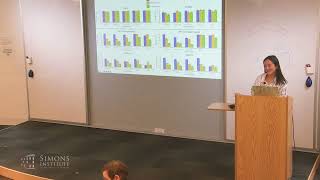
KiVA - Kid-inspired Visual Analogies for Large Multimodal Models
Explore kid-inspired visual analogies for enhancing multimodal AI models, bridging AI, psychology, and neuroscience perspectives on higher-level intelligence.
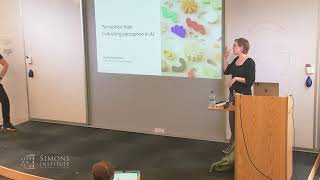
A Comparative Cognition Approach to Evaluating AI Capabilities
Explore how comparative cognition methods can assess AI capabilities, drawing parallels between animal and artificial intelligence evaluation to gain insights into both fields.
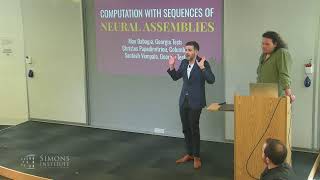
Language Models as World Models? - Understanding Representations and Semantic Control
Explore how language models encode world knowledge, their limitations in semantic accuracy, and techniques for improving their representations and controllability.
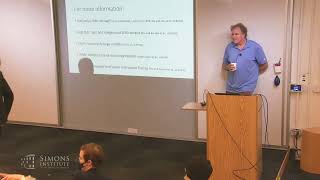
How Grounded Are Ungrounded LLM Models
Explore the groundedness of large language models, examining their capabilities and limitations in understanding and interacting with the real world.
Applications of Sub-linear Algorithms in Other Fields
Explore how sub-linear algorithms impact diverse fields, enhancing efficiency and scalability in data analysis and problem-solving across disciplines.
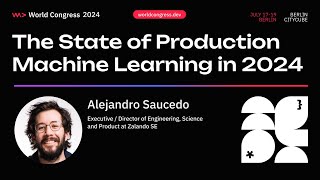
The State of Production Machine Learning in 2024
Explore challenges and best practices in production machine learning systems, covering deployment, explanation, security, monitoring, and scaling. Gain insights into the ML tooling ecosystem.
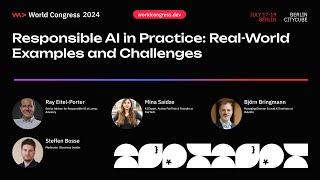
Responsible AI in Practice: Real-World Examples and Challenges
Explore real-world examples and challenges of implementing responsible AI, gaining insights into ethical considerations and practical strategies for developing AI systems with integrity.
The Future of Computing: AI Technologies in the Exascale Era
Explore AI technologies in the exascale era, examining their impact on computing's future and potential advancements in computational power and capabilities.
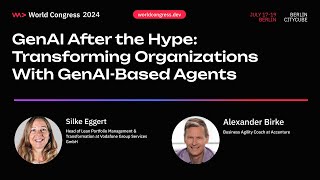
Transforming Organizations with GenAI-based Agents - WeAreDevelopers World Congress 2024
Explore the transformative potential of GenAI-based agents in organizations beyond the initial hype, with insights from industry experts Silke Eggert and Alexander Birke.

Simplify AI Infrastructure with Kubernetes Operators
Automate AI infrastructure management on Kubernetes using Operators. Learn to streamline cluster provisioning, hardware configuration, and model deployment for efficient ML application deployment.