Empowering Women Using AI - Addressing Gender-Based Violence Online
Explore how AI can combat gender-based violence online, raise awareness, and protect individuals. Learn about innovative approaches to mitigate online harassment and empower women in the digital space.
AI Development Assistance for Android Studio - Using Gemini AI Models
Explore AI-assisted developer tools for Android, featuring insights on Gemini models, code transformation, and productivity enhancements in Android Studio from Google's AIDA team.
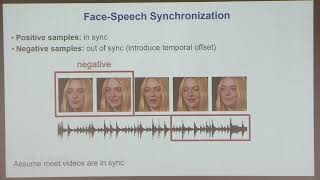
Audio-Visual Self-Supervised Learning: Insights from Infant Development
Explore how neural networks learn audio-visual representations from video streams, mimicking infant learning through synchronization of sight and sound.
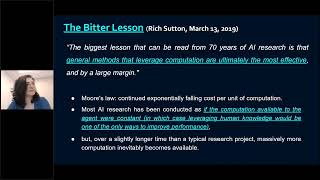
Recent Advances in Foundation Models: Scaling Laws, Emergent Behaviors, and AI Democratization
Explore recent advances in foundation models, scaling laws, and emergent behaviors in AI. Learn about efforts to democratize AI and make cutting-edge technology accessible to all.
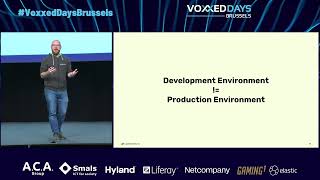
Can Data and Machine Learning Learn from Software Engineering?
Exploring similarities and differences between software engineering, data engineering, and machine learning, highlighting potential cross-disciplinary learnings and unique aspects.

Claude 3.5 Sonnet - Anthropic's Latest AI Model Challenging GPT-4
Explore Claude 3.5 Sonnet's advanced capabilities in language, coding, and multimodal tasks. Learn how it compares to GPT-4 and its potential impact on AI development.
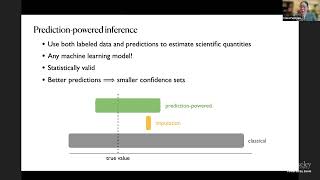
Error Embraced - Making Trustworthy Scientific Decisions with Imperfect Predictions
Explore prediction-powered inference for valid statistical analysis using machine learning predictions, with applications in proteomics, genomics, and astronomy. Learn about reliable ML-guided decisions in biological sequence design.
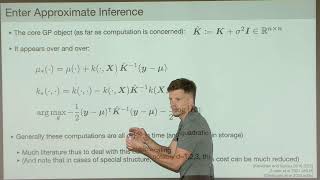
Data is as Data Does - The Influence of Computation on Inference
Exploring the impact of computational approximations on probabilistic models in machine learning, with focus on Gaussian Process approximations and their applications in neurobiology.
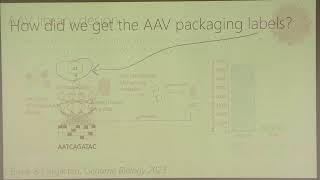
Machine Learning-Based Protein Engineering - Insights and Approaches
Explore ML-based protein engineering insights, discussing cutting-edge techniques and potential applications in biotechnology and drug discovery.
Symmetries in Machine Learning for Materials Science
Exploring machine learning techniques incorporating crystallographic symmetries for materials science, enhancing property prediction and discovery of new materials and meta-materials.
Open Challenges in AI for Molecular Design: Representation, Experimental Alignment, and Oracle Reliability
Explore AI challenges in molecular design: representation, experimental alignment, and oracle reliance. Learn about new workflows and approaches to address real-world complexities in molecular discovery.
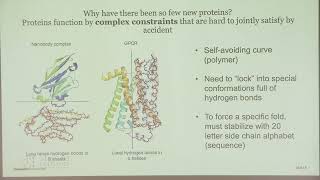
Illuminating Protein Space with Generative Models
Explore generative modeling for protein design, focusing on building learning systems that can generalize, scale, and create fit-for-purpose protein complexes on demand.
Deep Learning and Numerical Methods Intersections for Improving Molecular and Fluid Dynamics
Explore intersections of deep learning and numerical methods to enhance molecular and fluid dynamics simulations, improving accuracy and efficiency in scientific computations.
Large ML Potentials for Chemistry - Generalization, Inductive Biases, and Error Cancellation
Explore machine learning potentials in chemistry, focusing on generalization, inductive biases, and error cancellation techniques for improved accuracy and efficiency.
Machine Learning Gradients in Molecular Simulations
Explore ML gradients in molecular simulations, including surrogate functions, active learning, and differentiable programming for enhanced scientific modeling and optimization.
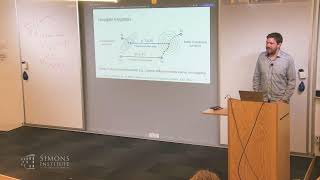
From Entropy to Artistry: Thermodynamics and Generative AI
Explore connections between diffusion models and physics, focusing on non-equilibrium thermodynamics and its applications in image/video generation and climate modeling.
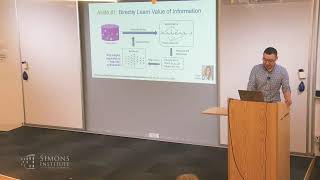
Explorations in Exploration: Deep Learning Meets Value of Information for Sequential Experimental Design
Exploring machine learning's role in sequential experimental design, focusing on quantifying information value and improving flexibility in planning future experiments.
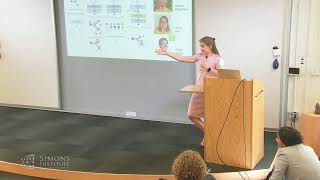
Harnessing the Properties of Equivariant Neural Networks for Materials Science
Explore equivariant neural networks for materials science, covering applications, advantages, and future directions in understanding and designing atomic systems.

Gen 3 by Runway - Revolutionizing AI Video Generation
Explore RunwayML's Gen 3 Alpha: A revolutionary AI video generator creating photorealistic scenes, special effects, and lifelike characters. Learn its capabilities, comparisons with competitors, and potential impact on filmmaking and content creation.
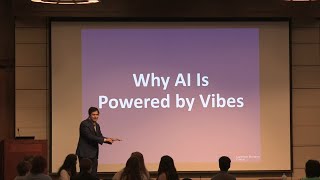
Why AI is Unpredictable
Explore AI's unpredictability through amusing analogies and expert insights. Gain a thought-provoking perspective on the challenges and implications of artificial intelligence's inherent unpredictability.

Building Local Llama Agents with Mistral and Arcee Agent
Explore building local Llama Agents using Mistral and Arcee models. Learn to create AI agents with open-source tools for tasks like calculation and NLP analysis.