News on Tensor Networks for Machine Learning and Quantum Computing Simulation
Explore recent advancements in tensor networks for enhancing machine learning and simulating quantum processors, covering deep neural networks, convolutional networks, and large language models.
On the Variance and Admissibility of Empirical Risk Minimization on Convex Classes
Explores empirical risk minimization's variance and admissibility in function estimation, proving its minimax optimal variance and admissibility using concentration of measure techniques in convex geometry.
GraphLab - Machine Learning for Big Data in the Cloud
Explore GraphLab, a framework for efficient parallel machine learning algorithms handling Big Data. Learn about its advantages over existing tools and its impact on large-scale tasks.
The Art of Leaderboarding in the Era of Extreme-Scale Neural Models
Explore how smaller models with knowledge and reasoning algorithms can outperform larger neural models in NLP tasks, challenging the notion that scale alone determines AI performance.
Advancing Weather and Climate Prediction with Data-Driven Methods
Exploring machine learning's transformative role in weather and climate prediction, enhancing forecast accuracy, facilitating scientific discovery, and revolutionizing atmospheric science methodologies.

The Case for Open-Source AI - Interview with Thomas Wolf of HuggingFace
Insightful interview with Thomas Wolf exploring HuggingFace's journey, open-source philosophy, business model, and current projects in AI. Covers hiring, research initiatives, and the impact of tools like Gradio.
Artificial Intelligence: A Guide for Thinking Humans - Interview with Melanie Mitchell
Explore AI's current state and future potential with Melanie Mitchell, discussing conceptual abstraction, analogy-making, and the challenges in developing human-like artificial intelligence.
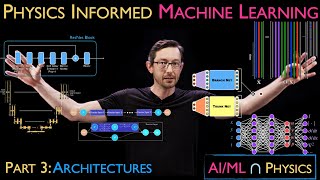
Designing an Architecture for Physics-Informed Machine Learning - Part 3
Explore various neural network architectures for physics-informed machine learning, including ResNets, UNets, and PINNs. Learn how to incorporate physical principles and symmetries into model design for improved performance.

AI for Everyone - Learn Modern Artificial Intelligence from Scratch
Learn to effectively use AI for daily tasks and build amazing apps, covering basics to advanced topics like prompt engineering, GPU usage, and app development.

Building an LLM Fine-Tuning Dataset - From Reddit Comments to QLoRA Training
Learn to build a QLoRA fine-tuning dataset for language models using Reddit data. Covers data acquisition, processing, structuring, and training sample creation, culminating in QLoRA training and results analysis.
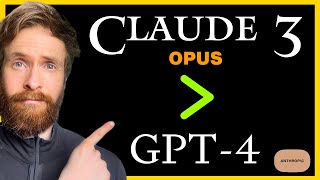
Claude 3 Opus API Testing - Evaluating Capabilities in Logic, Context, and More
Explore Claude 3 Opus AI's capabilities in logic, long context, coding, system instructions, and image processing through hands-on testing and performance evaluation.
Mastering Large Language Model Evaluations - Techniques for Ensuring Generative AI Reliability
Explore techniques for evaluating Large Language Models, addressing challenges like hallucinations and toxicity, and learn essential metrics and tools for assessing AI reliability in generative applications.

GPT-Fast - Blazingly Fast Inference with PyTorch
Explore techniques for accelerating AI inference using PyTorch, including compile, quantization, speculative decoding, and tensor parallelism, with expert insights from Horace He.
Instrumenting Weights & Biases for PII Data Detection - ML Pipeline Tutorial
Instrumenting W&B for PII detection: Learn to track experiments, analyze data, and perform error analysis in ML pipelines. Apply knowledge to a Kaggle competition using W&B Tables and Artifacts.

Machine Learning for NCAA Tournament Bracket Predictions
Learn to build a machine learning model for predicting NCAA tournament outcomes, from data setup to final bracket creation, enhancing your predictive modeling skills and tournament strategy.
Claude 3 vs Gemini vs GPT-4 - Comparing LLMs for PowerPoint Creation
Comparison of leading AI models' abilities to create PowerPoint presentations, exploring their strengths and limitations in slide design and content generation.
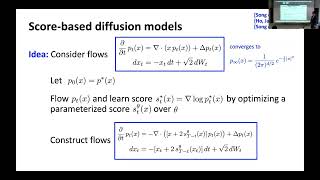
Renormalization Group Flow, Optimal Transport, and Diffusion Models
Explore connections between renormalization group flow, optimal transport, and diffusion models in applied mathematics, with insights from Harvard researcher Jordan Cotler.

First Principles of OCI Generative AI Service - Architecture and Implementation
Explore OCI Generative AI Service's mechanics, including flexible LLM fine-tuning and improved GPU cluster management for simplified, cost-effective AI application integration.

Anthropic's Claude 3 is Not Sentient or Self-Aware
Explora la controversia sobre la conciencia de Claude 3 de Anthropic, analizando argumentos y evidencias sobre la supuesta sensibilidad de esta inteligencia artificial avanzada.
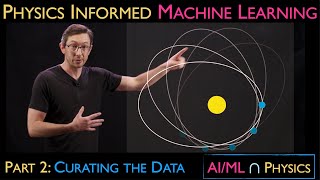
Physics-Informed Machine Learning: Curating Training Data - Part 2
Explore physics-informed data curation for machine learning, covering data augmentation, coordinate systems, simulation vs. experiments, and strategies for handling expensive, biased, and rare data in AI/ML applications.
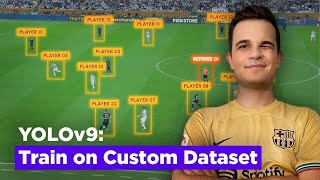
YOLOv9 Tutorial - Train Model on Custom Dataset
Learn to set up, train, and deploy YOLOv9 for custom object detection, including model evaluation, inference, and practical applications like self-service checkout systems.