Training Large Language Models on Kubernetes
Explore challenges and best practices for training Large Language Models on Kubernetes, including optimization techniques, resource management, and benchmarks comparing K8s to bare metal environments.
Constructing Kubeflow Super Nodes with Karpenter
Learn how Karpenter optimizes AI/ML platforms on Kubernetes by automatically selecting and launching ideal compute resources for Kubeflow Notebooks and Pipelines, enhancing efficiency and scalability.
Poisoned Pickles - Security Risks and Protections for Serialized ML Models
Explore the security risks of using pickle for ML model serialization and learn strategies to protect against poisoned pickles in data science pipelines.
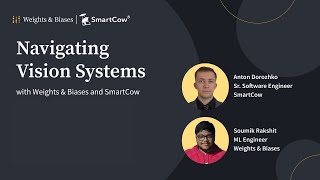
Navigating Vision Systems with Weights & Biases and SmartCow
Explore computer vision advancements with Weights & Biases and SmartCow. Learn about Ultralytics, object detection metrics, and practical implementations for enhancing ML projects.
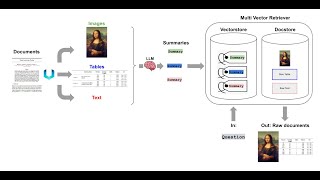
Using LangChain with Multimodal AI to Analyze Images in Financial Reports
Learn to analyze financial reports with images using GPT-4 Vision and LangChain. Explore multimodal RAG techniques, codebase implementation, and result evaluation for enhanced document analysis.
Prompt Engineering - Crash Course
Explore prompt engineering techniques to effectively communicate with AI language models, enhancing skills in text summarization, question answering, and classification.
Balancing AI's Productivity Boost with Ethical Considerations in Cloud-Native
Explore K8sGPT's potential to enhance cloud-native observability and issue triage using AI, while considering ethical implications and accessibility for newcomers.
Mastering LLM Delivery in Private Clouds: A Journey to Seamless Deployments with Kubernetes and OCI
Explore how Kubernetes and OCI artifacts simplify private LLM deployments, addressing data governance challenges and improving efficiency in artifact sharing between model developers and consumers.
Achieving Real-Time Generative AI During Gameplay for Games on Kubernetes
Explore real-time GenAI integration in Kubernetes-based games. Learn deployment strategies, low-latency solutions, and scalability techniques for enhanced player experiences and broader ecosystem benefits.
Scaling ML Pipelines on Kubernetes Using Tekton - Overcoming Complexity
Explore scaling ML pipelines on Kubernetes with Tekton, addressing limitations and enhancing efficiency through custom tasks and integration with KubeFlow for improved scalability in production environments.
Beyond Prototypes: Production-Ready ML Systems with Metaflow and Argo Project
Explore production-ready ML systems using Metaflow and Argo, focusing on rapid improvement and maintenance. Learn from Netflix's experience in composing and orchestrating advanced ML systems.
Discovering Chicago Film Sets with MLOps in Kubernetes
Explore Chicago film sets using Kubernetes and MLOps. Learn to integrate CNCF projects, design patterns, and best practices for data-driven applications while discovering popular shooting locations.
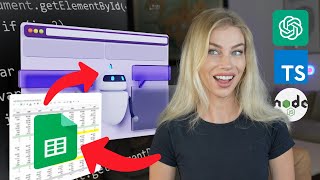
Building a Full Stack AI Chatbot with Langchain, ChatGPT, and Singlestore - 2 Hour Tutorial
Build a full-stack AI chatbot using Langchain, ChatGPT, and Singlestore. Learn to train the chatbot on your own data and create a functional application in just two hours.

Introduction to Large Language Models - Future and Security Challenges
Comprehensive introduction to Large Language Models, covering their functionality, training, future potential, and security challenges. Explores applications, scaling, tool use, and emerging paradigms in AI.

Advanced RAG Techniques - RAG Fusion Implementation - Lecture 6
Explore RAG fusion technique to enhance retrieval-augmented generation models, combining multiple search queries and ranking results using reciprocal rank fusion with LangChain implementation.

Towards Interpretable Data Science
Explore holistic approaches to interpretable data science, focusing on counterfactual and attribution-based explanations for complex data processing and decision support systems.
OpenAI Alternatives: Comparing Retrieval Models for RAG - Cohere Embed v3 and Open Source
Explore top retrieval models for RAG: OpenAI's text-embedding-ada-002, Cohere's Embed v3, and e5-base-v2. Compare performance, inference speeds, and results across various tests to enhance your AI applications.

Quick Wins Across the Enterprise with Responsible AI
Explore rapid AI prototyping, use case identification, and responsible enterprise adoption. Learn about Microsoft AI services, Kyndryl's LLMOps framework, and human-centric implementation for balanced speed and responsibility.

Recommending the Right Product to Users - JSON Mode without Function Calling
Explore building a GPT-powered sales agent using JSON mode, with and without RAG, to recommend products based on user preferences through natural conversation.
Differentiable Programming for End-to-end Optimization of Experiments - Lecture 5
Explore differentiable programming for optimizing experiments in high-energy physics. Learn advanced techniques to enhance data analysis and improve experimental design in particle physics research.
End-to-End AI App Development: Prompt Engineering to LLMOps
Comprehensive guide to Azure AI's features for streamlining AI app development, from prototyping to deployment. Learn to maximize LLM capabilities and harness Generative AI potential with Azure AI Studio.