Estimating Normalizing Constants for Log-Concave Distributions - Algorithms and Lower Bounds
Explore algorithms and lower bounds for estimating normalizing constants in log-concave distributions, covering annealing, Monte Carlo methods, and Langevin dynamics.
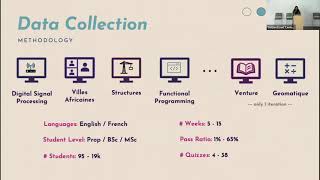
Meta Transfer Learning for Early Success Prediction in MOOCs
Explore innovative deep learning techniques for predicting student success in MOOCs, focusing on meta transfer learning and attention layers to enhance early intervention strategies.

Machine Learning for Algorithm Design
Explore data-driven algorithm design using machine learning, combining theoretical foundations with practical applications to improve performance for various combinatorial problems.
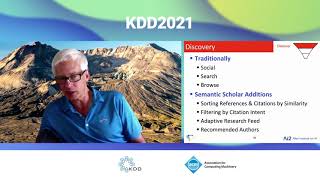
Semantic Scholar- Tera-Scale NLP to Accelerate Scientific Research--Daniel Weld
Explore Semantic Scholar's AI-powered tools for accelerating scientific research, including adaptive feeds, personalized alerts, and advanced summarization techniques.
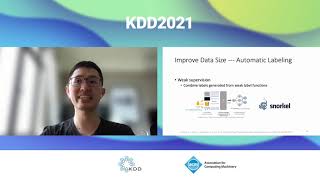
Towards an Easy-to-use AI Platform - Data, Algorithms, and Systems - Wei Wang
Explore the development of user-friendly AI platforms, covering data preparation, model construction, debugging, and deployment, with a focus on enhancing efficiency and accessibility.

PyTorch - A Modern Library for Machine Learning with Adam Paszke
Explore PyTorch's capabilities in machine learning, from research to production. Learn about its innovative solutions for efficient inference and its versatility across various ML scenarios.
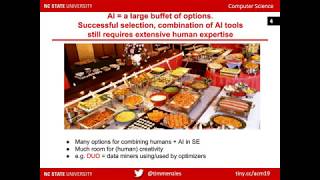
What Role for Programmers in the Age of AI
Exploring the evolving role of programmers in AI era, discussing synergies between data mining and optimization, and highlighting the continued importance of human expertise in software development.

Introduction to Neural Networks in Python - Tensorflow-Keras
Learn neural network basics, architecture, hyperparameters, and implementation in Python using TensorFlow/Keras. Includes hands-on coding examples for various classification tasks, from simple to complex datasets.

End to End ML Project - Data Transformation Implementation Using Pipelines
Implement data transformation using pipelines for ML projects, covering categorical and missing value handling, standard scaling, and artifact storage.
Hands on Machine Learning - Unsupervised Learning
Explore unsupervised learning techniques including clustering, dimensionality reduction, and Gaussian mixture models. Hands-on implementation using Python libraries for data analysis and visualization.
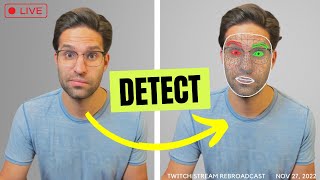
Face Detection with Python - Live Coding
Explore Python face detection models for age, race, emotion, and keypoints. Compare results and implement various techniques in this hands-on coding session.

Time Series Forecasting with XGBoost - Advanced Methods
Explore advanced time series forecasting with XGBoost, covering outlier removal, cross-validation, lag features, and future predictions. Enhance your skills in handling complex time-dependent data for improved forecasting accuracy.

Time Series Forecasting with XGBoost - Use Python and Machine Learning to Predict Energy Consumption
Learn to predict energy consumption using XGBoost and Python in this hands-on tutorial. Covers data preparation, feature engineering, model building, and forecasting techniques for time series analysis.
Complete Guide to Cross Validation
Comprehensive guide to cross-validation in machine learning, covering setup, datasets, common pitfalls, train-test splits, and practical applications using scikit-learn in Python.

Solving Real World Data Science Problems With Python - Computer Vision Edition
Learn to build and improve convolutional neural networks for computer vision tasks using Python, TensorFlow, and Keras. Explore data augmentation, preprocessing, and network architecture optimization techniques.
Why Machine Learning Is Important - Learn Machine Learning - Machine Learning Algorithm
Explore machine learning fundamentals, algorithms, and applications. Gain insights into supervised and unsupervised learning, and practice with Microsoft Azure experiments.
Machine Learning for Beginners - Data Scientists and Analysts
Comprehensive introduction to machine learning for data professionals, covering key concepts, techniques, and practical applications in business contexts, with hands-on coding examples.
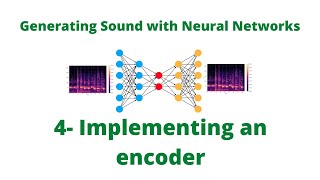
How to Implement Autoencoders in Python and Keras - The Encoder
Learn to implement autoencoders in Python and Keras, focusing on building the encoder component. Covers autoencoder class construction, convolutional layers, bottleneck creation, and practical implementation.

Autoencoders Explained Easily
Intuitive explanation of autoencoders, covering key concepts like representation learning and latent space, with applications in data generation, denoising, and anomaly detection.

Types of Audio Features for Machine Learning
Explore audio feature types for ML: time, frequency, and time-frequency domains. Learn categorization based on abstraction, ML approach, and temporal scope for intelligent audio applications.
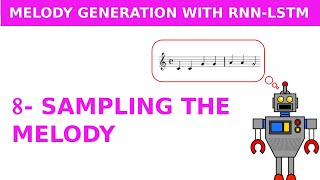
Generating Melodies with a Neural Network
Explore neural network-based melody generation using LSTM, from data preparation to sampling with temperature, in this hands-on tutorial for AI music enthusiasts.