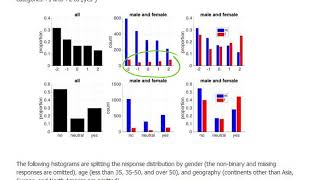
What's in a Name? The Need to Nip NIPS
Exploring the controversy around the NIPS acronym, its impact on inclusivity in machine learning, and the decision-making process leading to the NeurIPS rebranding.
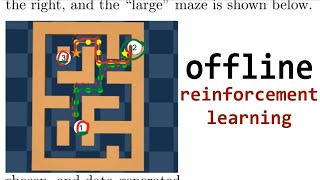
Datasets for Data-Driven Reinforcement Learning
Explore offline reinforcement learning benchmarks and datasets for evaluating algorithms in various settings, including safety-critical tasks and learning from expert demonstrations.
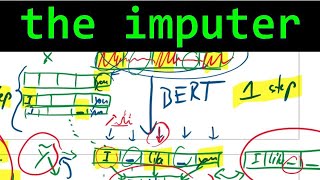
Imputer - Sequence Modelling via Imputation and Dynamic Programming
Explore a novel sequence-to-sequence model that balances efficiency and performance using imputation and dynamic programming for faster inference in various applications.
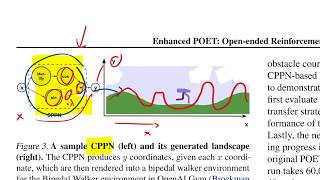
Enhanced POET - Open-Ended RL Through Unbounded Invention of Learning Challenges and Their Solutions
Explores advancements in open-ended learning algorithms, focusing on Enhanced POET's ability to generate and solve novel challenges, demonstrating significant progress in machine learning automation.
Evaluating NLP Models via Contrast Sets
Explore how contrast sets reveal NLP model limitations by exposing systematic gaps in test data, offering insights into true linguistic capabilities and decision boundaries.
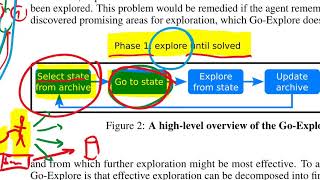
Go-Explore: A New Approach for Hard-Exploration Problems
Discover a groundbreaking algorithm that outperforms in hard-exploration Atari games, utilizing random exploration and memory to achieve superhuman scores in Montezuma's Revenge and Pitfall.
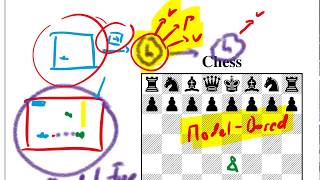
MuZero - Mastering Atari, Go, Chess, and Shogi by Planning with a Learned Model
MuZero: AI algorithm combining tree-based search with learned model for superhuman performance in complex domains without prior knowledge of dynamics. Predicts rewards, policies, and value functions.
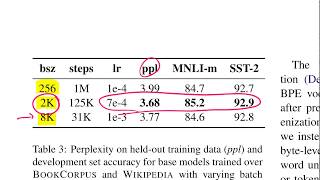
RoBERTa - A Robustly Optimized BERT Pretraining Approach
Explore how RoBERTa improves BERT's performance through optimized training, challenging recent model enhancements and highlighting the impact of hyperparameter choices in language model pretraining.
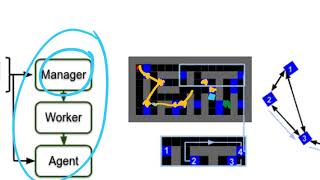
Learning World Graphs to Accelerate Hierarchical Reinforcement Learning
Explore hierarchical reinforcement learning using world graphs to accelerate learning in complex environments. Learn about pivotal states, goal-conditioned policies, and efficient task solving.
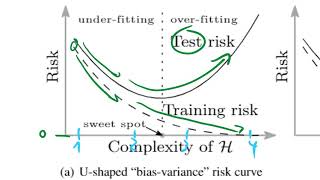
Reconciling Modern Machine Learning and the Bias-Variance Trade-Off
Explores the paradox of modern machine learning where complex models can generalize well despite overfitting, introducing the "double descent" risk curve that extends beyond the traditional bias-variance trade-off.

Population-Based Search and Open-Ended Algorithms
Explore population-based search and open-ended algorithms in AI, discussing key concepts and potential applications for advancing machine learning and artificial intelligence.
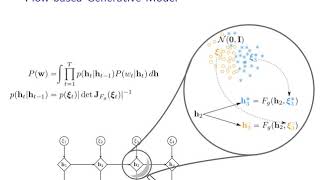
Stochastic RNNs Without Teacher-Forcing
Explore stochastic non-autoregressive RNNs for unconditional word generation, based on deep state space models. Learn about innovative training techniques without teacher-forcing.
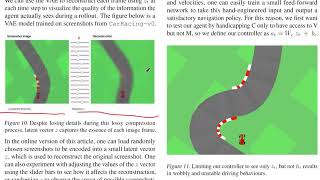
World Models
Explore generative neural network models for reinforcement learning environments, learning compressed representations and training agents in hallucinated dreams for efficient task-solving.
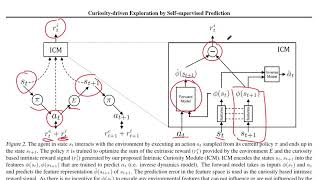
Curiosity-Driven Exploration by Self-Supervised Prediction
Explore how curiosity can be an intrinsic reward for agents in sparse-reward environments, using self-supervised prediction to enable efficient exploration and skill acquisition.
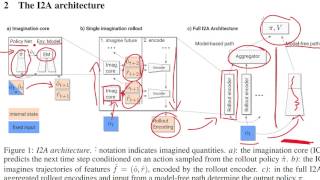
Imagination-Augmented Agents for Deep Reinforcement Learning
Explore innovative deep reinforcement learning architecture combining model-free and model-based approaches for improved performance and efficiency in complex environments.

Composite Indexes and the Faiss Index Factory
Explore composite indexes and Faiss Index Factory for optimizing vector search performance, balancing recall, latency, and memory usage in similarity search applications.

Training BERT - Masked-Language Modeling
Explore BERT's masked-language modeling technique for NLP tasks. Learn how this innovative approach trains the model to predict masked tokens, enhancing its understanding of language context.
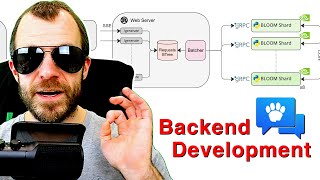
Open Assistant Inference Backend Development
Hands-on coding session building streaming inference into Hugging Face's text generation server, covering CUDA, Python, Rust, gRPC, WebSockets, and server-sent events for AI development.

ChatGPT - This AI Has a Jailbreak! - Unbelievable AI Progress
Explore ChatGPT's capabilities, origins, and potential risks. Learn about its underlying technology, amazing features, and ways to bypass safety mechanisms, while considering OpenAI's vision for the future.

Did Google's LaMDA Chatbot Just Become Sentient?
Explore the controversy surrounding Google's LaMDA chatbot and its alleged sentience. Analyze claims, examine language models, and delve into the philosophical questions of AI consciousness and recognition of machine sentience.
Sparse Expert Models - Switch Transformers, GLAM, and More With the Authors
Explore sparse expert models in AI, discussing their architecture, routing, history, applications, and future potential. Learn about Switch Transformers, GLAM, and advancements in efficient large-scale language models.