
End-to-End Adversarial Text-to-Speech - Paper Explained
Explore end-to-end adversarial text-to-speech synthesis, tackling alignment challenges and producing high-quality audio directly from text input using innovative neural network architectures and training techniques.
Movement Pruning - Adaptive Sparsity by Fine-Tuning
Explore Movement Pruning, an adaptive sparsity technique for fine-tuning deep neural networks. Learn its advantages over Magnitude Pruning in transfer learning scenarios and its impact on model efficiency.
Learning to Classify Images Without Labels - Paper Explained
Explore innovative techniques for unsupervised image classification, combining representation learning, clustering, and self-labeling to group visually similar images without predefined labels.
On the Measure of Intelligence by François Chollet - Foundations - Paper Explained
Exploring Chollet's proposal for measuring AI intelligence through generalization ability, challenging traditional skill-based evaluations and drawing inspiration from psychometrics to redefine intelligence assessment.
Dynamics-Aware Unsupervised Discovery of Skills - Paper Explained
Explores a novel RL framework for autonomous skill discovery and goal-directed planning, combining model-based and model-free approaches to learn predictable behaviors and their dynamics without explicit rewards.
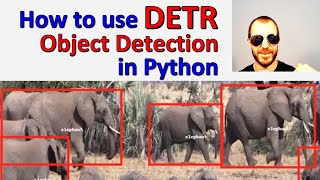
How to Use Facebook's DETR Object Detection Algorithm in Python - Full Tutorial
Hands-on tutorial implementing Facebook's DETR object detection algorithm in Python, covering model loading, image processing, output handling, and visualization with various test cases.

A Critical Analysis of Self-Supervision, or What We Can Learn From a Single Image
Explores self-supervision in deep learning, revealing that a single image with data augmentation can effectively train lower network layers, challenging assumptions about large dataset requirements.
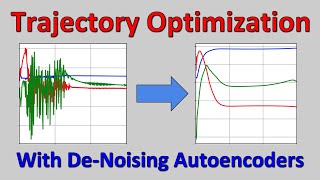
Regularizing Trajectory Optimization with Denoising Autoencoders - Paper Explained
Explore regularizing trajectory optimization in reinforcement learning using denoising autoencoders to improve planning and sample efficiency in motor control tasks.
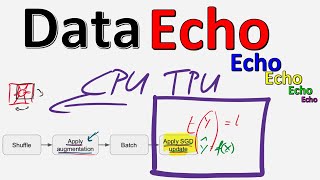
Faster Neural Network Training with Data Echoing - Paper Explained
Explore data echoing technique to optimize neural network training by reusing pipeline data, reducing bottlenecks and improving GPU efficiency for faster processing.
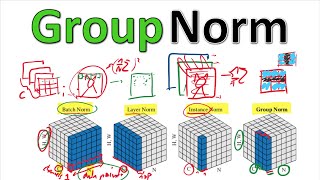
Group Normalization - Paper Explained
Explore Group Normalization as an alternative to Batch Normalization, addressing batch size limitations and improving performance in various deep learning tasks.
Concept Learning with Energy-Based Models
Explore energy-based models for concept learning, focusing on their ability to generalize, reason abstractly, and solve problems creatively with limited data through inference-time optimization.

Big Transfer - General Visual Representation Learning
Explore pre-trained ResNet for visual tasks, learning about large model pre-training and effective fine-tuning techniques for improved performance across diverse datasets.

Divide-and-Conquer Monte Carlo Tree Search for Goal-Directed Planning - Paper Explained
Explores a novel AI planning approach using divide-and-conquer Monte Carlo Tree Search, proposing intermediate goals to break complex problems into manageable sub-tasks for more efficient problem-solving.
Reinforcement Learning with Augmented Data
Explore how data augmentation enhances reinforcement learning algorithms, improving efficiency and generalization across visual observation tasks without modifying core RL methods.
Chip Placement with Deep Reinforcement Learning
Deep reinforcement learning optimizes chip placement, outperforming human experts in speed and efficiency. This AI-driven approach learns from experience, generalizes to new designs, and minimizes power, performance, and area constraints.

The AI Economist - Improving Equality and Productivity with AI-Driven Tax Policies
Explore AI-driven tax policies that balance equality and productivity through reinforcement learning, revealing emergent strategies and outperforming traditional economic models in simulations and human experiments.
Deconstructing Lottery Tickets - Zeros, Signs, and the Supermask
Explores the Lottery Ticket Hypothesis, analyzing key components of sparse networks and uncovering insights on weight initialization, sign importance, and the concept of Supermasks in neural network training.
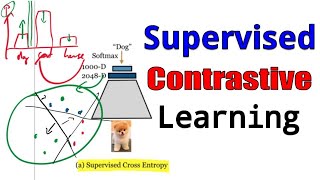
Supervised Contrastive Learning
Explore a novel supervised learning approach that outperforms cross-entropy loss, improving image classification models' performance and robustness across various architectures and data augmentations.
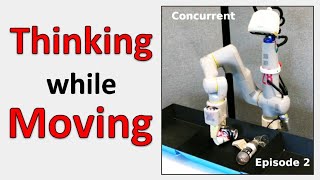
Thinking While Moving - Deep Reinforcement Learning with Concurrent Control
Explore concurrent control in reinforcement learning, where agents make decisions while executing actions, revolutionizing robotic movement and decision-making processes.
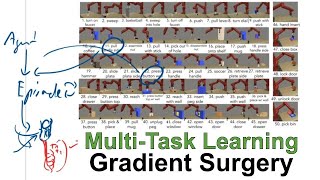
Gradient Surgery for Multi-Task Learning
Explore PCGrad, a technique addressing gradient conflicts in multi-task learning, enhancing efficiency and performance in supervised and reinforcement learning scenarios.
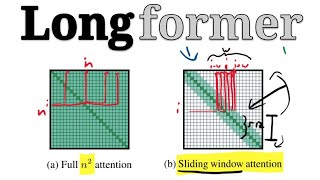
Longformer - The Long-Document Transformer
Explore Longformer's innovative attention mechanism for processing lengthy documents, combining local windowed and global attention to overcome Transformer limitations in handling long sequences.