Dimensionality Reduction II
Explore advanced dimensionality reduction techniques, including PCA and negentropy, with practical applications in brain and cognitive sciences. Includes exercises and research discussions.
Prof. Lorenzo Rosasco- Multiple Kernel Learning
Explore multiple kernel learning techniques with Prof. Lorenzo Rosasco, covering overlapping groups, vector notation, proxy operators, and more in this comprehensive lecture.

Transformer Encoder in 100 Lines of Code
Learn to implement a Transformer Encoder from scratch in Python. Explore key concepts like attention mechanisms, layer normalization, and feed-forward networks through hands-on coding.
End-to-End ML Project with Deployment - Project Structure, Logging, and Exception Handling - Tutorial 2
Learn to structure, log, and handle exceptions in an end-to-end machine learning project, focusing on practical implementation and deployment techniques.

Pinecone's New Hybrid Search - The Future of Search?
Explore Pinecone's hybrid search, combining vector and traditional methods for improved relevance and adaptability in semantic search and information retrieval.

OpenAI CLIP Explained - Multi-modal ML
Explore OpenAI's CLIP model, bridging text and image understanding. Learn about multi-modal AI, CLIP's functionality, and its applications in encoding, classification, and object detection.

Bag of Visual Words for Image Classification and Retrieval
Learn to build image embeddings using the Bag of Visual Words technique for image retrieval, object detection, and classification in computer vision applications.
Making the Most of Data - Augmented SBERT
Explore data augmentation in NLP, focusing on AugSBERT for low-resource domains. Learn techniques to generate and label data automatically, enhancing ML model performance without manual annotation.
Building MLM Training Input Pipeline - Transformers From Scratch
Learn to create a complex input pipeline for Masked Language Modeling, transforming raw OSCAR data into a DataLoader ready for training transformer models from scratch.
Vector-Based Methods for Similarity Search - TF-IDF, BM25, SBERT
Explore three vector-based approaches for language comparison and document similarity: TF-IDF, BM25, and Sentence-BERT. Learn key techniques for building effective search engines in AI and machine learning.

Training BERT - Train With Next Sentence Prediction
Learn to pre-train BERT models using Next Sentence Prediction (NSP) for improved language understanding in specific domains. Practical implementation with unstructured text data.
Sentiment Analysis on Any Length of Text With Transformers - Python
Learn to perform sentiment analysis on long texts using transformers in Python, overcoming token limitations through chunking and processing techniques for NLP tasks.
Build a Transformer for Language Classification in TensorFlow
Build a transformer-based sentiment classifier using HuggingFace's library in TensorFlow. Learn to download data, tokenize inputs, prepare datasets, define the model architecture, and train for multi-class sentiment analysis.
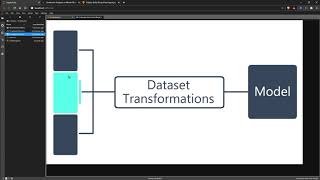
How to Build TensorFlow Pipelines with tf.data.Dataset
Learn to create efficient input pipelines for machine learning using TensorFlow's tf.data.Dataset API, enhancing data processing and model performance.

Data Management Fundamentals
Explore data management fundamentals, resources, and techniques for enhancing data discoverability and comprehension in scientific work and publications.

Building Realistic Machine Learning Systems for Security
Explore building robust machine learning systems for malware detection, addressing challenges like low false positive rates, polluted data, and realistic adversarial attacks in security applications.

Trustworthy Machine Learning: Challenges and Frameworks
Exploring the security challenges in machine learning, this talk discusses strategies for building trustworthy AI systems by analyzing data influence, addressing vulnerabilities, and enhancing interpretability.
Classifiers Under Attack: Evasion Techniques and Defensive Strategies
Exploring vulnerabilities in machine learning classifiers for security applications, demonstrating evasion techniques, and discussing methods to enhance robustness against adversarial attacks.
Adversarial Examples in Machine Learning - Crafting and Defending Against Attacks
Explore machine learning vulnerabilities, adversarial examples, and their impact on system security. Learn crafting techniques and defenses through practical tutorials and real-world applications.
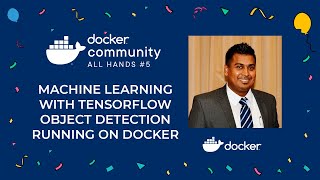
Machine Learning with TensorFlow Object Detection Running on Docker
Explore TensorFlow Object Detection API implementation using Docker, covering image creation, dependencies, and practical analysis of object detection in pictures.
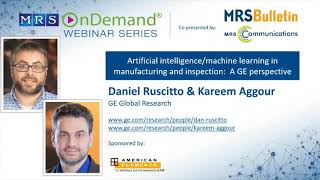
Artificial Intelligence-Machine Learning in Manufacturing and Inspection - A GE Perspective
Explore GE's perspective on AI/ML in manufacturing, focusing on metal additive manufacturing, ceramic matrix composites, and microstructure quantification for improved quality assurance.