
Become a Master of SDXL Training with Kohya SS LoRAs - Combine Power of Automatic and SDXL LoRAs
Master SDXL LoRA training with Kohya SS: installation, optimization, and advanced techniques for high-quality image generation using Automatic1111 Web UI and minimal VRAM.
ChatGPT's Biggest Feature Yet - Code Interpreter
Explore ChatGPT's Code Interpreter: a powerful Python execution environment that extends AI capabilities, enabling real-time code interpretation and execution in a secure, sandboxed setting.
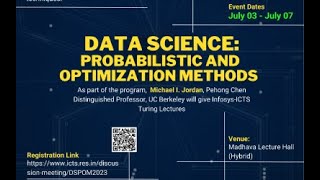
Advances in Risk-Aware Multi-Armed Bandit Problems - Lecture 3
Explore risk-aware multi-armed bandit problems with Vincent Tan. Learn advanced techniques for balancing exploration and exploitation in uncertain decision-making scenarios.
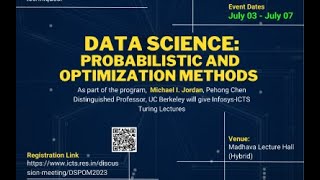
Learning from Dependent Data - Lecture 2
Explores techniques for analyzing and learning from dependent data, focusing on probabilistic and optimization methods in data science.
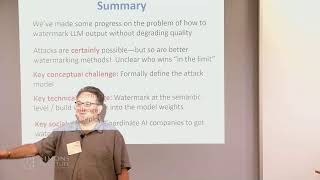
Watermarking of Large Language Models
Explore statistical watermarking for LLM outputs, its context, challenges, and unsolved problems in AI attribution. Gain insights into deployment issues and resistance to translation attacks.

Are LLMs the Beginning or End of NLP?
Explore tensions in NLP due to LLM advances: task-based vs. tech stacks, ML optimization vs. software engineering principles, and the complex capabilities and limitations of modern models.
Large Language Models Bootcamp Information Session
Comprehensive introduction to building LLM-powered applications, covering foundations, advanced techniques, and hands-on projects. Ideal for AI enthusiasts and professionals seeking practical skills in generative AI.

Medical Polyp Image Segmentation with U-Net and TensorFlow Keras
Step-by-step guide to implement U-Net for medical polyp image segmentation using TensorFlow/Keras, covering data preprocessing, model architecture, training, and evaluation.

An Observation on Generalization
Explore insights on generalization in large language models and transformers with OpenAI's Ilya Sutskever, delving into the capabilities and implications of advanced AI systems.
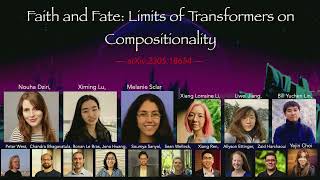
Possible Impossibilities and Impossible Possibilities
Explore the limits and potential of large language models, questioning fundamental constraints and alternative paths beyond scale in this thought-provoking discussion on AI's future.
Sparks of Artificial General Intelligence
Exploring GPT-4's advanced capabilities and the potential for smaller models to exhibit AGI-like properties through high-quality data and efficient training methods.

Machine Learning Methods for Climate Science - Lecture 2
Explore machine learning applications in climate science, focusing on advanced techniques and their impact on understanding and predicting climate phenomena.
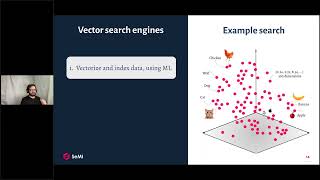
Vector Search - A Gentle Introduction - Zain Hasan
Explore vector search technology, its applications in semantic search and recommendation systems, and learn about implementing real-time vector search with CRUD support for production-scale ML models.
Formalizing Explanations of Neural Network Behaviors
Explores strategies for formally explaining neural network behaviors, discussing alternatives to informal interpretations and rigorous proofs, aiming to provide safety benefits in AI research.

Are Aligned Language Models "Adversarially Aligned"?
Explore techniques to manipulate aligned language models into harmful behavior, highlighting challenges in creating robustly aligned AI systems resistant to adversarial attacks.

Language Models as Statisticians, and as Adapted Organisms
Exploring language models as statistical tools and adapted systems to understand their behavior, capabilities, and potential for improvement in various applications.
How to Use Self-Play for Language Models to Improve at Solving Programming Puzzles
Explore how language models can generate and solve programming puzzles, improving their own performance through self-play and interpreter-verified solutions.
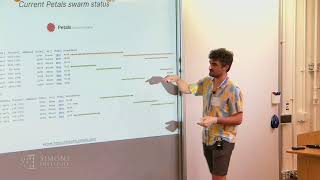
Build an Ecosystem, Not a Monolith
Explore the potential of specialist AI models in creating a more efficient and effective ecosystem, addressing technical challenges and collaborative development opportunities.

Interpretability via Symbolic Distillation
Explore symbolic distillation techniques for enhancing interpretability in large language models and transformers, focusing on practical applications and theoretical insights.
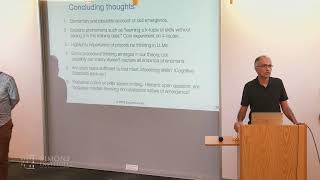
A Theory for Emergence of Complex Skills in Language Models
Explores statistical framework linking LLM cross-entropy loss to language skill competence, analyzing scaling laws' implications for efficient learning and emergence of complex abilities.
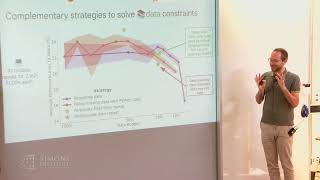
Scaling Data-Constrained Language Models
Explore strategies for scaling language models in data-constrained environments, addressing data repetition, compute optimization, and mitigating scarcity challenges.