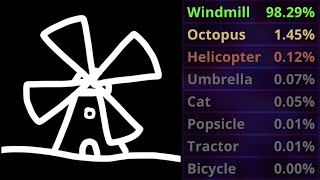
How to Create a Neural Network and Train It to Identify Doodles
Comprehensive guide to building and training neural networks from scratch, covering key concepts and practical implementation for image recognition tasks.

Complete Natural Language Processing Tutorial in Python
Comprehensive Python tutorial covering NLP fundamentals, techniques, and state-of-the-art models. Includes practical examples using popular libraries and hands-on implementation of advanced concepts.

Real-World Python Machine Learning Tutorial With Scikit Learn
Comprehensive Python machine learning tutorial covering sentiment analysis using scikit-learn, from data preparation to model evaluation and optimization, with practical examples using Amazon reviews.
MLOps 101 - A Practical Tutorial on Creating a Machine Learning Project with DagsHub
Step-by-step tutorial on using DagsHub for machine learning projects, covering project creation, environment setup, remote storage configuration, version control, experiment tracking, and hypothesis exploration.

Build Your First Machine Learning Model in Python
Learn to build a machine learning model in Python using scikit-learn. Covers data loading, splitting, model building with linear regression and random forest, comparison, and visualization.
Machine Learning in R - Repurpose Machine Learning Code for New Data
Learn to adapt machine learning code in R for new datasets. Explore data understanding, visualization, and model building techniques using the DHFR dataset as an example.

Enhance Low Light Images Using Keras, Python and Weights & Biases
Learn to enhance low-light images using Zero-DCE, an unsupervised technique implemented with Python, Keras, and Weights & Biases. Explore model training, experiment tracking, and result visualization in this hands-on tutorial.
Fine-Tuning OpenAI's GPT-3
Explore GPT-3's applications, fine-tuning benefits, and API development with OpenAI's VP and a W&B engineer. Learn about commercial uses and the new OpenAI-W&B collaboration for logging fine-tuning projects.

AutoMuse- Synopsis GAN for Self-Improving Synopsis Generators
Explore AI-powered synopsis generation using GANs and GPT-3, delving into creative writing applications, story idea generation, and the challenges of crafting compelling narratives and characters.
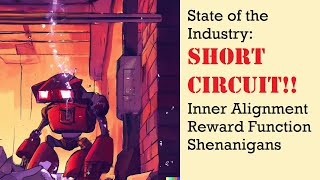
State of the Industry - Short-Circuiting Reward Functions
Explores risks of advanced AI systems, including learned optimization, inner alignment problems, and potential dangers of superintelligence, emphasizing the importance of understanding AI limitations and goal-setting challenges.
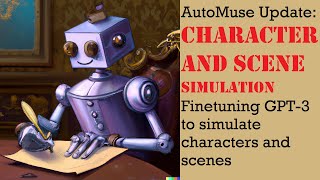
AutoMuse: Working on Character and Scene Simulations - GPT-3 Finetuning Project
Explore character simulation and scene generation techniques using GPT-3 fine-tuning. Learn to create synthetic data, develop realistic characters, and generate novel scenes for AI-powered storytelling.
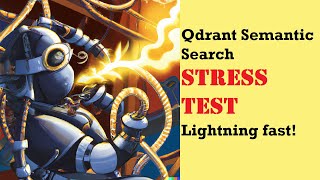
Stress Testing Qdrant - Semantic Search with 90,000 Vectors - Lightning Fast Search Microservice
Explore stress testing Qdrant for semantic search with 90,000 vectors. Learn to set up TensorFlow, generate data, and evaluate search efficiency in this hands-on tutorial.
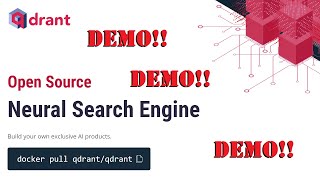
Semantic Search for AI - Testing Out Qdrant Neural Search
Explore semantic search implementation using Qdrant, covering Docker setup, data cleaning, microservice creation, and leveraging sentence embeddings for improved AI-powered search capabilities.
Fine-Tune a Perfect Email Generator in GPT-3 - Take Any Input and Generate a Great Email
Learn to fine-tune GPT-3 for generating perfect emails. Explore techniques for synthesizing content, automating creativity, and creating training datasets to improve email writing across various scenarios and intents.
Introducing the RAVEN MVP - A General Purpose AI Companion - With a Live Demo
Explore RAVEN, an innovative AI companion with real-time assistance capabilities, cognitive architecture, and self-improvement features. Learn about its development, principles, and future potential in artificial intelligence.
Answer Complex Questions From an Arbitrarily Large Set of Documents With Vector Search and GPT-3
Learn to build a system that answers complex questions from large document sets using vector search and GPT-3, enhancing information retrieval and analysis capabilities.
Fine-Tune Multiple Cognitive Tasks with GPT-3 on Medical Texts and Reduce Hallucination
Learn to finetune GPT-3 for medical tasks, reduce hallucination, and improve accuracy in extracting information from patient charts and generating diagnoses.
Fine-Tune GPT-3 to Write an Entire Coherent Novel - Part 1
Learn to fine-tune GPT-3 for novel writing, exploring techniques like style mimicking, outline generation, and chunk-by-chunk story building to create coherent, AI-generated fiction.
From Zero to Finetuned Model in 1 Hour with GPT-3 - Generate a Movie Script from Any Premise
Learn to generate movie scripts from any premise using GPT-3, exploring creative storytelling techniques and fine-tuning models for various genres and styles in just one hour.
Supercharge Your Training With PyTorch Lightning and Weights & Biases
Learn to enhance ML pipelines using PyTorch Lightning and Weights & Biases. Discover efficient experiment tracking, advanced logging techniques, and how to leverage callbacks for improved model development and visualization.
DIY ChatGPT- Enhancing RAVEN's Long-Term Memories and Starting to Work on Self-Reflection
Explore techniques for enhancing AI memory, self-reflection, and learning through timestamps, knowledge bases, dream sequences, and heuristic imperatives. Gain insights into debugging and improving AI systems.