LLMs for Automated Data Science - Introducing CAAFE for Context-Aware Automated Feature Engineering
Discover how CAAFE leverages large language models to enhance automated feature engineering in data science, improving model performance through context-aware feature generation and semantic understanding.
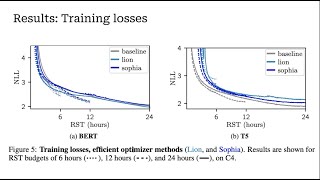
No Train No Gain - Revisiting Efficient Training Algorithms for Transformer-based Language Models
Delve into efficient training algorithms for Transformer models, exploring dynamic architectures, batch selection, and optimizers while examining their effectiveness against baseline methods.
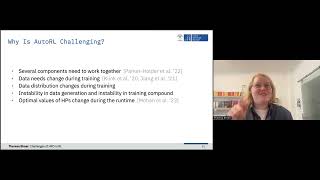
Challenges in Hyperparameter Optimization for Reinforcement Learning - Understanding AutoRL Through AutoML
Explore the complexities of hyperparameter optimization in Reinforcement Learning, examining AutoML tools and methods to better understand and tune RL algorithms for improved performance.
Multi-objective Bayesian Optimization with Heuristic Objectives for Biomedical and Molecular Data Analysis Workflows
Discover advanced Bayesian optimization techniques for biomedical data analysis, focusing on multi-objective approaches with heuristic objectives in unsupervised bioinformatics workflows.
Discovering Black-Box Optimizers via Evolutionary Meta-Learning
Delve into evolutionary meta-learning techniques for discovering black-box optimizers, exploring advanced concepts in evolution strategies and genetic algorithms through self-attention architectures.
Hyperparameter Optimization and Algorithm Configuration from a Black-Box Optimization Perspective
Explore dynamic algorithm configuration and hyperparameter optimization approaches, comparing AutoML and black-box optimization methods for efficient, adaptive parameter tuning.
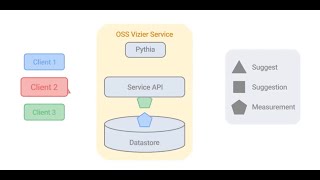
Open Source Vizier: Distributed Infrastructure for Blackbox Optimization and Hyperparameter Tuning
Explore Google's Vizier system for blackbox optimization and hyperparameter tuning, covering its distributed infrastructure, Python implementation, and integration with AutoML ecosystem.
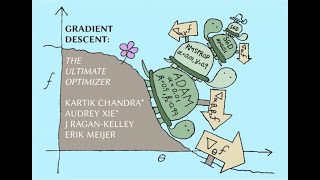
Gradient Descent: The Ultimate Optimizer - Automating Hyperparameter Optimization
Discover how to automatically optimize hyperparameters in gradient-based ML algorithms through an elegant modification to backpropagation, making optimizer tuning more efficient and less sensitive to initial choices.

On Learning Polynomial Recursive Programs
Explore P-finite automata, a generalization of weighted automata with polynomial transition weights. Learn about their polynomial-time learnability in Angluin's MAT exact learning model.

Asynchronous Probabilistic Couplings in Higher-Order Separation Logic
Explore asynchronous probabilistic couplings in higher-order separation logic, addressing synchronization issues in relational program logics for enhanced reasoning about probabilistic programs.

Arduino Nano RP2040 Connect - Arduino Meets Raspberry Pi
Explore the Arduino Nano RP2040 Connect's advanced features, including WiFi, Bluetooth, IMU with machine learning, and MEMS microphone through hands-on experiments and practical demonstrations.
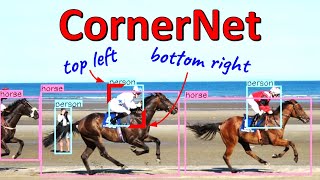
CornerNet- Detecting Objects as Paired Keypoints
Explores CornerNet, a novel object detection approach using paired keypoints. Covers corner pooling, heatmap and embedding outputs, loss functions, and experimental results.
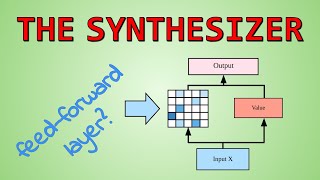
Synthesizer - Rethinking Self-Attention in Transformer Models
Explores alternative attention mechanisms in Transformer models, proposing the Synthesizer model that learns synthetic attention weights without token-token interactions, showing competitive performance across various NLP tasks.
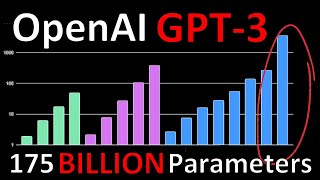
GPT-3 - Language Models Are Few-Shot Learners
Comprehensive analysis of GPT-3's capabilities, exploring its performance on various NLP tasks and discussing its potential impact on AI research and applications.

DETR - End-to-End Object Detection with Transformers
Explore DETR, a groundbreaking object detection method using Transformers. Learn about its simplified architecture, innovative loss function, and impressive performance in image analysis tasks.

When BERT Plays the Lottery, All Tickets Are Winning - Paper Explained
Exploring BERT pruning and the Lottery Ticket Hypothesis, revealing that even pruned components can be fine-tuned for good accuracy in NLP tasks, with implications for model efficiency and knowledge utilization.
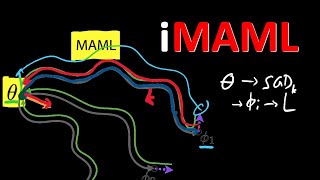
IMAML- Meta-Learning with Implicit Gradients
Explore an innovative approach to meta-learning that improves computational efficiency through implicit gradients, enabling faster adaptation to new tasks using prior knowledge.
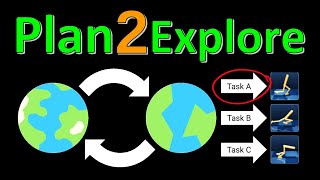
Planning to Explore via Self-Supervised World Models - Paper Explained
Explores a novel AI approach for efficient self-supervised learning and rapid adaptation to new tasks, using planning in latent space to seek out uncertainty and maximize information gain.
Latent Dirichlet Allocation with Gibbs Sampling Explained
Comprehensive explanation of Latent Dirichlet Allocation (LDA) with Gibbs Sampling, covering topic modeling, posterior inference, and implementation details. Ideal for those interested in understanding this classic machine learning technique.

Variational Autoencoder From Scratch in PyTorch
Learn to implement a Variational Autoencoder from scratch using PyTorch, covering architecture, training loop, and inference with practical examples and code demonstrations.

SRGAN Implementation From Scratch
Learn to implement SRGAN from scratch, covering model architecture, VGG loss term, and essential components for super-resolution image enhancement.