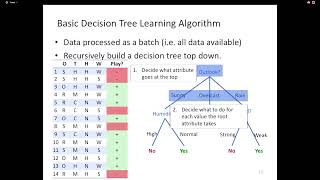
Learning Decision Trees Using ID3 Heuristic - Lecture 4
Master the ID3 heuristic algorithm for decision tree learning through practical examples and hands-on application with real datasets, focusing on fundamental concepts and implementation techniques.
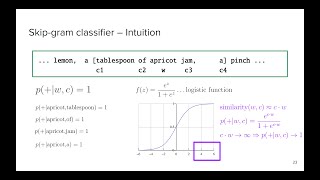
Vector Semantics and Word Embeddings in Natural Language Processing
Dive into vector semantics and word embeddings, exploring representation learning, distributional hypothesis, word2vec implementation, and their practical applications in natural language processing.
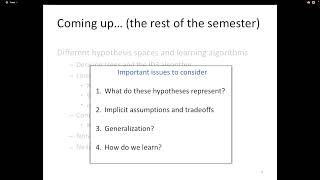
Introduction to Decision Trees in Machine Learning - Lecture 3
Explore the fundamentals of decision trees in machine learning, understanding their structure, functionality, and representational capabilities in data-driven decision making.
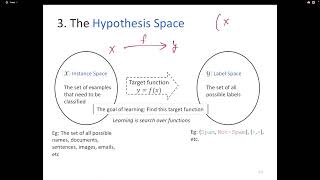
Supervised Learning: The Setup and Hypothesis Space Selection - Lecture 3
Delve into supervised learning concepts, focusing on hypothesis space selection and its crucial role in building effective machine learning models.
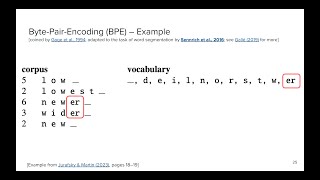
Logistic Regression and Natural Language Processing - Tokenization and BPE
Master logistic regression fundamentals and explore text tokenization techniques including BPE, with key linguistic concepts for natural language processing applications.
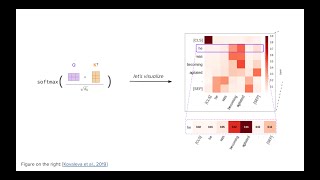
Attention and Transformer Encoder Architecture
Master the inner workings of Transformer encoders and attention mechanisms in deep learning, exploring their architecture, self-attention calculations, and practical applications in modern AI.
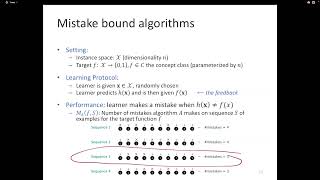
Mistake Bound Learning and the Halving Algorithm - Lecture 8
Dive into mistake bound learning principles and explore the Halving algorithm's role in machine learning theory and practical applications.
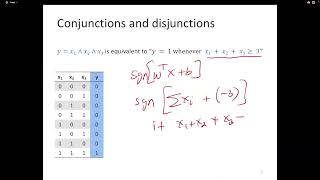
Linear Classifier Expressiveness in Machine Learning - Lecture 7
Delve into the theoretical foundations of linear classifiers, exploring their expressive capabilities and understanding their role as a fundamental hypothesis class in machine learning.
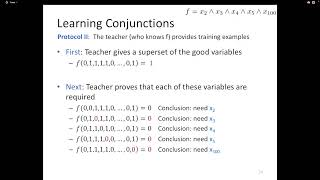
How Good is a Learning Algorithm? Quantifying the Learning Process - Lecture 7B
Explore the quantitative aspects of machine learning by examining how many examples are needed to effectively discover and validate hypotheses.
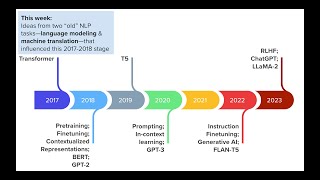
Introduction to Language Modeling: From N-grams to Neural Networks
Explore the evolution of language modeling, from n-grams to neural architectures, covering key concepts like embeddings, transformers, and RLHF implementations.

Decision Trees and Overfitting in Machine Learning - Lecture 6
Dive into advanced concepts of decision trees, focusing on overfitting challenges and practical solutions for building more robust machine learning models.
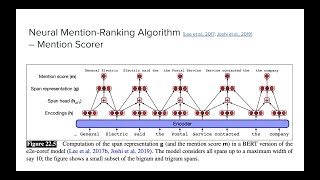
Coreference Resolution in Natural Language Processing
Master the fundamentals of coreference resolution in natural language processing, exploring key concepts, algorithms, and practical applications for improving text understanding and analysis.
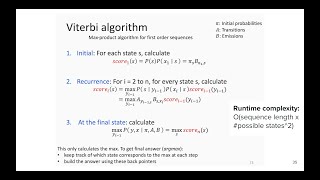
Hidden Markov Models - Parameter Estimation and Efficient Inference
Master parameter estimation and efficient inference techniques for Hidden Markov Models, exploring key algorithms and mathematical foundations for probabilistic sequence modeling and pattern recognition.
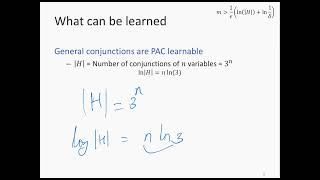
Positive and Negative Learnability Results in Machine Learning - Lecture 14B
Explore fundamental learnability concepts in machine learning through Occam's razor theorem applications and function class analysis.
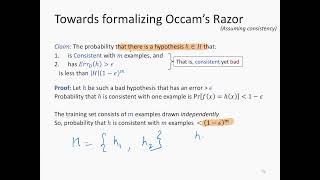
Machine Learning: Occam's Razor for Consistent Learners - Lecture 13B
Explore the theoretical foundations of Occam's razor theorem and its applications in consistent machine learning algorithms through mathematical analysis.

Introduction to Computational Learning Theory - Lecture 12
Explore fundamental concepts of computational learning theory and theoretical frameworks that underpin machine learning algorithms and their effectiveness.
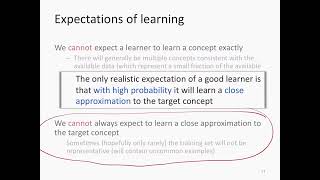
PAC Learning in Machine Learning Theory - Lecture 13
Explore the fundamental concepts of PAC (Probably Approximately Correct) learning theory and its applications in theoretical machine learning frameworks.
Machine Learning: Occam's Razor and Consistent Learners - Lecture 14
Delve into the principles of Occam's razor and its application in consistent learning algorithms, exploring key theoretical foundations of machine learning complexity.
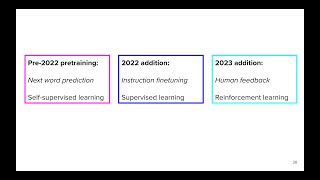
Finetuning a Sequence-to-Sequence Model with RLHF
Master sequence-to-sequence model finetuning techniques and reinforcement learning from human feedback (RLHF) through hands-on demonstrations and practical implementations.
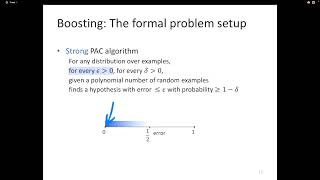
Boosting and Ensemble Methods in Machine Learning - Lecture 18
Dive into boosting algorithms and learn how to combine weak learning rules to create powerful predictive models in machine learning applications.
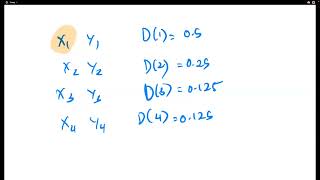
Machine Learning: Boosting and Ensemble Methods - Lecture 19
Dive into advanced boosting techniques and ensemble methods to transform weak learning algorithms into powerful predictive models for enhanced machine learning capabilities.