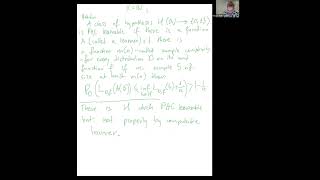
Computable PAC Learning - Part 2
Dive into advanced concepts of computable PAC learning through an in-depth exploration of theoretical frameworks and computational complexity in machine learning theory.
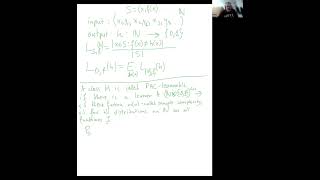
Computable PAC Learning - Part 1
Dive into computational complexity and PAC learning theory through an in-depth exploration of foundational concepts, statistical learning frameworks, and algorithmic approaches.

Vapnik-Chervonenkis Theorem and Statistical Learning Theory
Dive into the fundamental Vapnik-Chervonenkis theorem, exploring how VC-dimension relates to machine learning generalization and error rates in hypothesis spaces.
Trained Quantum Neural Networks are Gaussian Processes
Explore the mathematical foundations of quantum neural networks, focusing on their convergence to Gaussian processes and implications for training in supervised learning scenarios.
Potential and Limitations of Near-Term Quantum Computing
Explore the current landscape of quantum computing, examining both promising applications and key limitations in intermediate-scale quantum devices, with focus on error mitigation and practical implementations.
Using Machine Learning for Doing Rather Than Knowing - Practical Applications of RL in Industry
Explore practical applications of reinforcement learning in industrial systems, focusing on real-time control algorithms for supply chains, logistics, and energy management in non-stationary environments.
Coresets for Machine Learning - Tensor Factorization and Bregman Clustering
Explore advanced techniques for data summarization through coresets, focusing on tensor factorization and Bregman clustering, with applications in efficient machine learning algorithms for massive datasets.
Cost-Efficient Distributed Learning
Discover strategies for optimizing distributed gradient descent algorithms by managing worker responses and implementing adaptive techniques to balance computational efficiency with model quality in machine learning systems.
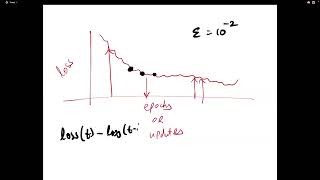
Neural Networks and Backpropagation - Lecture 26
Dive into neural network training fundamentals through backpropagation, learning essential parameter optimization techniques and mathematical foundations for deep learning implementation.
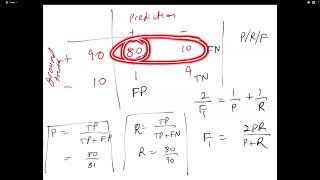
Neural Networks - Lecture 25
Dive into neural networks' structural foundations and discover their role as a hypothesis class, exploring key concepts and practical applications in machine learning.
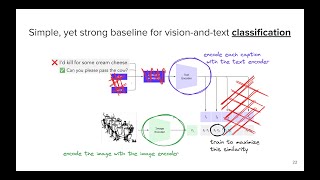
Multilingual and Multimodal Large Language Models
Explore the fascinating world of multilingual and multimodal Large Language Models, understanding their capabilities, applications, and future potential in AI development.
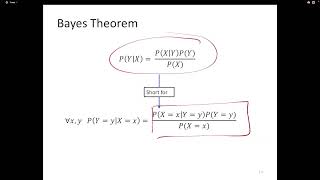
Bayesian Learning and Maximum Likelihood Methods - Lecture 23
Explore probabilistic learning criteria through maximum a posteriori and maximum likelihood approaches, with practical examples of Bayesian learning applications.
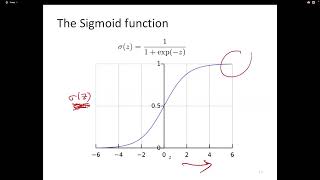
Logistic Regression - Machine Learning Lecture 24
Master logistic regression classification through maximum likelihood and maximum a posteriori criteria, building practical skills for effective machine learning model development.
Support Vector Machines and Maximizing Margins in Machine Learning - Lecture 20
Dive into support vector machines, exploring margin maximization, linear classifiers, and regularized risk minimization for advanced machine learning applications.
Stochastic Gradient Descent for Support Vector Machines - Lecture 22A
Dive into stochastic sub-gradient descent optimization for Support Vector Machines and discover its connection to perceptron algorithms through practical implementation techniques.
Tokenization and Morphology in Natural Language Processing
Master essential text processing concepts through tokenization and morphology analysis, exploring fundamental techniques for breaking down and understanding linguistic structures.
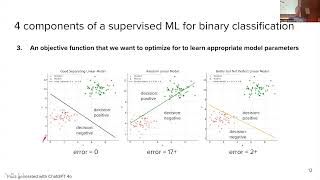
Machine Learning Foundations - Logistic Regression
Master logistic regression fundamentals through hands-on practice, exploring core concepts, implementation techniques, and practical applications in machine learning and data analysis.
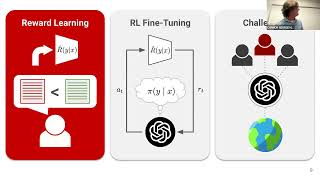
Reinforcement Learning from Human Feedback (RLHF) - Advances in Generative AI
Dive into reinforcement learning from human feedback (RLHF) and its crucial role in advancing generative AI systems, exploring key concepts, implementation strategies, and real-world applications.
Practical Advice for Building Machine Learning Applications - Lecture 28
Gain insights into practical strategies and best practices for implementing real-world machine learning systems, from system design to deployment considerations.
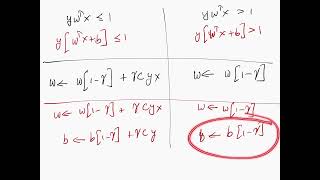
Practical Issues with Neural Networks in Machine Learning - Lecture 27
Explore practical challenges and solutions for training large neural networks, including effective strategies and optimization techniques for improved performance.
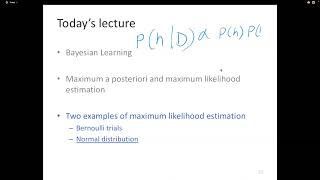
Maximum Likelihood Estimation for Regression in Machine Learning - Lecture 24
Dive into maximum likelihood estimation for regression through practical examples and explore its connection to loss minimization in Bayesian learning frameworks.