SciAgents and AI Research Idea Generation - Comparing Stanford and MIT Approaches
Explore groundbreaking research from Stanford and MIT on AI agents' capabilities in scientific discovery, idea generation, and knowledge graph reasoning, with practical Python implementations.
Self-Harmonized Chain of Thought (ECHO) - Understanding Complex Reasoning in Language Models
Explore the innovative ECHO method for enhancing language model reasoning through iterative refinement, clustering, and cross-validation techniques to achieve more accurate and consistent solutions.
Robin3D: Improving 3D Large Language Models Through Robust Instruction Tuning
Discover how Robin3D advances spatial intelligence through innovative data generation and architectural improvements for better 3D scene understanding and object relationship comprehension.
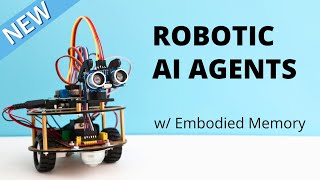
Embodied-RAG: Hierarchical Non-parametric Memory Systems for AI Agents
Explore Carnegie Mellon's groundbreaking Embodied-RAG framework that enhances robotic systems with hierarchical memory and advanced spatial navigation capabilities for real-world applications.

Anthropic's Improved Contextual RAG System - Implementation Guide and Performance Analysis
Discover how to implement Anthropic's improved RAG system with contextual retrieval, featuring cBM25, prompt caching, and reranking techniques - applicable across all LLM platforms for enhanced performance.
Collaborative Multi-Agent LLMs for Mixed-Autonomy Traffic - CoMAL Framework
Explore how CoMAL framework enables autonomous vehicles to collaborate through LLM-powered reasoning, role assignment, and real-time coordination for safer and more efficient mixed-autonomy traffic systems.
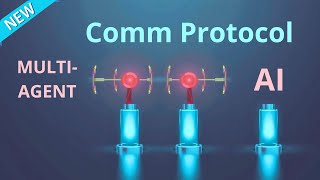
Task-Optimized Multi-Agent Communication Protocols with G-Designer
Explore the G-Designer framework for optimizing multi-agent AI communication through Graph Neural Networks, focusing on efficiency, scalability, and robust topology design.
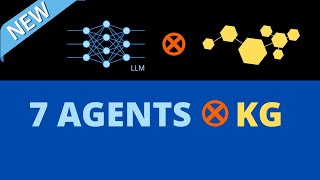
AGENTiGraph: Integrating LLM-based Multi-Agent Systems with Knowledge Graphs
Explore how AGENTiGraph combines seven specialized AI agents with knowledge graphs to enhance LLM capabilities, focusing on entity mapping, reasoning, and complex query handling.
AFLOW: Automating Agentic Workflows for Large Language Models
Discover how AFLOW framework optimizes LLM workflows through automated code-based representations, specialized Monte Carlo Tree Search, and reusable operators to enhance AI performance while reducing computational costs.

Google's Dual-Agent AI Architecture: Thinking Fast and Slow
Explore Google's innovative dual-agent AI system that combines fast, intuitive responses with deep, deliberate reasoning for enhanced human-AI interactions and complex problem-solving.
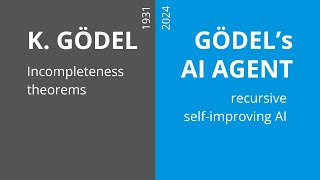
Gödel's Theorem and Self-Learning AI Machines - From Incompleteness to Recursive Agents
Explore the groundbreaking Gödel Agent framework for AI, examining how self-referential systems and recursive self-improvement enable machines to autonomously evolve and optimize their own code and decision-making processes.

DINOv2: Data Pipeline, Model Training and Results - Meta AI's Visual Feature Learning System
Delve into Meta AI's DINOv2 architecture, exploring its data pipeline, training methodology, and innovative features for robust visual processing without supervision in just 12 minutes.
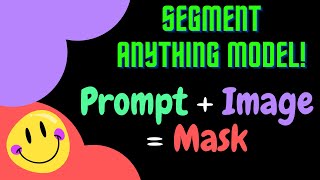
Understanding Meta AI's Segment Anything Model (SAM) - Architecture, Data Engine, and Results
Dive into Meta AI's Segment Anything Model (SAM), exploring its architecture, innovative data engine, and zero-shot transfer learning capabilities for advanced image segmentation tasks.
ChatGPT and Whisper API Tutorial - Building a Demo Application with Python
Master ChatGPT's Python API capabilities through hands-on demonstrations of text completion, chat, image generation, and speech features, culminating in building a Streamlit demo application.
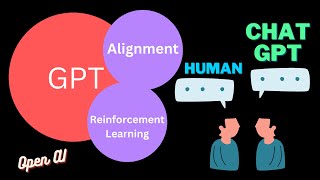
How ChatGPT is Trained - Model and Training Explained
Delve into the technical foundations and training methodology behind ChatGPT, exploring its model architecture, reinforcement learning principles, and step-by-step training process.

KGARevision: A Knowledge Graph-Based Agent for Medical AI Question Answering
Discover how Harvard's KGARevion agent combines knowledge graphs with LLMs to enhance medical AI reasoning, focusing on complex medical interactions and improved retrieval methods.
Multi-Agent Dynamics with Self-Play Reinforcement Learning
Explore how self-play techniques in multi-agent reinforcement learning revolutionize game theory, enabling AI agents to develop advanced strategies through autonomous learning and competition.
Strategic Deviations in Multi-Agent Imitation Learning: From Value Optimization to Regret Analysis
Delve into the complex dynamics of multi-agent AI systems, exploring strategic deviations, regret gaps, and equilibrium concepts in imitation learning through practical applications and mathematical frameworks.
Behavior Cloning and Residual Reinforcement Learning for Visual Assembly
Explore advanced imitation learning techniques combining behavior cloning with reinforcement learning for autonomous robotic systems, focusing on precise visual assembly and sim-to-real transfer applications.
Reinforcement Learning-Based Fine-Tuning of Diffusion Models for Drug Discovery
Dive into advanced reinforcement learning techniques for fine-tuning diffusion models, focusing on accelerated drug discovery, bioinformatics, and molecular compound predictions.

Multi-Agent AI Coordination and Pathfinding Using Cooperative Reward Shaping
Discover how multiple AI agents coordinate actions through Reinforcement Learning, from pathfinding algorithms to practical applications in transport, underwater networks, and space exploration.