
RecurrentGemma: Moving Past Transformers with Griffin Architecture for Long Context Length
Explore Google's RecurrentGemma-2B architecture, featuring Griffin's innovative approach to language modeling that surpasses traditional transformers with enhanced efficiency and long-context processing capabilities.
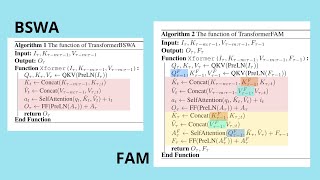
TransformerFAM and BSWA: Understanding Feedback Attention Memory and Block Sliding Window Attention
Dive into Google's revolutionary TransformerFAM architecture, exploring how feedback attention mechanisms and working memory enhance AI's ability to process indefinite sequence lengths with improved efficiency and context awareness.

INFINI Attention: Efficient Infinite Context Transformers with 1 Million Token Context Length
Explore Google's Infini-attention transformer mechanism, featuring compressive memory integration for handling million-token sequences and efficient long-term information processing.
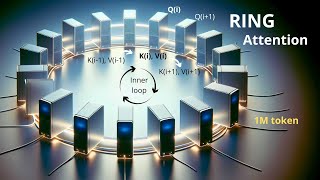
Ring Attention and Blockwise Transformers for Extended Context Length in Language Models
Dive into the technical mechanics of Ring Attention, exploring how it achieves million-token context lengths in large language models through blockwise parallel transformers and efficient implementation.
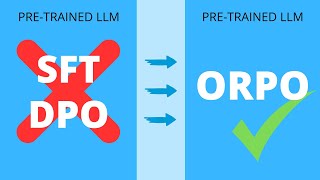
ORPO: A New Preference-Aligned Training Method for Large Language Models
Explore a groundbreaking reference model-free optimization algorithm for LLM training, comparing ORPO's performance with Llama 2 and Mistral 7B through theoretical physics perspectives.

Symmetry Breaking in AI Diffusion Models - Dynamical Regimes and Optimization
Explore groundbreaking research on symmetry breaking patterns in AI diffusion models and their impact on optimization and transformation processes.

Understanding AI State Machines, State Agents, and State Spaces
Explore fundamental AI concepts including state machines, agent states, and state spaces in modern language models, with clear explanations of their interconnections and applications.

AI Domain Generalization: ICRM and ContextVisionTransformers in Medical and Emergency Response
Explore advanced domain generalization in AI through MIT's ICRM methodology and ContextViT, focusing on medical imaging and emergency response applications across diverse real-world scenarios.
FASTER Code for Supervised Fine-Tuning and DPO Training with UNSLOTH
Explore practical implementation of UNSLOTH for accelerated Supervised Fine-Tuning and DPO-Alignment of LLMs using Jupyter notebooks with HuggingFace compatibility.

LLM Prompt Formatting: Optimizing Performance for Language Models and RAG Systems
Master the critical impact of prompt formatting on LLM and RAG system performance, exploring optimization techniques and understanding how different formats influence AI model responses.
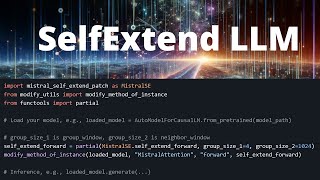
Self-Extending LLM Context Windows Using Grouped Self-Attention
Discover how to extend LLM context windows through grouped self-attention, enabling longer text processing without model retraining. Learn implementation techniques and practical applications.

Supercharging Multi-LLM Intelligence with CALM - Composition to Augment Language Models
Discover how CALM (Composition to Augment Language Models) revolutionizes multi-LLM integration through advanced projection layers and cross-attention mechanisms for enhanced AI capabilities.

Generative Interactive Environments (GENIE) - Creating Synthetic Video Game Worlds
Explore GENIE AI's groundbreaking technology for generating interactive video environments, featuring advanced neural networks and transformers for synthetic world creation.
DSPy Combined with Graph Optimizer in PyG - Multi-Hop RAG Implementation
Explore DSPyG's innovative approach to multi-hop RAG implementation, combining DSPy with graph optimization for enhanced AI research capabilities using minimal computational resources.
DSPy for In-Context Learning and RAG Classification - Code Explained
Explore state-of-the-art extreme multi-label classification using DSPy's Infer-Retrieve-Rank program, combining frozen retrieval with in-context learning for optimal results.
DSPy: Building Self-Improving Language Model Pipelines - Beyond LangChain Templates
Explore DSPy's innovative approach to building self-improving LLM pipelines, featuring automatic prompt engineering and graph-based optimization - moving beyond traditional prompt templates.
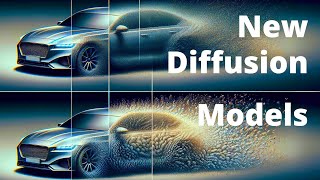
Diffusion Transformer and Rectified Flow in Stable Diffusion 3
Dive into the mechanics of Diffusion Transformers, exploring noise distribution, latent space dimensionality, and the innovative Rectified Flow technology powering next-gen AI image generation.
Performance Evaluation of Open-Source Instruction-Tuned Large Language Models
Explore the latest performance benchmarks and evaluation methodologies for open-source instruction-tuned Large Language Models through comprehensive leaderboard comparisons.

Understanding 4-bit Quantization and QLoRA - Memory Efficient Fine-tuning of LLMs
Dive into memory-efficient fine-tuning of large language models through 4-bit quantization and QLoRA, combining theoretical foundations with practical implementation in Colab.

Video Games and the Future of Artificial Intelligence
Explore how modern video games and their advanced physics simulations are revolutionizing AI development and machine learning capabilities through realistic virtual environments.
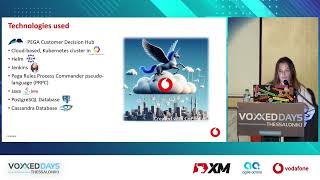
From AI Conversations to Data-Driven Decisions - Unlocking the Future of Customer Engagement
Explore how AI assistant Tobi leverages machine learning, data engineering, and analytics to predict customer needs and deliver personalized offers through integrated backend systems.