Leveraging LLMs and Big Data - Building Know-how AI Agents
Discover how to build intelligent AI agents by combining large language models with big data, exploring practical implementation strategies and real-world applications.
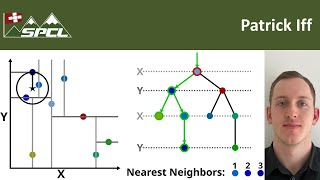
Finding Relevant Items Using Approximate Nearest Neighbor Search Algorithms
Explore algorithms for nearest neighbor search, from KD-Trees to modern approaches like HNSW and IVF-PQ, understanding their applications and performance tradeoffs.

Identifying Candidates for Advanced Heart Failure Therapies Using Machine Learning
Discover how artificial intelligence can revolutionize early identification of heart failure patients for advanced therapies, improving survival rates through timely interventions and referrals.

Leveraging Big Data, ML, and Health Tech Approaches to Improve Cardiovascular Health for All
Discover how big data, machine learning, and health technology can revolutionize cardiovascular healthcare delivery and improve patient outcomes across diverse populations.

Interpretable Graph Routing Network for Knowledge-based Visual Question Answering
Explore an innovative graph routing network approach for knowledge-based visual question answering, focusing on interpretable step-by-step reasoning and enhanced accuracy.
Large Language Models as Learnable Planners for Long-Term Recommendation
Explore how Large Language Models function as learnable planners in long-term recommendation systems, focusing on innovative approaches to enhance user engagement and personalization.

Discriminative Training of Acoustic Models - From MPE to fMPE
Explore discriminative training techniques for acoustic models, focusing on MPE and fMPE approaches, with insights into feature-space transformation methods for speech recognition.

Stable Diffusion 3.5 and ComfyUI Comparison Review
Discover the key differences between Stable Diffusion 3.5 and ComfyUI.exe through hands-on testing and comparative analysis of their image generation capabilities and workflows.

FLUX Fine-Tuning and DreamBooth Training Tutorial - Windows, RunPod, and Massed Compute
Master comprehensive FLUX model fine-tuning and DreamBooth training across Windows, RunPod, and Massed Compute platforms using Kohya GUI for creating high-quality AI-generated images.
Mathematical Problems in Machine Learning - Part 1 of 4
Dive into mathematical probability fundamentals for machine learning through Stanford expert Andrea Montanari's comprehensive exploration of key theoretical concepts and applications.

Untargeted Adversarial Attack on Knowledge Graph Embeddings
Explore advanced techniques for executing untargeted adversarial attacks on knowledge graph embeddings, focusing on privacy and security implications in federated learning environments.

Treatment Effect Estimation for User Interest Exploration on Recommender Systems
Explore advanced techniques for estimating treatment effects in recommender systems, focusing on user interest exploration and long-term session recommendations.

Reinforcing Long-Term Performance in Recommender Systems with User-Oriented Exploration Policy
Explore advanced techniques for optimizing recommender systems through user-oriented exploration policies, focusing on enhancing long-term performance and session-based recommendations.
Mathematical Problems in Machine Learning - Lecture 3
Delve into advanced mathematical probability concepts and their applications in machine learning through Stanford expert Andrea Montanari's comprehensive theoretical exploration.
Mathematical Problems in Machine Learning - Lecture 2
Delve into mathematical probability fundamentals and their applications in machine learning through advanced theoretical concepts and problem-solving approaches from Stanford expertise.

Disentangling ID and Modality Effects for Session-based Recommendation
Explore advanced techniques for disentangling identity and modality effects in session-based recommendation systems, focusing on long-term user behavior analysis and pattern recognition.
Mathematical Problems in Machine Learning - Lecture 4
Delve into advanced mathematical probability concepts applied to machine learning through Stanford expert Andrea Montanari's comprehensive theoretical exploration and analysis.

Building AI Pipelines with Hugging Face and Kedro - From ChatGPT to Production
Discover how to build robust AI systems using Hugging Face's open models and Kedro pipelines, moving beyond commercial AI to create customizable and transparent machine learning solutions.
Making AI Truly Open Source - Challenges and Solutions
Explore the complexities of truly open-source AI, examining transparency challenges, data attribution issues, and practical solutions for creating genuinely open AI systems.
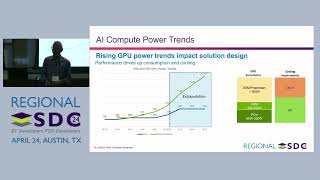
Technical Trends in AI Infrastructure for Developers - 2024
Explore the evolving landscape of AI infrastructure, from accelerators and storage to deployment models, focusing on technical trends and future solutions for developers working with AI workloads.
Applying AI/ML Methodologies to Categorize Storage Workloads
Discover how AI/ML techniques analyze and synthesize complex storage workloads, enabling efficient testing and validation of enterprise storage systems through automated workload categorization and reproduction.