
Superpowers with TensorFlow.js
Explore machine learning in JavaScript with TensorFlow.js, from computer vision to creative prototypes. Learn to implement ML in browsers and beyond, unlocking new possibilities for your projects.

Transfer Learning in JavaScript with TensorFlow.js
Learn to create a custom machine learning model using TensorFlow.js for object recognition in the browser. Explore transfer learning techniques to build and train models quickly for various applications.
Python Neural Networks - Tensorflow 2.0 Tutorial - What Is a Neural Network?
Explore neural networks using TensorFlow 2.0, covering key concepts, architecture, and practical implementation in Python for beginners and intermediate learners.

How to Build an AI-Powered Video Search App
Learn to build an AI-powered video search app using YouTube data, Pinecone, and Streamlit. Covers data collection, enhancement, indexing, and querying, with practical code examples and implementation steps.
Managed Training with Amazon SageMaker and Transformers
Explore SageMaker and Hugging Face integration for efficient NLP model training, deployment, and optimization. Learn preprocessing, hyperparameter tuning, and model compression techniques.
Enhancing the Performance Testing Process for gRPC Model Inferencing at Scale
Explore performance testing for gRPC model inferencing at scale using Kubernetes, KServe, and ModelMesh. Learn about deployment, load testing, and monitoring key metrics.
Protocol Detection: A Deep Dive into How Linkerd Achieves Zero-Config
Explore Linkerd's zero-config protocol detection, its mechanics, evolution, and handling of various protocols. Learn about implementation challenges and solutions for seamless integration with diverse applications.
Model Serving at the Edge - Challenges and Solutions with ModelMesh
Explore efficient AI model deployment on edge devices using ModelMesh, K3s, and MicroShift. Learn to overcome resource limitations and manage multiple models effectively for large-scale adoption.
CNCF TAG-Runtime: Cloud Native Open Source Core Components
Explore CNCF TAG-Runtime's role in cloud native workloads, working groups, and future trends in runtime technologies like containers, VMs, Edge/MLOps, and WebAssembly.
WebAssembly-Based AI as a Service with Kubernetes
Explore WebAssembly for AI deployment in cloud-native apps, leveraging WasmEdge runtime for serverless functions and machine learning inference, with a focus on WASI for enhanced performance and security.
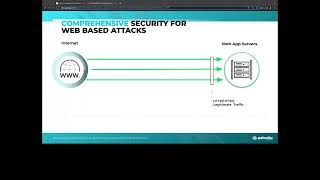
How to Achieve Comprehensive Protection for Cloud Native Applications and Workloads
Learn comprehensive protection strategies for cloud-native applications, covering web security, runtime risks, and predictive models. Explore practical solutions and benefits through demos and real-world examples.
Empower Heterogeneous Edge AI Acceleration with Kubernetes
Unified framework for empowering heterogeneous edge AI accelerators on Kubernetes, addressing challenges in detection, provisioning, and boosting ML frameworks for efficient edge computing.
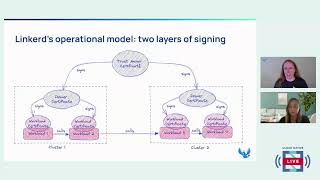
Cloud Native Certificate Management with Linkerd
Explore certificate management in Linkerd, focusing on key benefits and unique aspects of this cloud-native service mesh for Kubernetes environments.

The Evolution and Innovation of CubeFS
Explore CubeFS, a cloud-native distributed storage solution for big data, machine learning, and data sharing. Learn about its protocols, redundancy strategies, and hybrid-cloud acceleration features.
Securing Edge Workloads with Cert-Manager and SPIFFE
Explore securing edge workloads using cert-manager and SPIFFE for efficient certificate management and trust distribution in Kubernetes environments, focusing on ingress and mTLS security.
Edge-Native: The New Paradigm for Operating and Developing Edge Apps
Explore edge-native principles for developing and operating apps across distributed locations, addressing challenges like NAT, limited resources, and heterogeneous environments for efficient edge computing.
WebAssembly-Based AI as a Service on the Edge with Kubernetes
Explore WebAssembly for edge AI, leveraging WASI and WasmEdge to deploy ML models as serverless functions on Kubernetes, offering speed, security, and portability for edge computing.
Smart Green Computing: Cloud Native Operations for Sustainability
Explore smart green computing for cloud-native operations, combining CNCF projects and open-source tools to create ML models for sustainable cluster management and carbon optimization.
Building Multi-Cloud Service Meshes at Snowflake
Explore Snowflake's multi-cloud service mesh architecture, addressing challenges in cloud-agnostic design, ingress management, autoscaling, and control plane upgrades across diverse environments.
Untangling Multi-Cloud Identity and Access with SPIFFE Tornjak
Explore secure multi-cloud workload identity management using SPIFFE/SPIRE and Tornjak, shifting from platform-specific to organization-wide approaches for consistent access across cloud providers.
The Rise of No-Code AI Vision at the Edge
Explore how Docker enables rapid development of AI-powered retail item detection systems using low-code platforms, showcasing faster ML solution creation with minimal coding efforts.