
Society Needs a Software Update: Measuring, Predicting and Managing the Complexity of Society
Explore methods for measuring, predicting, and managing societal complexity to drive positive change and innovation in our interconnected world.
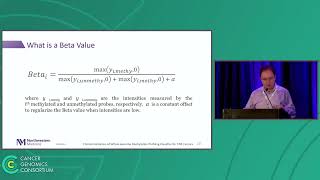
Clinical Validation of Whole Genome Methylation Profiling Classifier for Central Nervous System Tumors
Explore whole genome methylation profiling for CNS tumor classification. Learn about workflow, data analysis, and clinical applications in this comprehensive genomics presentation.
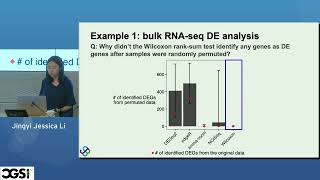
Controlling False Discoveries in Genomics Data Analysis - What is the Null Hypothesis?
Explore advanced techniques for controlling false discoveries in genomics data analysis, focusing on null hypothesis formulation and its impact on statistical inference in high-dimensional biological datasets.
Genome-wide Prediction of Disease Variants with a Deep Protein Language Model
Explore genome-wide prediction of disease variants using deep protein language models. Learn cutting-edge techniques for identifying potential genetic causes of diseases.
Predicting the Epigenome from DNA Sequence - Are We There Yet?
Explore predicting epigenomes from DNA sequences using deep learning methods. Discover limitations, data analysis techniques, and latest research in computational genomics.
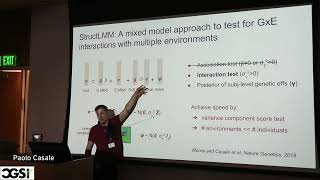
Mixed Models in Genomic Analyses and Imaging Studies
Explore mixed models in genomics and imaging, focusing on efficient set tests, Gaussian process priors, gene-environment interactions, and neural networks for histologic feature quantification.
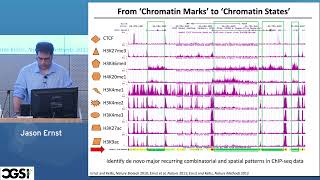
A Tutorial on Computational Methods for Modeling and Analyzing Epigenomic Data
Explore computational methods for modeling and analyzing epigenomic data, covering ChromHMM, multivariate Hidden Markov Models, and integrating multiple chromatin markers across cell types.
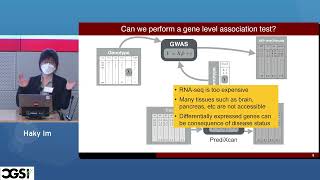
Integrating Multiple Omic Data to Improve Mechanistic Understanding and Prediction
Explore integrating multiple omic data to enhance mechanistic understanding and prediction in genomics. Learn techniques for improving data interpretation and predictive modeling in computational biology.
Designing DNA with Tunable Regulatory Activity Using Discrete Diffusion
Explore DNA Discrete Diffusion (D3) for engineering regulatory DNA sequences with targeted functional activity levels. Learn about its advantages, evaluation metrics, and applications in functional genomics.

gRNAde: Geometric Deep Learning for 3D RNA Inverse Design
Explore gRNAde, a geometric deep learning pipeline for 3D RNA inverse design. Learn about its architecture, use cases, and advantages over traditional methods in RNA sequence design.
Stability-Aware Boltzmann Estimator Training of Neural Network Interatomic Potentials
Explore advanced neural network interatomic potentials for molecular dynamics simulations using Stability-Aware Boltzmann Estimator Training to enhance stability and accuracy across various systems and architectures.
Combinatorial Perturbation Prediction Using Causally-Inspired Neural Networks
Explore PDGRAPHER, a novel graph neural network model for phenotype-driven drug discovery. Learn how it predicts perturbagens to reverse disease effects, offering faster and more efficient therapeutic target identification.
HyperPCM: Robust Task-Conditioned Modeling of Drug-Target Interactions
Explore HyperPCM, a robust method for predicting drug-target interactions using hypernetworks. Learn about its state-of-the-art performance on benchmarks and excellence in zero-shot inference for unseen protein targets.

MFBind - A Multi-Fidelity Approach for Evaluating Drugs in Generative Modeling
Explore MFBind, a multi-fidelity approach integrating docking and binding free energy simulations for improved drug discovery generative modeling. Learn its advantages over current methods.
Removing Biases from Molecular Representations via Information Maximization
Explore InfoCORE, an innovative approach to remove batch effects in drug screening data, enhancing molecular representations for improved property prediction and molecule-phenotype retrieval.
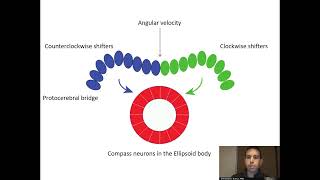
Recurrent Neural Networks in Brains and Machines
Explore neural networks as models for brain activity, examining their evolution and potential for bridging multiple cognitive systems. Gain insights into ongoing research and future directions in neuroscience.
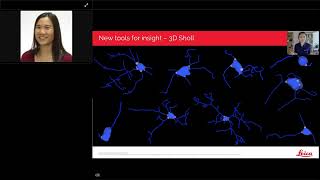
Unlocking Insights in Complex and Dense Neuron Images Guided by AI
Explore AI-guided techniques for analyzing complex 3D neuron morphology, overcoming challenges in multi-modal imaging and diverse neuronal densities.
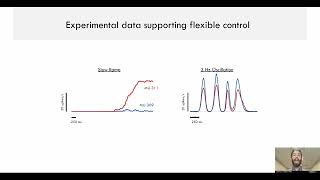
Interpretable Latent Variable Models Demonstrate Flexible Neural Control of Spinal Motor Units
Explore interpretable machine learning models for analyzing neural activity, focusing on spinal motor control and challenging the rigid control theory of motor unit function.
Towards A Global Federated System for Biosurveillance and Pandemic Early Warning Using Genomic, Epidemiological, Climate and Environmental Data
Explore a global federated system for biosurveillance using genomic, epidemiological, climate, and environmental data to model biological risks and enhance pandemic early warning capabilities.
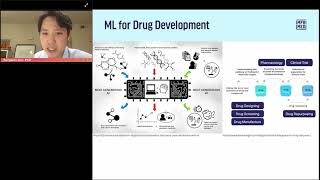
Moving Beyond Mutation - AI-driven Functional Precision Medicine for Cancer
Explore AI-driven functional precision medicine for cancer, combining live-cell assays, immune profiling, and machine learning to predict drug efficacy and improve treatment outcomes.
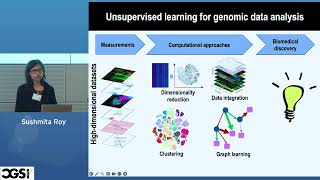
Matrix Factorization and Applications to Bulk and Single Cell Omic Datasets
Explore matrix factorization techniques for analyzing bulk and single-cell omic datasets, with applications in computational genomics and bioinformatics.