De Novo Protein Design Using Deep Learning and Musical Representations
Explore innovative protein design using deep learning and musical representations, bridging materials science and artificial intelligence for groundbreaking bioengineering applications.
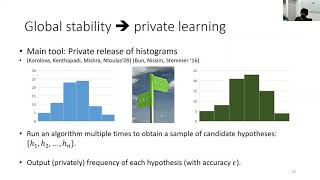
An Equivalence Between Private Classification and Online Prediction
Explore the connection between private classification and online prediction, examining theoretical implications and potential applications in machine learning and data privacy.

The War on Misinformation: Combating Viral Falsehoods in Public Health
Explore strategies to combat viral misinformation, focusing on vaccine skepticism and its impact on public health. Learn how data and technology can track and counter the spread of falsehoods.
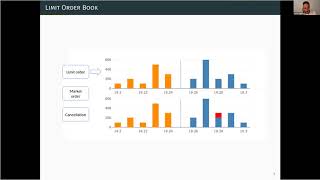
Detecting Spoofing Strategies in High Frequency Trading
Exploring detection methods for spoofing strategies in high-frequency trading, focusing on volume imbalance impact and optimization models to identify manipulative behaviors in limit order books.
Evidently AI Tutorial - Open Source ML Models Monitoring and Observability
Learn to monitor and evaluate ML models with Evidently AI, an open-source Python library for data scientists. Explore reports, test suites, and dashboards for continuous model quality assessment.

Logic and Probabilistic Circuits - Lecture 1
Explore logical reasoning and probabilistic modeling techniques, focusing on their applications in database theory and artificial intelligence.
Time Series Analysis with the KNIME Analytics Platform - Preprocessing, Alignment, Imputation
Learn time series analysis using KNIME: preprocessing, alignment, imputation, forecasting, and evaluation. Build a demand prediction application with (S)ARIMA and machine learning models through hands-on, codeless examples.
Translating Data into Effective Decisions - Data Driven Decision Making - Data-Backed Decisions
Learn a systematic process to leverage machine learning for improved decision-making, focusing on actionable metrics, key levers, and embracing uncertainty to drive better business outcomes.
Automating Supervised Machine Learning Pipeline Development
Explore methodologies for automating supervised machine learning pipelines, covering data cleaning, feature engineering, and model development. Gain insights from experienced data scientists on best practices and techniques.
Building Data Science Products - Think Business First
Learn to approach data science projects from a business perspective, focusing on key questions and considerations before diving into tools and techniques.
Ace the SQL and Data Science Interview - Complete Interview Prep - SQL Interview Tips and Tricks
Expert insights on acing data science and SQL interviews, covering technical questions, case studies, and strategies to stand out in the competitive job market.
Time Series Analysis for Beginner Data Scientists - Time Series Forecasting
Learn time series analysis for data science: navigate, analyze, and model time series data, create forecasts, and build interactive dashboards. Ideal for beginners with basic coding skills.
Unlock the Power of Embeddings with Vector Search - Future of Data & AI - Data Science Dojo
Explore embeddings and vector search for unstructured data analysis. Learn to build semantic text and reverse image search systems using Milvus, with real-world applications and best practices.
Introduction to Text Analytics with R - Pre-Processing Our Test Data
Learn to preprocess test data, cache IDF values, perform SVD projections, and evaluate model effectiveness for text analytics in R. Enhance your skills in handling unseen textual data and making predictions.

N-Grams - Introduction to Text Analytics with R
Explore N-grams in text analytics, including TF-IDF validation, word ordering, dimensionality challenges, and hardware limitations. Enhance your R-based text analysis skills.
Intro to Machine Learning with R & Caret
Learn to leverage R's caret package for efficient machine learning tasks, including data sampling, model training, cross-validation, and hyperparameter tuning. Enhance your data science skills with practical examples.
Intro to Big Data, Data Science & Predictive Analytics
Explore the diverse world of big data, data science, and predictive analytics. Gain insights into subfields, real-world applications, and the components of a big data pipeline across various industries.

Data Preprocessing in Python
Learn to transform raw text into structured lists and CSVs using Python, enhancing data organization and analysis skills for practical applications.
21 Recent AI Updates in 23 Minutes
Comprehensive overview of recent AI advancements, including new models, tools, and industry developments. Covers a wide range of topics from audio generation to LLM applications and ethical considerations.
Step-by-Step Machine Learning Project Implementation: EDA, Feature Engineering, Selection, and Model Training
Comprehensive guide to implementing a machine learning project, covering data cleaning, EDA, feature engineering, selection, model training, and hyperparameter tuning.
Jet Energy Corrections with GNN Regression using Kubeflow at CERN
Explore how Kubeflow enables graph neural network-based jet energy corrections at CERN's Large Hadron Collider, improving particle physics research through scalable machine learning workflows.