Towards Physical AI - Bridging the Gap Between Artificial and Natural Intelligence
Explore the future of AI and robotics, comparing artificial agents to natural intelligence and discussing potential paradigm shifts for more adaptive and efficient systems.
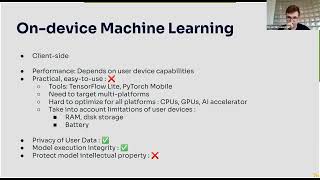
BlindAI: Secure Remote ML Inference with Intel SGX Enclaves
Explore secure remote ML inference using Intel SGX enclaves, balancing security, privacy, and performance. Learn about BlindAI's open-source solution for confidential computing.

Building FPGA-based Machine Learning Accelerators in Python
Explore building ML accelerators on affordable FPGAs using Python-based tools. Learn about open-source and proprietary options for FPGA development and the broader silicon landscape.
Next-Gen Detection: Harnessing LLMs for Sigma Rule Automation
Explore innovative approaches to automate Sigma rule generation using LLMs, comparing techniques like RAG, fine-tuning, and prompt-chaining for enhanced threat detection efficiency.
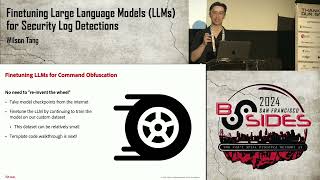
Finetuning Large Language Models for Security Log Detections
Explore finetuning LLMs for advanced security log detection, moving beyond traditional signature-based methods to enhance threat identification capabilities.
Your Voice Confirms My Identity - Exploring Voice Authentication Security in the Age of AI
Explore AI voice cloning and its impact on voice authentication systems. Learn voice cloning techniques and discuss trends in voice security.
Skynet the CTI Intern: Building Effective Machine Augmented Intelligence
Explore integrating LLMs in cybersecurity intelligence, enhancing analyst efficiency while recognizing AI limitations. Learn to create a symbiotic human-AI relationship for proactive defense.
Malice in Chains - Supply Chain Attacks Using Machine Learning Models
Explore potential supply chain vulnerabilities in machine learning models and learn strategies to mitigate risks in AI-driven systems.
Will Machine Learning Replace the WAF?
Explore the potential of machine learning to revolutionize web application firewalls, examining its capabilities, limitations, and impact on cybersecurity.
Understanding Multiple Intelligences Across Evolution and Development - There Is No Such Thing as AGI
Explore multiple intelligences across evolution and development, challenging the concept of AGI and examining diverse cognitive abilities in various species.

Educability - Understanding Higher-Level Intelligence
Exploring human educability: synthesizing learning from experience, others, and chaining knowledge. Proposes a computational approach to understanding and replicating broader human capabilities beyond example-based learning.
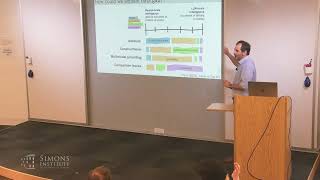
Bridging the Data Gap Between LLMs and Children - Understanding Higher-Level Intelligence
Explores the disparity in data requirements between AI models and human learning, examining potential explanations and presenting new insights on multimodal input and evaluation methods.
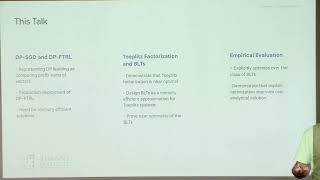
Large Scale Private Learning on Data Streams and the Buffered Linear Toeplitz Operators
Innovative algorithm for privacy-preserving machine learning on data streams, introducing Buffered Linear Toeplitz operators for efficient noise generation in differentially private training.
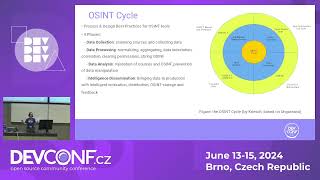
Open Source Intelligence Data in Cyber Threat Intelligence for a Common Purpose - DevConf.CZ 2024
Explore OSINT's role in Cyber Threat Intelligence for Enterprise IoT protection. Learn about Federated Learning, global data exchange, and AI-driven threat detection for enhanced cybersecurity.

AI to Detect and Manage Alzheimer's and Dementia - Part 2
Explore AI applications for early diagnosis and management of Alzheimer's and dementia, focusing on big data approaches to improve patient care and tackle key challenges.

How to Remove Electronic Components - Soldering Tutorial Part 2
Advanced techniques for removing electronic components, including transformers, BGAs, and surface mount regulators. Compares hot air gun vs. soldering iron methods for effective PCB rework and repair.
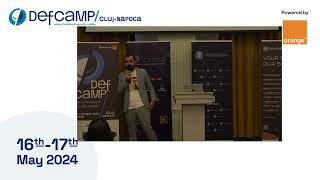
AI Driven Automated Security Orchestration in Heterogeneous 6G Networks
Explore AI-driven security orchestration for 6G networks, focusing on automated threat detection and response in complex, heterogeneous environments.
How AI Can Help Us Understand Breast Cancer
Explore machine learning applications in breast cancer research, focusing on improving treatments through enhanced biological understanding.
Palaeoanalytics - Using Data Science and Machine Learning to Answer Questions About Human Evolution
Explore how data science and machine learning revolutionize our understanding of human evolution through the Palaeoanalytics project, offering new insights into our ancient past.
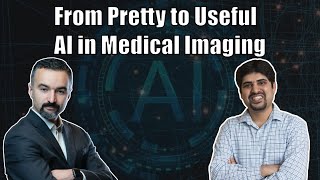
From Pretty to Useful: A Story in Using AI to Denoise Medical Images
Explore AI's journey in medical imaging, from aesthetic enhancements to practical applications in denoising, with insights on evaluating model usefulness and future directions.
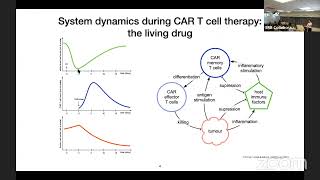
Quantifying CAR T Cells Activity Against AML - Model Selection Based on In Vitro Cytolytic Assays
Explore quantitative modeling of CAR T cell activity against AML through in vitro cytolytic assays, enhancing understanding of immunotherapy effectiveness.