ManaTI: Web Assistance for Threat Analysis with Domain Similarity
Explore web-based threat analysis with ManaTI. Learn to use WHOIS similarity for domain classification, improving efficiency and accuracy in detecting network security threats.
DGA-Detect - Using Machine Learning for Collaborative DGA Detection
Explore machine learning techniques for collaborative detection of Domain Generation Algorithms (DGAs) in cybersecurity, enhancing threat intelligence and network defense capabilities.
KillTheHashes - 30 Million Malware DNA Profiling Exercise - Hack.lu 2016
Explore malware profiling techniques and tools for identifying unique digital fingerprints, enabling early detection and categorization of new threats through characteristic family analysis.
Master of Clusters - MISP Summit 2018
Explore advanced clustering techniques for threat intelligence data analysis and visualization in MISP, enhancing cybersecurity insights and decision-making processes.
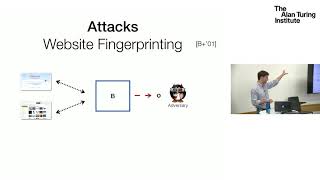
Measuring the Leakage of a Black-Box Using Machine Learning - Giovanni Cherubin
Explore machine learning techniques for measuring information leakage in black-box systems, focusing on privacy and anonymity protocols in website fingerprinting attacks.
People-Centric AI for the Built Environment - Burcin Becerik-Gerber, USC
Exploring AI-driven interactive environments that adapt to user needs, enhancing sustainability, health, and comfort in buildings. Focuses on machine learning and data science for personalized, context-aware spaces.
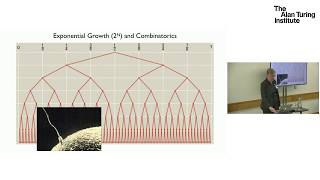
There Is No AI Ethics - The Human Origins of Machine Prejudice - Dr Joanna Bryson
Exploring the human roots of machine bias and challenging the concept of AI ethics. Dr. Bryson discusses the societal implications of AI and the importance of interdisciplinary approaches in addressing ethical concerns.
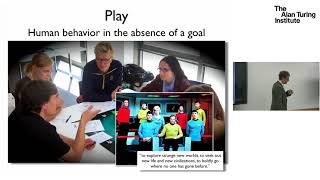
Operationalizing Creativity - The Data Science of Innovation from Elites to Vox Pop - Dr Simon Dedeo
Explore data-driven approaches to creativity and innovation, from elite to popular levels. Learn about operationalizing creativity, quantifying development, and analyzing innovation dynamics.
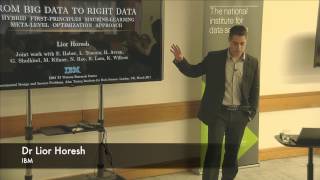
From Big Data to Right Data - Dr. Lior Horesh, IBM
Explore a hybrid approach combining first-principles and machine learning for meta-level optimization, shifting focus from big data to right data in experimental design and inverse problems.
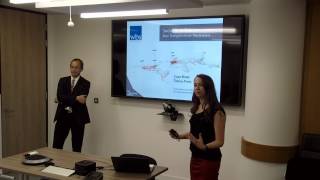
Social Data Science Masterclass - Dr Suzy Moat and Dr Tobias Preis, University of Warwick
Explore how online data from sources like Google and Twitter can measure and predict real-world human behavior, with insights from leading researchers in behavioral science and data analysis.
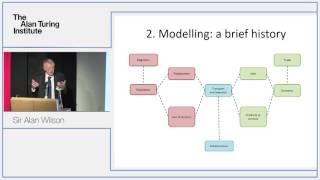
Turing Lecture - Smarter Cities - Sir Alan Wilson, Turing CEO
Explore urban evolution, innovative techniques, and data-driven approaches shaping smarter cities, with insights on modeling, sustainability, and the future of urban living.
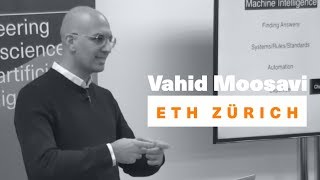
Machine Learning Literacy for Designers and Engineers
Machine learning's universal approach to phenomena inverts expertise from answering known questions to asking good ones. Explore applications in structural design, urban analysis, and real estate, with insights on ML's impact across engineering and desig…
A Full Classification of Finite Adversarial Partial Monitoring - Tor Lattimore
Explore finite adversarial partial monitoring, its classification, and implications for multi-armed bandit problems and full-information games. Learn about regret dependence on game structure.
The GDPR and Beyond - Ideas from Academia and Policy Panel
Exploring GDPR's impact on data protection, automated decision-making, and AI regulation. Experts discuss key concepts, implementation challenges, and future implications for governments and corporations.
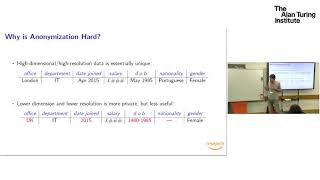
A Short Tutorial on Differential Privacy
Explore differential privacy fundamentals, applications in machine learning, and key definitions. Learn about privacy-preserving computations and various mechanisms for protecting sensitive data.
The GDPR and Beyond - Elizabeth Denham, UK Information Commissioner
Elizabeth Denham discusses GDPR implementation, its impact on data protection, and future implications for AI regulation. Insights from the UK's top data protection official on privacy, innovation, and accountability.
Filling the Gaps in Kubernetes Flavored SLSA with Threat Modeling
Explore threat modeling for Kubernetes CI/CD security using SLSA standards. Learn to identify and mitigate vulnerabilities in supply chain processes, with practical insights from Tekton's implementation.
Trust No System: The Unsettling Reality of Zero Trust
Challenging "Zero Trust" in cloud-native security, this talk explores trust as an observer's decision, debunks myths, and offers strategies for managing trust in cloud environments.
What Can Go Wrong When You Trust Nobody? Threat Modeling Zero Trust
Explore Zero Trust principles and threat modeling for cloud-native systems. Learn to implement secure architectures using Istio, Kubernetes, SPIRE, and OPA for robust, distributed workload protection.
OmniBOR: Bringing the Receipts for Supply Chain Security
Discover OmniBOR, a revolutionary approach to capture artifact dependency graphs in software development, enhancing supply chain security and reducing false positives in vulnerability scanning.
SLSA FRSCA Recipe for Secure Supply Chain
Explore an end-to-end solution for software supply chain security using OpenSSF-FRSCA, integrating tools like Tekton, Sigstore, and Kyverno to meet SLSA Level 3 requirements.