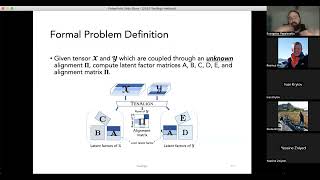
Joint Tensor Alignment and Coupled Factorization
Explore joint tensor alignment and coupled factorization for analyzing coupled datasets with unknown entity correspondence, outperforming multi-stage approaches in data mining applications.
Train a PyTorch Neural Network Step-by-Step - PyTorch Deep Learning
Learn to build and train a PyTorch neural network for image classification, achieving 85% accuracy on Fashion MNIST. Covers data preparation, network architecture, loss functions, optimization, and model visualization.

What Are CycleGANs? - A Novel Deep Learning Tool in Pathology
Explore CycleGANs for unpaired image conversion, including applications in pathology and microscopy. Learn model architecture, training, and inference through code demos and real-world examples.
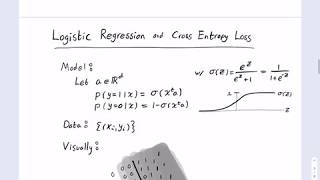
Supervised Machine Learning Review
Comprehensive review of supervised machine learning concepts, focusing on statistical frameworks, loss functions, and the intriguing double-descent phenomenon in neural networks.

MIT Introduction to Deep Learning
Comprehensive introduction to deep learning fundamentals, covering perceptrons, neural networks, loss functions, gradient descent, backpropagation, and regularization techniques.
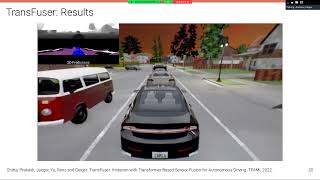
Learning Robust Policies for Self-Driving
Explore robust policies for self-driving vehicles, covering TransFuser for sensor fusion, PlanT for learned planning, and KING for identifying critical scenarios in autonomous driving.
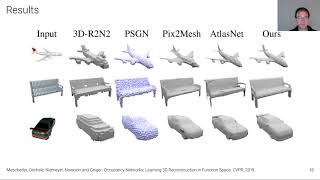
Learning 3D Reconstruction in Function Space - Long Version
Explore neural implicit 3D representations for geometry, texture, and motion reconstruction. Learn innovative techniques for modeling complex 3D shapes using continuous function spaces and 2D supervision.

What Are GANs - Generative Adversarial Networks Explained
Explore generative adversarial networks (GANs), their working principles, training phases, and applications in AI and deep learning. Learn how GANs generate realistic data through generator-discriminator competition.
Learning from Aggregate Responses
Explore aggregate learning techniques for privacy-protected data, including loss construction, bagging schemes, and iterative boosting algorithms to improve model accuracy while maintaining data privacy.

MIT Introduction to Deep Learning - Foundations of Deep Learning - Lecture 1
Comprehensive introduction to deep learning fundamentals, covering perceptrons, neural networks, loss functions, gradient descent, backpropagation, and regularization techniques for effective model training.
Direct Preference Optimization - Fine-Tuning LLMs Without Reinforcement Learning
Explore Direct Preference Optimization (DPO), an efficient method for training Large Language Models without reinforcement learning. Learn about the Bradley-Terry model, KL divergence, and loss function.
Crafting a Physics-Informed Loss Function for AI/ML in Physics - Part 4
Explores designing physics-informed loss functions in AI/ML, including case studies on fluid dynamics, sparse modeling, and equivariant loss, to enhance model performance and incorporate physical constraints.
Designing Losses for Data-Free Training of Normalizing Flows on Boltzmann Distributions
Explore advanced techniques for training normalizing flows on Boltzmann distributions without data, addressing mode collapse and optimizing high-dimensional distributions in molecular configuration generation.
The Cost of Fairness in Binary Classification
Explore the cost of fairness in binary classification, analyzing risk, optimal classifiers, and fairness frontiers with implications for stereotypes and decision-making.
What You Always Wanted to Know About Deep Learning, but Were Afraid to Ask
Demystifying deep learning concepts like back-propagation, gradient descent, and neural networks. Practical guide to training a model for object recognition using TensorFlow and Keras.
Hello Deep Learning
Explore deep learning from scratch, building an OCR solution for handwritten letters. Learn the fundamentals of machine learning and gain insights into the world of AI and neural networks.
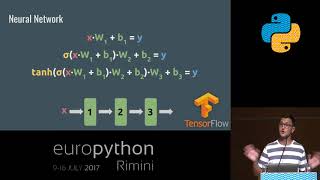
Introduction to TensorFlow
Aprende los conceptos básicos de deep learning y TensorFlow, desde la instalación hasta la creación de redes neuronales, a través de ejemplos prácticos y visualizaciones amigables.
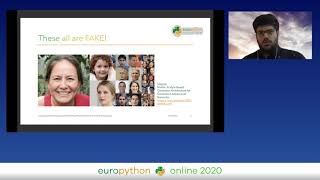
Painting with GANs - Challenges and Technicalities of Neural Style Transfer
Explore Neural Style Transfer using GANs, including challenges, technicalities, and applications in gaming, fashion, and mobile apps. Learn about loss functions and see code examples.
What You Always Wanted to Know About Deep Learning, but Were Afraid to Ask
Demystifying Deep Learning: key concepts, practical applications, and hands-on training for object recognition. Gain a clear understanding of AI fundamentals and start your journey into machine learning.
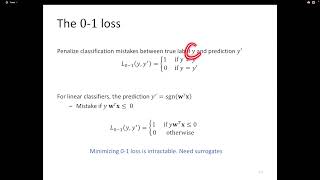
Loss Minimization in Machine Learning - Lecture 22
Explore the fundamental concept of learning as optimization through empirical risk minimization, focusing on loss minimization principles in machine learning applications.
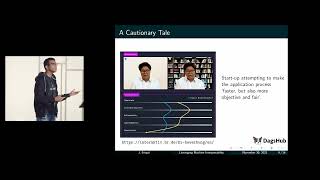
Interpretability Tools as Feedback Loops in Machine Learning Training
Explore machine learning interpretability techniques to optimize training sequences and develop more effective models without increasing compute or training time.