ChatGPT Applications in Network Engineering - Automation and Troubleshooting
Discover how ChatGPT can revolutionize network engineering through automation, troubleshooting, and documentation across major vendors like Cisco and Juniper.
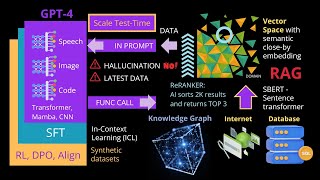
A Brief History of AI and AI Agents - From Language Models to Multi-Agent Systems
Explore the evolution of AI from GPT-3 to modern multi-agent systems, covering key developments in language models, function calling, AI agents, and future implications for global artificial intelligence.
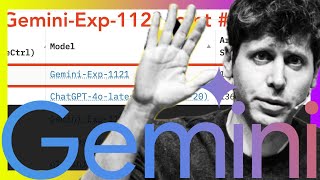
Google Gemini vs GPT-4: Understanding the LMSYS Arena Leaderboard and Gemini-exp-1121
Discover how Google's Gemini-exp-1121 model competes with GPT-4 on the LMsys Arena leaderboard, including ELO calculation methods and basic performance testing insights.
Building a ChatGPT RAG Data Pipeline with RisingWave Stream Processor and Vector Store
Discover how to build a real-time ChatGPT data pipeline using RisingWave stream processor, integrating Twitter feeds with vector embeddings for enhanced similarity search and RAG-based chatbot functionality.
Introduction to AI - Understanding Core Technologies and Implementation Best Practices
Gain insights into AI fundamentals, from NLP and machine learning to ethical considerations, while exploring real-world applications, security practices, and implementation strategies.

Is AI Sexist? Examining Gender Bias in Large Language Models
Explore how gender bias manifests in AI systems, particularly in Large Language Models, and learn practical steps to identify, understand, and address these biases in technology development.

Multimodal AI: Understanding Large Language Models with Vision and Audio Capabilities
Explore three key approaches to expanding Language Models beyond text, enabling them to process visual and auditory information, with practical demonstrations using LLaMA 3.2.
Fine-tuning AI Models for Healthcare Policy Analysis with AWS and Snorkel Flow
Master AWS and Snorkel Flow integration to enhance AI models through structured fine-tuning workflows, focusing on improving accuracy in analyzing health insurance policy documents and generating reliable responses.
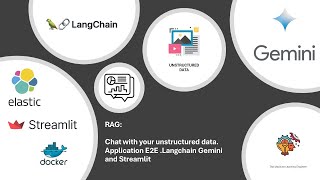
Building RAG Applications: Speaking with Unstructured Data Using LangChain - Part 1
Dive into building a RAG application using Langchain, multiple LLMs, and vector stores to enable interactive conversations with unstructured data through a Streamlit interface.
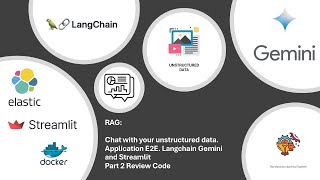
Building RAG Applications: Speaking with Unstructured Data Using LangChain - Part 2
Dive into building an end-to-end RAG application using Langchain, multiple LLMs, and vector stores to enable interactive conversations with unstructured data through a Streamlit interface.
Building End-to-End RAG Applications with Unstructured Data - Part 3: Docker Integration
Dive into containerization with Docker and Docker Compose while building a RAG application that processes unstructured data using LangChain, multiple LLMs, and vector stores through Streamlit.

Encoder-Only Transformers: Understanding BERT and RAG Architecture
Discover how encoder-only transformers power RAG, sentiment analysis, and classification through clear explanations of word embedding, positional encoding, and attention mechanisms.
Navigating Between Commercial and Open Source AI - Understanding Large Language Models
Explore the landscape of Generative AI, examining LLM openness levels, intellectual property challenges, and the balance between commercial interests and open collaboration in AI development.
Cloud Storage Considerations for RAG in AI Applications
Explore cloud object storage implementation in RAG systems, covering LLM-OS concepts, domain-specific data handling, and practical applications for building AI-powered solutions with vector databases.
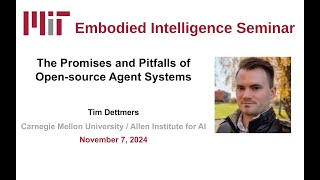
The Promises and Pitfalls of Open-source Agent Systems
Explore the potential and challenges of open-source AI agent systems, examining their performance compared to closed-source alternatives and key issues in evaluation and generalization.
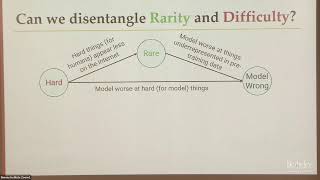
The Evolution of Domain Transfer in the Era of Pre-trained Language Models
Explore the complex relationship between pre-trained language models and domain transfer, examining how pre-training affects model understanding and pattern recognition across different contexts.

Cloud-Native AI: Wasm in Portable, Secure AI/ML Workloads
Discover how WebAssembly enables portable and secure AI/ML workloads in cloud environments, focusing on deploying models like Llama3 and Mixtral across diverse platforms with optimal performance.
Python and Generative AI Projects for Beginners - Building Applications and Machine Learning Systems
Master Python programming while building practical GenAI projects, from basic word games to advanced applications like face recognition, chatbots, and recommendation systems. Includes hands-on data analysis and visualization.
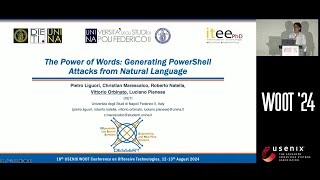
The Power of Words: Generating PowerShell Attacks from Natural Language
Explore how AI and Neural Machine Translation can automatically generate offensive PowerShell code from natural language, with insights into dataset creation and model performance evaluation.

Hacking AI - Exploring OWASP ML and LLM Top 10 Security Threats
Explore critical security threats in machine learning and large language models through OWASP's ML Top 10 and LLM Top 10 frameworks for enhanced AI security awareness.
Exploring New Features in Wolfram Language 14.1
Discover the latest features in Wolfram Language 14.1, including unified apps, vector databases, LLM integration, symbolic arrays, biomolecule visualization, and enhanced computational capabilities across various domains.