
LLaMA2 for Multilingual Fine Tuning
Explore multilingual fine-tuning capabilities of LLaMA2 and other language models, comparing performance and discussing implications for cross-lingual NLP tasks.
ChatGPT Explained - All You Need to Know - Tutorial
Explore ChatGPT's fundamentals, applications, and underlying technologies. Learn about Generative AI, GPT models, and prompt engineering techniques reshaping digital communication and AI interactions.

Vector-Based Methods for Similarity Search - TF-IDF, BM25, SBERT
Explore three vector-based approaches for language comparison and document similarity: TF-IDF, BM25, and Sentence-BERT. Learn key techniques for building effective search engines in AI and machine learning.

LangChain Agents Deep Dive with GPT 3.5 - LangChain
Explore LangChain agents to enhance LLMs with tools for logic, calculation, and search. Learn implementation, customization, and various agent types to superpower your AI applications.
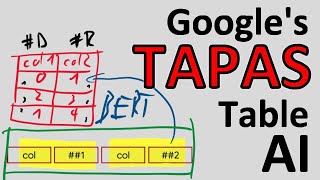
TAPAS - Weakly Supervised Table Parsing via Pre-training
Explore TAPAS, an innovative approach to table parsing and question answering using pre-training and weak supervision, outperforming traditional semantic parsing models with a simpler architecture.

GPT-2: Language Models are Unsupervised Multitask Learners
Explore OpenAI's GPT-2 model, its capabilities in natural language processing tasks, and the implications of its performance on various datasets without explicit supervision.

BERT- Pre-training of Deep Bidirectional Transformers for Language Understanding
Explore BERT's innovative approach to language representation, its bidirectional pre-training method, and its state-of-the-art performance across various natural language processing tasks.

OpenAssistant First Models Are Here! - Open-Source ChatGPT
Explore OpenAssistant's first models, an open-source alternative to ChatGPT. Learn about its capabilities, development process, and potential impact on AI language models.

GPT-4chan - This Is the Worst AI Ever
Explore the controversial GPT-4chan AI model trained on 4chan's /pol/ board, its capabilities, ethical implications, and the creator's experience building and deploying it as a chatbot.

Cooking with GPT-3 - Don't Try This at Home
Experimenting with AI-generated vegan recipes using random ingredients, showcasing GPT-3's capabilities in culinary creativity and the challenges of following unconventional cooking instructions.

Training BERT - Masked-Language Modeling
Explore BERT's masked-language modeling technique for NLP tasks. Learn how this innovative approach trains the model to predict masked tokens, enhancing its understanding of language context.

Extractive Q&A With Haystack and FastAPI in Python
Build an extractive Q&A system using Haystack, FastAPI, and BERT transformer. Implement Elasticsearch with BM25 retriever for efficient information retrieval and answer generation from text documents.

GPT-4 Is Here! What We Know So Far - Full Analysis
Comprehensive analysis of GPT-4's capabilities, improvements, and potential impact on AI technology, based on OpenAI's latest release and research findings.

ChatGPT - This AI Has a Jailbreak! - Unbelievable AI Progress
Explore ChatGPT's capabilities, origins, and potential risks. Learn about its underlying technology, amazing features, and ways to bypass safety mechanisms, while considering OpenAI's vision for the future.

GPT-4 - Hands on With the API
Explore GPT-4's capabilities, compare it with ChatGPT, and learn to use the OpenAI Python API. Discover token limits, coding applications, and why GPT-4 is a significant advancement in AI technology.

OpenAI GPT 3.5 AI Assistant With Langchain + Pinecone
Build an AI research assistant using OpenAI GPT-3.5, Langchain, and Pinecone to analyze arXiv papers, YouTube content, and articles, enhancing understanding of AI, NLP, and vector search topics.

LLM Chains Using GPT-3.5 and Other LLMs - LangChain
Explore LangChain chains, focusing on LLMChain and utility chains. Learn to build advanced applications with Large Language Models for chatbots, question-answering, and summarization.

Generative AI and Long-Term Memory for LLMs
Explore generative AI and long-term memory for LLMs, focusing on Generative Question-Answering systems and retrieval augmentation techniques to enhance AI capabilities.

Cohere AI's LLM for Semantic Search in Python
Learn to implement semantic search using Cohere's LLM for generating embeddings and Pinecone for vector indexing. Explore practical applications in NLP and efficient text data search.

GPU-Acceleration for PyTorch on M1 Macs - Using with BERT
Explore GPU acceleration for PyTorch on M1 Macs, including installation, implementation with BERT, and best practices for training large language models on Mac hardware.

Bringing LLM to the Enterprise - Training From Scratch or Just Fine-Tune With Cerebras-GPT
Learn to leverage Cerebras-GPT for enterprise LLM deployment, covering training from scratch, fine-tuning, and cost considerations. Explore open-source frameworks and compute-optimal models for efficient implementation.