
When BERT Plays the Lottery, All Tickets Are Winning - Paper Explained
Exploring BERT pruning and the Lottery Ticket Hypothesis, revealing that even pruned components can be fine-tuned for good accuracy in NLP tasks, with implications for model efficiency and knowledge utilization.

Ways to Use ChatGPT AI with GTM
Discover 10 innovative ways to leverage ChatGPT AI for enhancing Google Tag Manager efficiency, streamlining tracking processes, and optimizing data collection strategies.

Transfer Learning and Transformer Models
Explore natural language processing's evolution, focusing on Transformer architecture, language modeling, and BERT's impact on transfer learning in this comprehensive tech talk.

Trillion Parameter Models Are Here
Explore ZeRO-Infinity's breakthrough in training trillion-parameter ML models with limited GPUs, revolutionizing large-scale deep learning and expanding possibilities for AI researchers and practitioners.
Let's Build GPT - From Scratch, in Code, Spelled Out
Comprehensive tutorial on building a GPT model from scratch, covering key concepts like self-attention, multi-headed attention, and transformer architecture. Includes practical coding examples and insights into modern language models.

VQ-GAN - Taming Transformers for High-Resolution Image Synthesis - Paper Explained
Explore VQ-GAN's innovative approach to high-resolution image synthesis, combining modified VQ-VAEs with GPT-2 for impressive results. Learn about perceptual loss, adversarial techniques, and comparisons with other models.

Generate Blog Posts with GPT2 and Hugging Face Transformers - AI Text Generation GPT2-Large
Learn to generate blog posts using GPT2 and Hugging Face Transformers. Master text encoding, AI-powered content creation, and output decoding for efficient writing and content production.
NLP Powered Q&A with React.js and Tensorflow.js BERT
Build a Q&A web app using React.js and TensorFlow.js BERT in under 30 minutes. Learn to implement NLP-powered question answering for extracting insights from text passages.
ROME - Locating and Editing Factual Associations in GPT - Paper Explained & Author Interview
Explores mechanisms for storing and editing factual knowledge in GPT models, revealing key roles of mid-layer feed-forward modules and proposing targeted editing techniques with implications for model understanding and control.

More Is Different for AI - Scaling Up, Emergence, and Paperclip Maximizers
Explore AI scaling, emergence, and safety with Jacob Steinhardt. Discuss qualitative changes in AI systems, implications for alignment, and thought experiments like the Paperclip Maximizer. Gain insights on future AI challenges and potential solutions.

OpenAI DALL·E - Creating Images from Text - Blog Post Explained
Explore OpenAI's DALL·E model, its architecture, capabilities, and limitations in generating high-quality images from text descriptions. Learn about its potential impact on AI applications combining text and visuals.

Author Interview - Memory-Assisted Prompt Editing to Improve GPT-3 After Deployment
Explore a method to improve GPT-3's performance post-deployment by maintaining interaction memory and dynamically adapting prompts, enhancing accuracy without retraining the model.
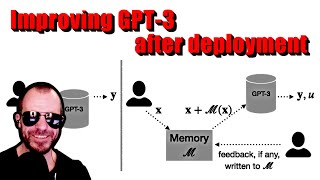
Memory-Assisted Prompt Editing to Improve GPT-3 After Deployment - Machine Learning Paper Explained
Explore adaptive methods to enhance GPT-3's performance post-deployment using memory-based prompts, improving accuracy without retraining the model. Learn about applications in fine-tuning and personalization.
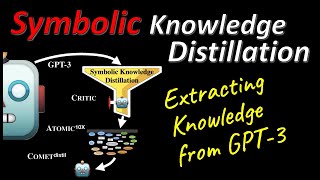
Symbolic Knowledge Distillation- From General Language Models to Commonsense Models Explained
Explore how to distill commonsense knowledge from large language models to create high-quality knowledge graphs and train smaller, specialized models for improved performance in commonsense reasoning tasks.
Deploy with FastAPI - Sentiment Analysis with BERT Using Huggingface, PyTorch, and Python Tutorial
Learn to deploy a pre-trained BERT model for sentiment analysis as a REST API using FastAPI, PyTorch, and Hugging Face. Covers project setup, API creation, model integration, and real-time predictions.

Sentiment Analysis with BERT Using Huggingface, PyTorch, and Python Tutorial
Learn to build a sentiment classification model using BERT, Hugging Face, and PyTorch. Covers BERT basics, fine-tuning for sentiment analysis, model training, evaluation, and prediction from raw text.
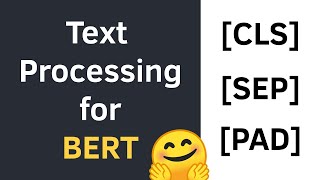
Sentiment Analysis with BERT Using Huggingface, PyTorch and Python Tutorial
Learn text preprocessing for sentiment analysis using BERT, Hugging Face, and PyTorch. Covers tokenization, padding, attention masks, dataset creation, and data splitting for NLP tasks.

Getting Started with AI Powered Q&A Using Hugging Face Transformers - HuggingFace Tutorial
Learn to implement AI-powered Q&A using Hugging Face Transformers. Explore BERT, transfer learning, and practical coding with pre-trained models for your own data and solutions.

Masked Language Modelling - Retraining BERT with Hugging Face Trainer - Coding Tutorial
Practical guide to retraining BERT for masked language modeling using Hugging Face Trainer on the Microsoft Research Sentence Completion Challenge, with step-by-step Python implementation and performance evaluation.

Hugging Face Transformers - The Basics - Practical Coding Guides - NLP Models (BERT/RoBERTa)
Learn the basics of Hugging Face Transformers library, including installation, pre-defined pipelines, and implementing models in PyTorch. Explore tokenization, attention masks, and model outputs in this practical coding guide.

Machine Learning Engineer Mock Interview for Meta with ChatGPT
Simulated machine learning engineer interview using ChatGPT, covering key ML concepts, coding tasks, and system design. Explores AI's ability to handle technical questions and practical scenarios.