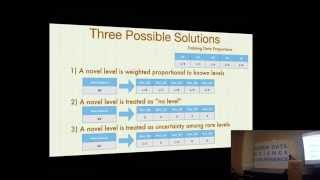
Prepping Data for Analysis Using R
Learn techniques for preparing data for analysis using R, covering common issues, automated solutions, and practical demonstrations for handling missing values and categorical variables.
A Primer in Machine Learning
Explore machine learning fundamentals, including hypotheses, data representation, algorithms like regression and classification, and practical implementation using MATLAB.
Python for Machine Learning - Machine Learning Tutorial for Beginners
Learn Python for machine learning, covering key concepts, popular packages, and algorithms like linear regression and K-nearest neighbor. Gain practical skills for a high-paying career in this rapidly growing field.
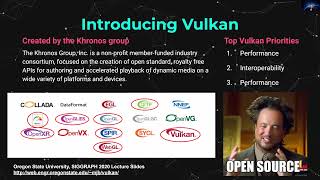
Beyond CUDA: GPU Accelerated Machine Learning on Cross-Vendor Graphics Cards with Vulkan Kompute
Explore GPU-accelerated machine learning across multiple vendors using Vulkan Kompute. Learn parallel processing options, Vulkan basics, and implement a linear regression example on diverse graphics cards.
Introduction to Lasso and Ridge Regression Models in R
Master linear regression regularization techniques through Lasso and Ridge methods in R, focusing on preventing overfitting and improving model reliability for more accurate predictions and estimations.
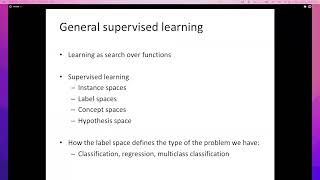
Machine Learning Mid-Semester Review - Lecture 15
Dive into a comprehensive mid-semester review of fundamental machine learning concepts, covering key principles and techniques explored throughout the academic term.
The Power of Adaptivity in Representation Learning - From Meta-Learning to Federated Learning
Delve into advanced machine learning concepts exploring adaptivity in representation learning, focusing on meta-learning and federated learning approaches for model deployment in new environments.
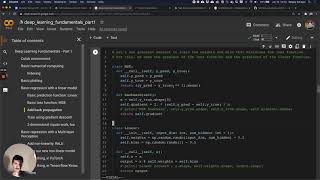
Coding a Neural Network - Full Stack Deep Learning - Spring 2021
Code a neural network from scratch using Google Colab, NumPy, PyTorch, and Keras. Learn linear regression and multi-layer perception models through hands-on implementation and visualization.

Machine Learning with Flax - From Zero to Hero
Comprehensive guide to Flax, a JAX-based ML library. Learn basics, custom models, optimization, and practical examples like linear regression and CNN on MNIST. Ideal for ML enthusiasts.
Reproducible Machine Learning and Experiment Tracking Pipeline with Python and DVC
Learn to build reproducible machine learning pipelines using Python and DVC. Track experiments, manage data versions, and compare model metrics for improved ML workflow efficiency.
Build Your First Model with PyTorch and Python - PyTorch Tutorial for Beginners
Learn to implement a Simple Linear Regression model using PyTorch, covering data exploration, model creation, tensor conversion, training, and prediction analysis in this beginner-friendly tutorial.

Build Your First Machine Learning Model in Python
Learn to build a machine learning model in Python using scikit-learn. Covers data loading, splitting, model building with linear regression and random forest, comparison, and visualization.

PyTorch Crash Course - Getting Started with Deep Learning
Comprehensive introduction to PyTorch, covering tensor basics, autograd, linear regression, neural networks, and CNNs. Ideal for beginners in deep learning.

Regression Trees, Clearly Explained
Clear explanation of regression trees, their applications, and step-by-step construction process. Covers differences from classification trees and use with multiple variables.
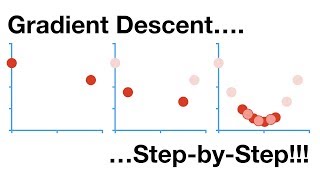
Gradient Descent, Step-by-Step
Comprehensive step-by-step explanation of Gradient Descent, covering its application in Machine Learning, optimization techniques, and variations like Stochastic Gradient Descent.
Machine Learning Fundamentals with Python and R
Comprehensive introduction to machine learning fundamentals using Python and R, covering linear regression, data types, polynomial regression, and NumPy, with hands-on projects and practical applications.
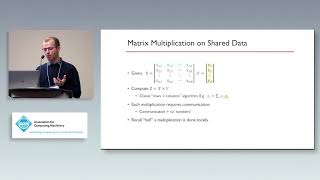
ABY3 - A Mixed Protocol Framework for Machine Learning
Explore privacy-preserving machine learning with ABY3, a framework addressing data collection concerns through encrypted computations and secure multi-party protocols.
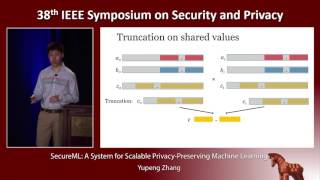
SecureML - A System for Scalable Privacy-Preserving Machine Learning
Explores scalable privacy-preserving machine learning techniques for linear regression, logistic regression, and neural networks using secure two-party computation, with efficient protocols and MPC-friendly alternatives to nonlinear functions.
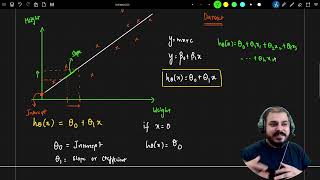
Machine Learning Series - Revising Complete Linear Regression, Cost Function, Convergence Algorithm
Comprehensive review of linear regression, covering simple and multiple regression, cost function, and convergence algorithms with mathematical intuition and practical examples.
Pretraining Task Diversity and the Emergence of Non-Bayesian In-Context Learning for Regression
Explores how task diversity in pretraining affects transformers' in-context learning abilities for regression, revealing a threshold beyond which models can solve novel tasks and outperform Bayesian estimators.
Designing Robust Learners
Explore robust machine learning techniques to handle data perturbations and improve model resilience, focusing on TV estimation, modulus examples, and arbitrary loss scenarios.