
Generalization in Deep Learning Through the Lens of Implicit Rank Minimization
Explores implicit regularization in deep learning through matrix and tensor factorizations, revealing tendencies towards low ranks. Discusses implications for generalization and potential improvements in neural network design.
In-Context Learning: A Case Study of Simple Function Classes
Exploring in-context learning capabilities of AI models, focusing on Transformers and LSTMs for learning basic function classes, with insights on evaluation and architectural differences.
When Is Scale Enough?
Exploring performance predictability in deep learning as models and datasets scale up, focusing on large language models and investigating solvable problems through scaling alone.
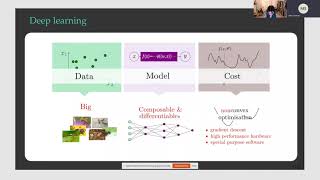
Quantum Computing - Guest Lecture
Explore quantum machine learning with Dr. Maria Schuld, covering linear models, deep learning, quantum software, and the intersection of quantum computing and AI.
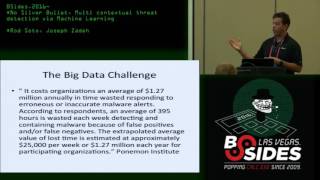
No Silver Bullet - Multi Contextual Threat Detection via Machine Learning
Explore multi-contextual threat detection using machine learning, covering big data processing, modeling adversaries, and building custom solutions for defense at scale.
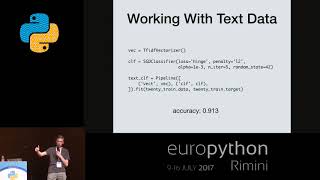
Explaining Behavior of Machine Learning Models with ELI5 Library
Explore techniques for interpreting and debugging ML models using eli5 library. Learn to explain linear models, decision trees, ensembles, and classifiers, improving trust and quality in ML solutions.
Linear Models and Their Geometry in Machine Learning - Lecture 5
Explore the fundamental concepts and geometric principles behind linear classifiers, a cornerstone of machine learning algorithms and classification techniques.
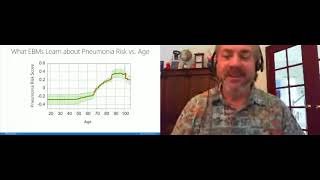
The Importance of Intelligibility in Machine Learning for Healthcare - Avoiding Black-Box Models
Explore intelligible machine learning models for healthcare, balancing accuracy and interpretability. Learn to understand, validate, and edit models for safe deployment in critical applications.
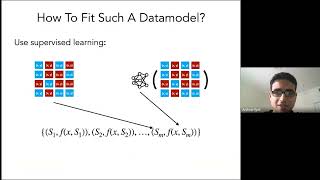
Mapping from Training Data to Predictions with Datamodels - Differential Privacy in Machine Learning
Explore datamodels in machine learning, from training data to predictions. Learn about model brittleness, data counterfactuals, and applications in ML pipelines.

Learning Linear Models In-Context with Transformers
Explore in-context learning of linear models using transformers with UC Davis professor Spencer Frei in this insightful seminar.
Training Neural Networks and Deep Learning Optimization Methods - Lecture 16
Master neural network training fundamentals, from momentum methods and regularization to batch normalization, with practical applications in BBB transmission prediction and model optimization.
Linear Models and Linear Classifiers - Lecture 6
Delve into linear classifiers and their expressive hypothesis class, exploring augmented versions, monotone conjunctions, and feature transformations for machine learning applications.
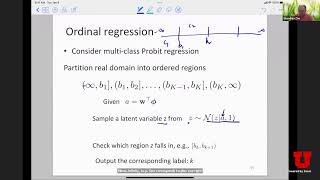
Predictive Distribution and Model Comparison in Linear Models - Lecture 12
Dive into predictive distribution modeling, exploring linear models, binary classification, and logistic regression while mastering maximum molecular estimation techniques.